FIFA’s decision to clear Folarin Balogun for the United States’ World Cup last-16 match against Belgium has turned into one of the tournament’s most politically charged controversies.
The American striker was expected to miss the knockout tie after being sent off in the round-of-32 win over Bosnia-Herzegovina. Instead, FIFA suspended the automatic one-match ban, allowing him to return immediately.
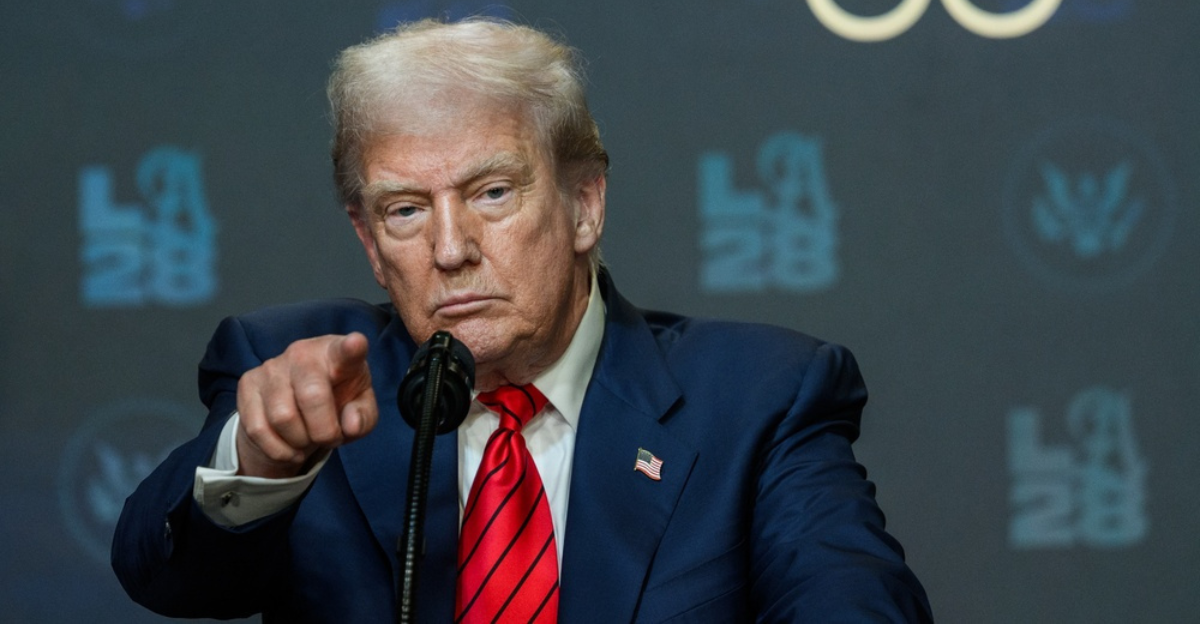
According to AP News, U.S. President Donald Trump personally called FIFA president Gianni Infantino and asked the governing body to review the case.
After the ruling was announced, Trump wrote on social media: “Thank you to FIFA for doing what was right, and reversing a great injustice!”
Read also: Manchester City face new panel that could reopen the 115-charge verdict
Balogun red card sparked immediate trouble
Balogun had been one of the United States’ most important players at the World Cup, scoring three goals before the Belgium match.
His tournament appeared to take a damaging turn against Bosnia-Herzegovina, when he was shown a straight red card after a VAR review for a challenge on defender Tarik Muharemović.
The United States still won the match 2-0, but the red card was expected to carry an automatic one-game suspension.
That would have ruled Balogun out of the last-16 tie against Belgium, a major blow for Mauricio Pochettino’s side as they tried to reach the World Cup quarter-finals for the first time since 2002.
Read also: UK Tax-service (HMRC) is coming after Manchester City now
FIFA use Article 27
The controversy deepened when FIFA’s disciplinary committee chose not to enforce the ban immediately.
According to The Guardian, FIFA used Article 27 of its disciplinary code, which allows a disciplinary measure to be suspended fully or partly.
That means Balogun’s red card has not simply disappeared.
The one-match suspension has been placed on probation for one year. If Balogun commits another offence of a similar nature and seriousness during that period, the ban can still be activated.
Read also: The huge job Jose Mourinho rejected for Real Madrid – and why it could already haunt him
It is a rare decision, and one that immediately raised questions because of the political involvement surrounding it.
Trump praise adds political weight
Trump’s public reaction turned a disciplinary case into a wider political story.
His message on social media made clear that he viewed the decision as a correction of an unfair punishment. But for critics, the timing of FIFA’s ruling and the president’s contact with Infantino created an uncomfortable impression.
According to The Wall Street Journal, Trump had urged Infantino to review Balogun’s suspension before the Belgium match.
Read also: 10 things the commission found Manchester City guilty of
FIFA has defended the decision through its disciplinary rules, but the lack of a detailed public explanation has only fuelled the debate.
The United States are one of the co-hosts of the tournament, and Balogun is one of their key players. That has made the decision even more sensitive.
Belgium question the ruling
Belgium reacted with anger and disbelief.
The ruling directly affects their preparation for the last-16 match, and the Belgian federation has argued that FIFA’s decision cuts across the usual World Cup disciplinary process.
Read also: Leaked Man City video: CEO brands guilty verdict a ‘conspiracy theory’
Quoted by AP News, Belgium coach Rudi Garcia said: “I didn’t know that in the offices of FIFA the fifth of July was the first of April in Europe.”
The Royal Belgian Football Association has also said it is examining its options, with fair play and consistency now at the centre of the debate.
For Belgium, the issue is not only whether Balogun should play. It is whether FIFA has created a precedent that could be difficult to defend in future cases.
A decision that will follow FIFA
For Pochettino and the United States, the ruling is a major sporting boost.
Balogun can now face Belgium, giving the Americans their most dangerous striker for one of the biggest matches in their recent history.
But the wider controversy will not disappear quickly.
According to Digi24, the case has added another political layer to an already dramatic World Cup, with Trump’s praise for FIFA drawing attention far beyond the football pitch.
The decision may still be remembered less for the technical use of Article 27 than for the questions it has raised about influence, consistency and trust in football’s disciplinary system.
Balogun is available.
FIFA, however, still has explaining to do.