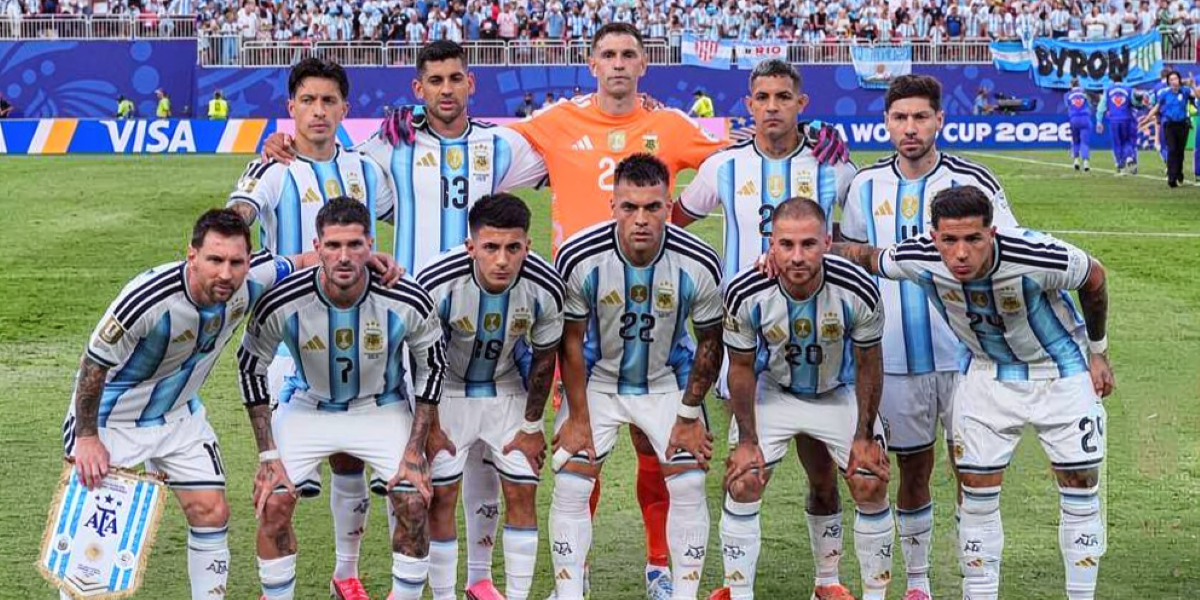
Despite a massive global petition demanding a lifetime ban, Argentina’s national team has been confirmed as an automatic qualifier for the 2030 FIFA World Cup. According to GOAL, the decision by FIFA comes in the wake of significant controversy surrounding Argentina’s conduct during the 2026 World Cup, particularly their ‘dirty’ tactics and unsavoury post-match behaviour following the final against Spain.
The petition, titled “Leave, Argentina,” garnered an astonishing 23,316,108 signatures, far exceeding its initial target of five million and approaching a Guinness World Record. Launched after the 2026 tournament, the petition accused FIFA and its referees of consistently favouring Argentina and their captain, Lionel Messi. A statement from the petition articulated the frustration: “Why should the rest of the world compete when the winner is already known? Exclude Argentina from the World Cup and give everyone a fair chance.”
The catalyst for this widespread discontent stemmed from Argentina’s performance and conduct throughout the 2026 World Cup, culminating in their defeat to Spain in the final at the New York New Jersey Stadium on July 19. Critics pointed to Argentina’s players turning their backs as Spain’s Rodri lifted the trophy. While defender Lisandro Martinez reportedly offered an explanation for the team’s post-match actions, FIFA is continuing its investigation into whether their disciplinary code was violated by players and coaching staff. However, there are no indications that Argentina will be barred from future competitions.
Fallout from the 2026 final and tournament controversies
The 2026 World Cup, hosted across the United States, Canada, and Mexico, was marred by a string of refereeing decisions that fueled accusations of bias towards Argentina. Specific incidents cited included Lionel Messi’s tackle on Aissa Mandi during Argentina’s match against Algeria, which some refereeing experts believed warranted a red card. In the final, officiated by Slovenia’s Slavko Vincic, Argentina’s Alexis Mac Allister and Nicolas Tagliafico reportedly escaped cards for fouls, while Spain had two goals disallowed from Nico Williams and Ferran Torres. Spain ultimately secured their second World Cup title with Ferran Torres scoring the winning goal in the 106th minute, assisted by Nico Williams.
Read also: Arsenal’s €70m price tag stalls AC Milan pursuit of Gyökeres
Lionel Messi, who was 39 during the 2026 tournament, delivered a strong individual performance with eight goals and four assists, but missed out on the Golden Boot and the all-time top scorer crown, both claimed by Kylian Mbappe with 22 career World Cup goals. Following the final, veteran defender Nicolas Otamendi, 38, announced his retirement from international football after 139 appearances for Argentina. England secured the bronze medal, defeating France 6-4 in the third-place play-off.
A guaranteed place for the 2030 centenary tournament
As talkSPORT reported, FIFA has confirmed that all six host nations for the 2030 World Cup will automatically qualify, guaranteeing Argentina a spot. Argentina will co-host three matches alongside Uruguay and Paraguay to mark the 100th anniversary of the inaugural World Cup, which Uruguay hosted in 1930. These centenary matches will take place in Buenos Aires, Montevideo, and Asuncion, respectively. The primary co-hosts for the 2030 tournament will be Spain, Portugal, and Morocco.
While Argentina’s qualification is assured, it is highly improbable that Lionel Messi will feature in the squad, as he will be 43 years old midway through the 2030 tournament. The sentiment of the petition’s creators, however, remains clear, with their official website signing off: “FIFA ignored us, but Spain kept its promises, thank you Spain.”