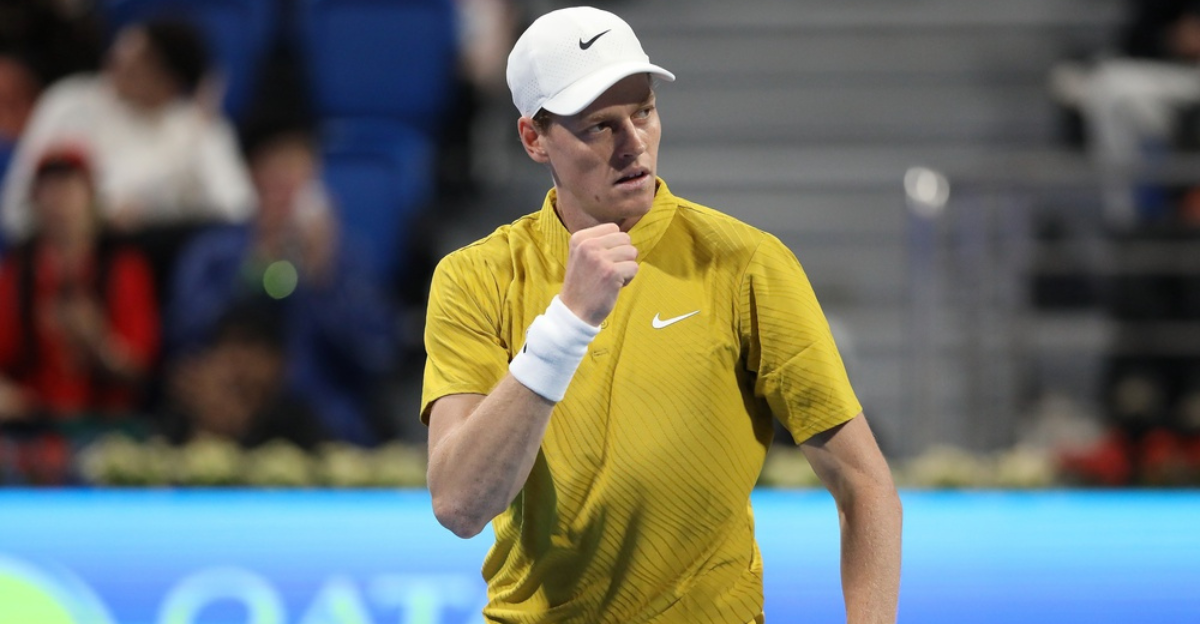
The message from Sinner’s box is that the world number one is not breaking down because he cannot cope.
He is breaking down because he demands too much of himself to leave anything in reserve.
That is the argument Simone Vagnozzi laid out to Corriere della Sera in an interview published on 28 July, in which the Italian coach was pushed to explain the on-court collapses that have become the loudest sub-plot of Sinner’s dominant year. Vagnozzi refused to isolate a single villain.
“I don’t think there is a single cause; it’s a combination of many small things that can lead to these minor breakdowns,” he said in the interview, as translated by Pro Football Network.
Read also: Infantino's inner circle cracks: senior adviser Cordeiro quits FIFA over World Cup sale plan
“Though let’s remember, there have only been four of them in the last five years. These guys aren’t machines.”
The Paris collapse, in Vagnozzi’s own words
The image that provoked the interview is still fresh. In the second round at Roland Garros in late May, Sinner led Argentine qualifier Juan Manuel Cerúndolo by two sets and 5-1 in the third before his body gave in, and he eventually lost 6-3, 6-2, 5-7, 1-6, 1-6 on a sweltering Paris afternoon.
Vagnozzi’s reading of that day layers a physical explanation over the psychological one that dominated the coverage.
“Heat, fatigue, and tension can all combine. In Paris, the temperatures were brutal, and he arrived there under significant physical and mental stress,” he told Corriere.
Read also: A 15-minute phone call made him decide: Now Tonali reveals why he chose Tottenham.
“In short, there isn’t just one factor; if there were, it would be easier for us to fix it. We have to live with these episodes while working to prevent them.”
Sinner himself has struck a similar tone.
“We’ve understood what happened. But it could happen again, because it’s not a situation you solve overnight. It’s something broader than that,” the Italian told reporters after the defeat.
‘A bit too much drama, honestly’
Where Vagnozzi becomes sharpest is on the noise around every wobble. He told Corriere that the volume of scrutiny his player carries is not proportional to the number of bad days.
Read also: Sepp Blatter criticizes FIFA's World Cup sale plan, drawing accusations of hypocrisy
“There is a lot of pressure on Jannik, too much I would say. Sometimes he wins, but if he takes a break, I read that there is something wrong, as if the other players never get broken! Criticism is part of the game, but some criticism is free,” Vagnozzi said, in remarks reported by Sportskeeda.
The coach was blunter about how Paris was framed:
“after Paris I read ‘Sinner disaster’ or ‘Sinner alarm’, well, it seemed to me that there was a bit too much drama, honestly.”
What sits behind the coach’s certainty
The reason Vagnozzi feels able to defend the collapses without excusing them is his read of Sinner’s inner life.
Read also: Everyone laughed at Fernando Alonso's retirement joke – but they aren't laughing anymore
Sinner’s greatest quality, he told Corriere, is wanting people around him who tell him what he does not want to hear, and taking that criticism on the chin a day later.
Vagnozzi also pointed to the way Sinner motivates himself through sacrifice, in comments picked up by OA Sport:
“Jannik is special in this regard too. He tells himself: I’m sacrificing enormously, giving up my youth for this sport and I absolutely cannot give up.”
Wimbledon answered the question the loudest voices asked
The counter-argument to the fragility case is already on the trophy shelf. Six weeks after the Cerúndolo defeat, Sinner beat Alexander Zverev 6-7(7), 7-6(2), 6-3, 6-4 in the Wimbledon final on 12 July to defend his title and claim a fifth Grand Slam.
Read also: ‘I knew he was open’: Welsh boxer sends rival through ropes in terrifying first-round knockout
He remains world number one with a lead of close to 5,000 points over Zverev, and this week begins his 81st non-consecutive week at the top, placing him tenth on the all-time list of men to have held the position.
The North American hard-court swing that leads into the US Open starts within days, and the same body that gave out in Paris will be asked to carry the same weight of expectation again.
Vagnozzi’s message, delivered before the courts get repainted blue, is that if it fails, it will not be because Sinner asked too little of it.