A brief comment from Donald Trump at a high-profile international event has reopened a long-running debate over what Americans call the world’s most popular sport and whether the United States has been naming it incorrectly all along.
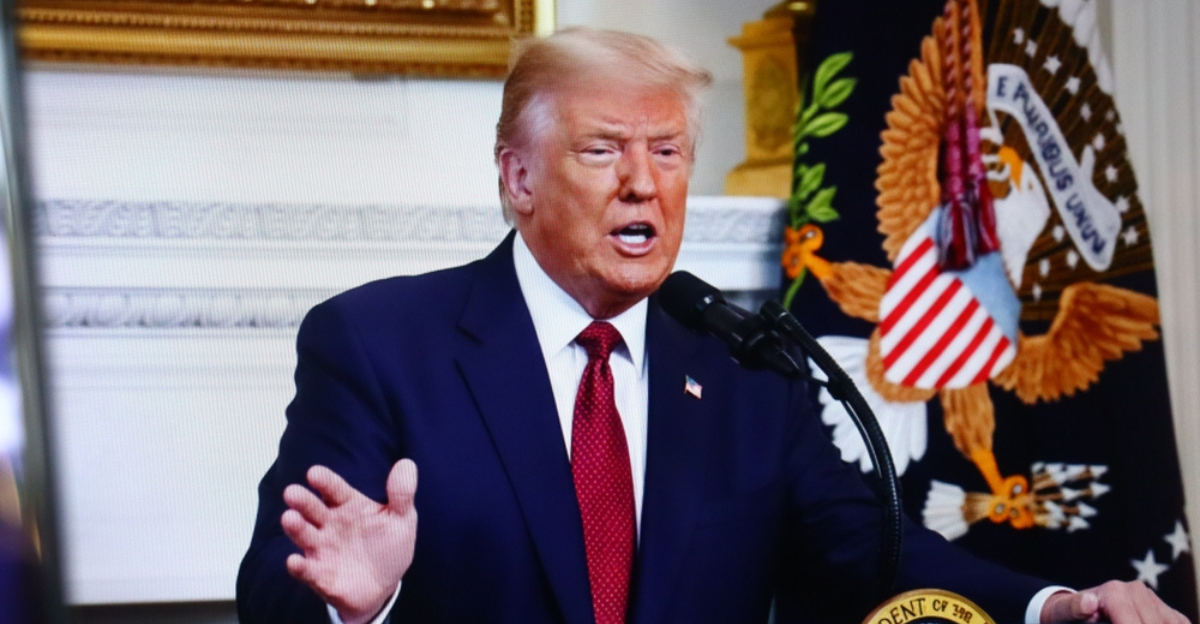
Speaking during the FIFA 2026 World Cup draw in Washington on December 5, Trump questioned the logic behind the term “soccer,” suggesting that the issue may stem from what Americans call football rather than the global game itself.
Global spotlight on the US game
The remarks came as the United States prepares to co-host the 2026 World Cup alongside Canada and Mexico, a tournament expected to further accelerate soccer’s growth across North America.
The draw event brought together FIFA officials, international delegates, and political figures, placing the sport and its cultural differences firmly in the spotlight.
Read also: Max Verstappen admits one thing he still wants from nightmare season
Footage shared by commentator Acyn captured Trump addressing the audience and reflecting on how the sport is labeled in the US compared to the rest of the world.
Questioning a long-standing naming clash
During his remarks, Trump pointed to what he described as a contradiction in American terminology.
“But when you look at what has happened to football in the United States, soccer in the United States … we seem to never call it [football] because we have a little bit of a conflict with another thing that’s called football,” he said.
His comment touched on a well-known divide: in most countries, “football” refers to the global game governed by FIFA, while Americans use the term to describe a completely different sport.
Read also: Lionel Messi to become ‘doctor’ hours before final Argentina appearance
Suggestion shifts focus to the NFL
Rather than proposing that Americans adopt global terminology, Trump suggested the naming issue might lie with the National Football League itself.
“But when you think about it, shouldn’t it really be called … this is football, there’s no question about it. We have to come up with another name for the NFL,” he added. “It really doesn’t make sense when you think about it.”
The remark was made offhand and not framed as a policy idea, but it nonetheless introduced a provocative twist to a familiar discussion.
A debate rooted in history
The difference in terminology dates back more than a century, when various forms of football developed along separate paths in the United States and Europe. The word “soccer” itself originated in Britain as a shorthand for “association football,” before falling out of common use there while remaining standard in the US.
Read also: Jamie Carragher tells Sheikh Mansour to sell Man City after guilty verdict
Today, the linguistic divide persists even as soccer’s popularity continues to rise in America, driven by expanding professional leagues, international stars, and the upcoming World Cup.
Cultural reality unlikely to shift
Despite Trump’s suggestion, any change to the NFL’s name remains highly improbable. American football dominates the domestic sports landscape, with the league firmly established as one of the most commercially powerful organizations in the world.
Still, the comments highlight an ongoing cultural contrast: as the global game gains ground in the US, the language used to describe it continues to reflect a uniquely American perspective.
With the 2026 World Cup approaching, that contrast is likely to become even more visible both on the field and in the way the sport is discussed.
Read also: Liverpool ready to raid Man City for two stars after guilty verdict
Sources: Acyn, FIFA event footage
Read also: Everton’s points deduction appeal could save Manchester City