The FIFA presidency is the most influential role in world football, with the successful candidate responsible for leading the sport’s global governing body and shaping its future. The president oversees FIFA’s commercial operations, international competitions, and its 211 member associations, making the election one of the most significant events in football governance.
Held every four years, the presidential election takes place at the FIFA Congress following the most recent FIFA World Cup. Although the final vote occurs on a single day, the nomination and campaigning process effectively begins a year earlier.
Who Can Run for FIFA President?
Anyone seeking the presidency must satisfy a number of eligibility requirements before appearing on the ballot. Candidates must have been actively involved in association football for at least two of the previous five years and must receive formal backing from at least five FIFA member associations before the nomination deadline. For the 2026 election, that deadline falls on November 18.
Every one of FIFA’s 211 member associations has one vote, regardless of size or footballing success. Voting is conducted by secret ballot, and rounds continue until one candidate secures a majority of the votes.
Read also: The 2026 Ballon d'Or favourite is clear after 35,000 fans cast their votes
If a candidate wins more than two-thirds of the votes in the opening round, they are elected immediately. However, if there is only a single candidate, FIFA rules allow the individual to be confirmed by acclamation without the need for a formal ballot.
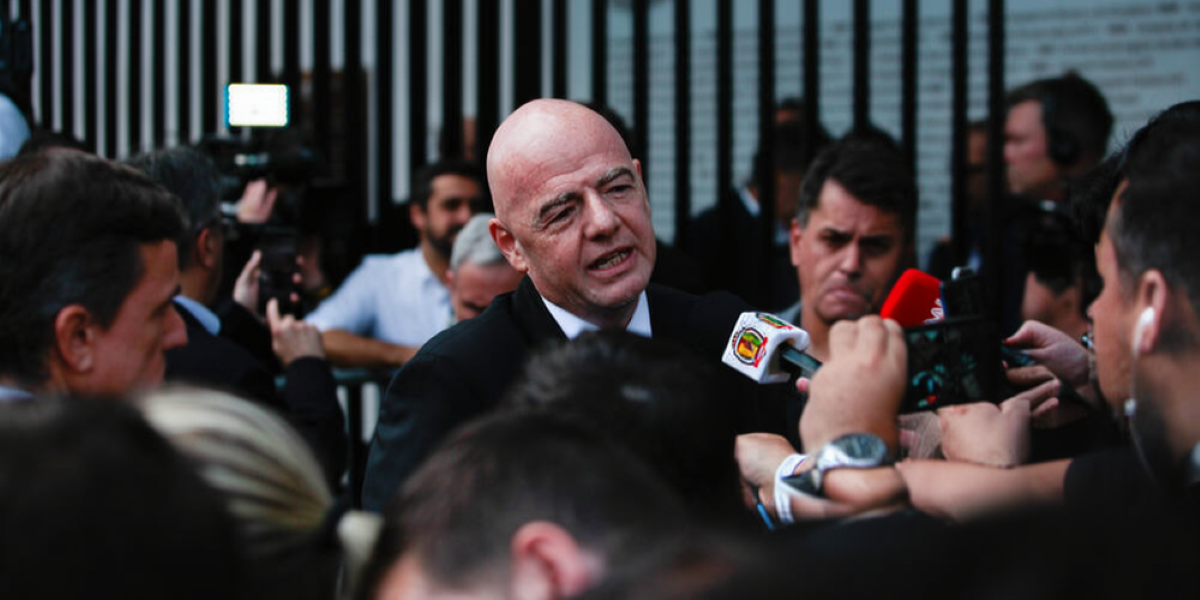
Gianni Infantino’s Time in Charge
The last contested FIFA presidential election took place in 2016, when Gianni Infantino defeated Prince Ali bin Hussein, Sheikh Salman Bin Ibrahim Al Khalifa, Jerome Champagne, and Tokyo Sexwale. After no candidate secured an outright majority in the opening round, Infantino won the decisive second round, overcoming pre-election favourite Sheikh Salman.
Infantino originally took office following Sepp Blatter’s resignation amid corruption investigations, completing the remainder of Blatter’s mandate before beginning his first full term in 2019.
Since then, he has been re-elected unopposed in both 2019 and 2023, with both victories confirmed by acclamation. His current term expires in 2027, and another successful campaign would allow him to remain FIFA president until 2031, the maximum permitted under FIFA’s term limits.
Read also: Gianni Infantino's FIFA future in doubt as 2027 election details emerge
Pressure Ahead of the Next Election
Although Infantino has faced no electoral opposition in recent years, the political environment surrounding FIFA has become increasingly complex.
Reports surrounding the FIFA Forward Enterprise (FFE) scandal have led to criticism of the current administration, while several major football bodies—including UEFA—have publicly questioned their confidence in FIFA’s leadership.
Should Infantino fail to secure another term, it would mark the first time a sitting FIFA president has been defeated since 1974, when Sir Stanley Rous lost the election to Brazil’s Joao Havelange.
FIFA Presidents Through History
Since FIFA was founded in 1904, the organization has had nine elected presidents and one interim leader.
Read also: Neymar sparks chaotic tunnel clash after Santos win
French administrator Jules Rimet remains the longest-serving president, leading FIFA for 33 years and overseeing the creation of the FIFA World Cup, a tournament that transformed the sport into a truly global competition.
A major shift occurred in 1974 when Joao Havelange became the first non-European to lead FIFA, reflecting football’s growing international influence.
More recently, Cameroon’s Issa Hayatou served as interim president between 2015 and 2016 after Sepp Blatter stepped down before Infantino’s election.
With questions surrounding the next presidential race and the future direction of world football, the upcoming FIFA election is expected to attract greater attention than any contest in recent years.
Read also: Sepp Blatter backs Lise Klaveness to replace Gianni Infantino as FIFA president
Read also: Van der Poel gave Pogacar nightmares during the Tour, and the Whoop data proves it