World championships could become almost annual
For decades, the rhythm of the major FIS disciplines has been easy to understand. World Championships are held in odd-numbered years, while the Winter Olympics take centre stage every fourth winter. Even-numbered non-Olympic seasons have provided a rare gap in the title calendar, allowing the World Cup and its crystal globes to stand as the principal prizes. FIS has now approved the concept of filling that gap with additional World Championships.
From 2032, the federation wants its championships to be staged not only every second year, but also during even-numbered seasons without a Winter Olympics. The result would be a global title event in almost every winter: Olympic medals in Olympic seasons and FIS world titles in the others. The governing body is also considering bringing the change forward by four years, with an additional edition potentially being organised in 2028.
The distinction between those two decisions is important. According to the official account of the FIS Council meeting, the Council has agreed to the overall concept of increasing the frequency from 2032. A 2028 edition has not been approved. FIS is only open to examining its feasibility once it has received a more detailed assessment.
The commercial opportunity is written into the plan
The preliminary feasibility study presented to the Council considered three main areas: sporting value, the effect on the calendar and the commercial potential of media and other rights. That wording makes clear that the proposal is not merely about creating more opportunities for athletes to win medals. Additional World Championships would also give FIS more premium events to sell to broadcasters, sponsors and host regions.
Read also: Messi admitted he targeted one World Cup rival on purpose
World Championships generally carry greater public attention than an ordinary World Cup weekend. They create medals, national narratives and a clearly defined climax that can be packaged for broadcasters. Adding championships to the empty even-numbered winters would therefore create new media-rights inventory without competing directly against the Winter Olympics. It would also give potential hosts another major event to bid for and commercial partners another global platform on which to appear.
The unresolved question is how much value remains if a world title is available almost every season. Scarcity is one of the reasons a championship medal carries particular weight. Athletes currently build two-year campaigns around the event, while federations plan funding, selection and training programmes accordingly. A near-annual cycle could generate more content and revenue, but it could also make each individual championship feel less exceptional and reduce the importance of winning the overall World Cup.
Biathlon already uses a comparable structure, with World Championships generally held every year except in Olympic seasons. As Sport1’s report on the FIS decision notes, that model has been established for decades. The crucial difference is that alpine skiing, cross-country skiing, ski jumping, freestyle skiing and snowboarding have built their modern calendars around a biennial championship cycle. Transferring the biathlon model across a much broader group of disciplines would represent a far larger structural change.
FIS measures calendar pressure while adding to it
The timing creates an obvious tension. During the same meeting in Thun, FIS approved the principles for a new long-term World Cup calendar designed to improve travel patterns and measure the wider impact of individual events. The federation wants competitions to be grouped into regional clusters, reducing repeated long-distance journeys and allowing consecutive events to take place within the same part of the world.
Read also: Cristiano Ronaldo crisis forces Portugal chief into emergency action
FIS also intends to develop a “Calendar Impact Score” for every event. The organisation has not yet explained the precise formula or published the factors that will carry the greatest weight. However, the stated intention is to use several criteria when assessing the value and burden of each competition. FIS also wants to develop emerging markets while continuing to protect the traditional countries and venues on which its winter-sports audience has been built.
That process remains unfinished. The approved principles will now return to FIS management and subsequently to the Media Rights Executive Board. Only after the federation’s autumn meetings is a draft long-term calendar expected to return to the Council for approval. Until that document appears, it is impossible to know where additional World Championships would fit, which World Cup events might be moved or reduced, and whether the new scoring system will carry genuine decision-making power.
The reporting contradiction is difficult to overlook. FIS is creating a mechanism intended to assess calendar pressure at the same time as it prepares to add another major championship to the programme. Regional clustering may reduce travel, but it does not remove the physical demands of another peak event, the financial burden on national federations or the organisational pressure placed on possible host regions.
Russians and Belarusians receive a route back
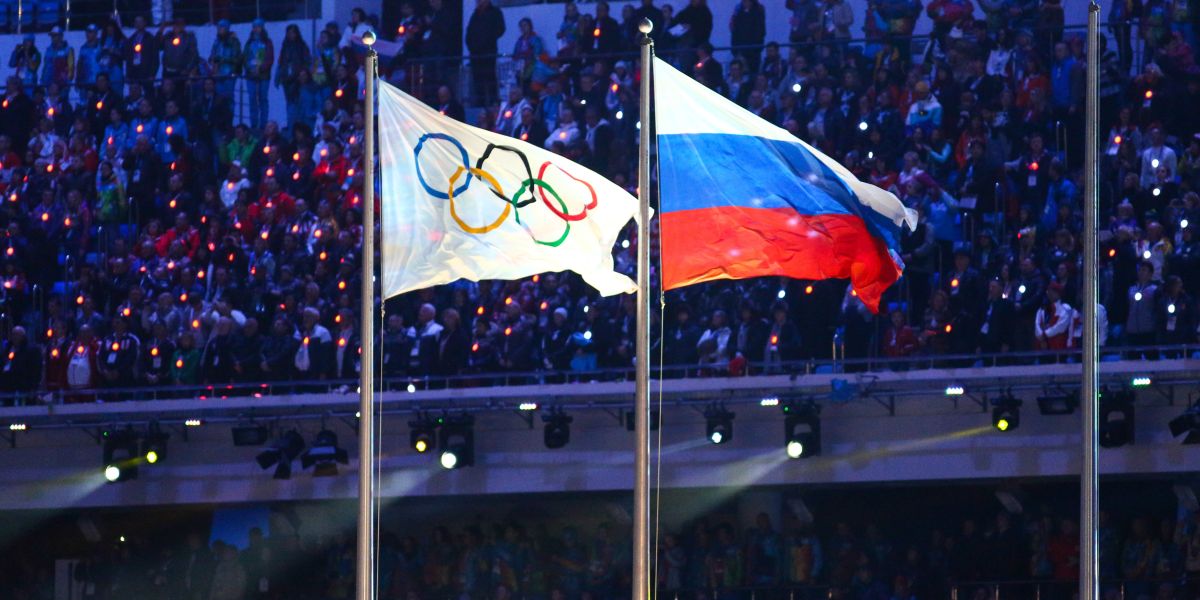
The calendar decision was not the only major change approved in Thun. FIS also established conditions under which Russian and Belarusian athletes and support personnel may return to its competitions during the 2026/27 season. The athletes must participate as Individual Neutral Athletes rather than representatives of their countries, and their admission will depend on signing a declaration of neutrality based on principles established by FIS.
Read also: Harry Kane breaks silence on Man City verdict
Under the conditions published separately by FIS, approved competitors may enter only individual events. Russian and Belarusian flags, anthems and national uniforms will not be permitted, while every athlete must satisfy the relevant anti-doping requirements. FIS says compliance with its neutrality principles will be continuously monitored and that breaches can result in sanctions.
The decision does not reinstate Russia or Belarus as national teams, and it does not guarantee that every athlete who applies will be accepted. However, it creates an official pathway into the World Cup and other FIS competitions after years in which the two countries were largely absent from the international winter-sports circuit. The sporting effect could become significant in disciplines where Russian athletes traditionally competed for victories and championship medals.
Important details remain unpublished. FIS has not said how many athletes could be approved, who will examine individual applications, how quickly decisions will be made or how the federation will investigate possible links to the military and public support for the war. Those questions will determine whether the neutrality system becomes a restrictive exception or a broad route back into international competition.
One meeting reshapes sport, politics and business
Taken separately, more frequent World Championships and the conditional return of Russian and Belarusian athletes are major decisions. Taken together, they show a federation reshaping several foundations of its competitions at once. The number of premium events, the structure of the World Cup calendar, access for politically controversial athletes and even the rules governing wild cards are all now being reconsidered.
Read also: Phil Taylor comes out of retirement for stunning darts return
FIS also approved the principle of a common wildcard framework across its disciplines. The future system is expected to include objective performance criteria, a fixed number of starts, a defined eligibility period, anti-doping compliance and safety controls. The final regulations are not expected before spring 2027, but the proposal is another sign that the federation wants greater central control over how athletes enter its competitions.
The immediate controversy will centre on the Russian and Belarusian return because it takes effect during the coming season. The more consequential long-term battle may concern the championships. National federations, athletes and broadcasters must decide whether an almost annual cycle strengthens winter sport or simply asks the same stars, organisers and audiences to produce another peak moment every year.
FIS is presenting the changes as strategic modernisation. The sharper interpretation is that the federation has identified two forms of unused space: blank years in its commercial calendar and leading athletes currently sitting outside its competitions. In Thun, it moved to fill both.
Read also: ‘If you lie to me, I will leave’: Guardiola’s City warning takes on new weight