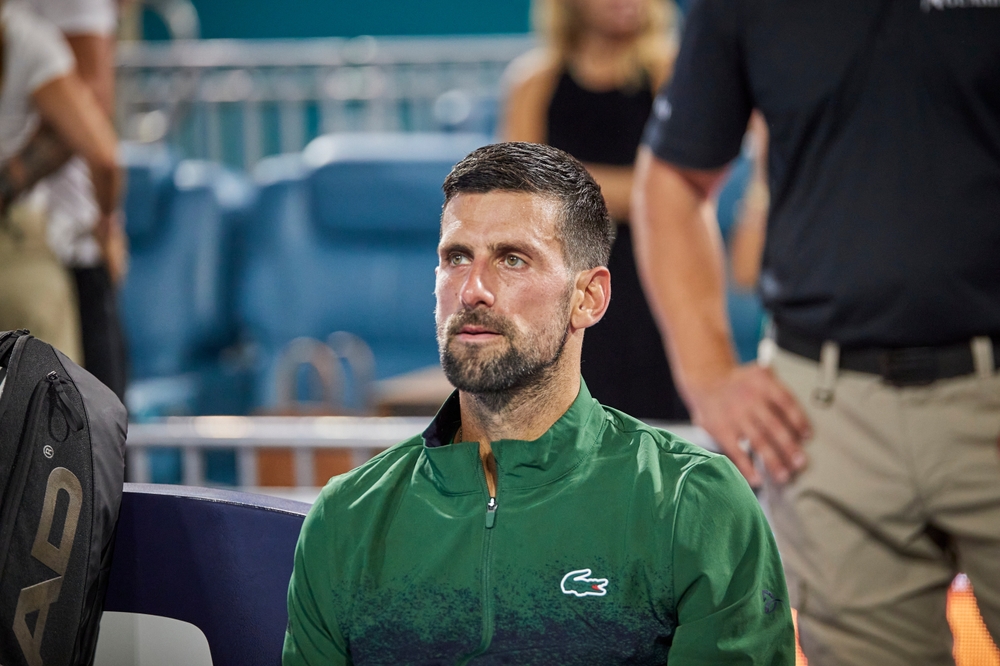
Erling Haaland’s outstanding World Cup ended on the sidelines as Norway suffered a 2-1 extra-time defeat by England in Miami.
The striker was withdrawn at the interval in extra time after struggling to influence the quarter-final. It was the first appearance of his debut World Cup in which he failed to score.
Andreas Schjelderup had given Norway the lead, but Jude Bellingham equalised in first-half stoppage time before scoring the winner three minutes into extra time. Haaland remained on the pitch for the opening 15 minutes of the additional period but was unable to continue.
Dixon criticises Haaland’s movement
Haaland’s performance drew a blunt assessment from former England defender Lee Dixon during ITV’s coverage.
Read also: The wheelchair champion beat the sub-two-hour man, and London Marathon has its 2027 schedule
As quoted by TV 2 Sport, Dixon argued that the Manchester City forward had not done enough to justify being exhausted when he was substituted.
“He hasn’t exactly worn himself out. He’s barely moved the entire game. He’s the only player in the world who can get away with playing like that. If you had been his teammate, you would have gone crazy,” Dixon said.
The criticism reflected Haaland’s limited involvement. According to the Sky Sports match report, he registered only two shots before leaving the pitch, although Norway also failed to make the most of situations in which he had found promising positions.
The clearest example arrived shortly before England’s equaliser. Alexander Sørloth broke forward with Haaland available in the centre but chose to shoot rather than pass, allowing England to survive.
Read also: Kimi Antonelli issues warning to George Russell with Mercedes vow
Solbakken explains substitution
Norway coach Ståle Solbakken rejected the suggestion that Haaland had simply failed to exert himself. He said the striker had been physically drained by the tournament and had also suffered a blow to his thigh during the second half.
“It was not a difficult decision to substitute him. He was completely exhausted. Maybe I should have taken him off ten minutes earlier. He has had a fantastic World Cup. He has emptied himself of energy and power match after match,” Solbakken told Aftonbladet.
“In addition, he got a thigh bruise in the second half, and together with the fatigue, it meant he had nothing more to give. He did everything he could, but had a bit of bad luck in a couple of situations.”
A report by talkSPORT on Haaland’s condition also noted that he looked physically diminished and confirmed Solbakken’s explanation that fatigue and a dead leg contributed to the substitution.
Read also: Botev Plovdiv president shot in the head after Bulgaria’s Nations League tie
Miami conditions take their toll
The match was played in punishing conditions, with temperatures of approximately 33C and humidity at 65 per cent around kick-off.
According to The Guardian’s account of the quarter-final, the heat affected the tempo and placed a severe physical strain on both teams throughout the evening.
Haaland acknowledged that the humidity had made the match particularly demanding but refused to use it as an excuse.
“I am completely finished, I’ll be honest about that. It was difficult with the humidity here, but that’s nothing we should blame,” he told Aftonbladet.
Read also: John Stones has been convicted: “Nothing to say”
England coach Thomas Tuchel also felt the striker had reached his physical limit.
“I think he had a tough time with the physical play for quite a long period. I could see there was no other choice, because I saw how he struggled. But fundamentally, it’s not my place to interfere,” Tuchel said.
Seven goals in a historic campaign
Haaland’s quiet final appearance should not overshadow his wider contribution to Norway’s tournament.
The 25-year-old had scored seven goals across his first four appearances, including two against Iraq, two against Senegal, the winner against Côte d’Ivoire and a late brace that eliminated Brazil.
Read also: Gyokeres says bloody socks is normal procedure
As detailed in FIFA’s review of his goals, he averaged one goal every 51 minutes before the quarter-final and became the most prolific player on his World Cup debut since Poland’s Grzegorz Lato scored seven times in 1974.
Haaland ended the competition with seven of Norway’s 13 goals. His performances helped the country win its first World Cup knockout matches and reach the quarter-finals for the first time.
England ultimately succeeded in keeping him away from the decisive areas, but Norway’s progress to the last eight would have been difficult to imagine without him.