Hamilton was faster but Ferrari did not move Leclerc
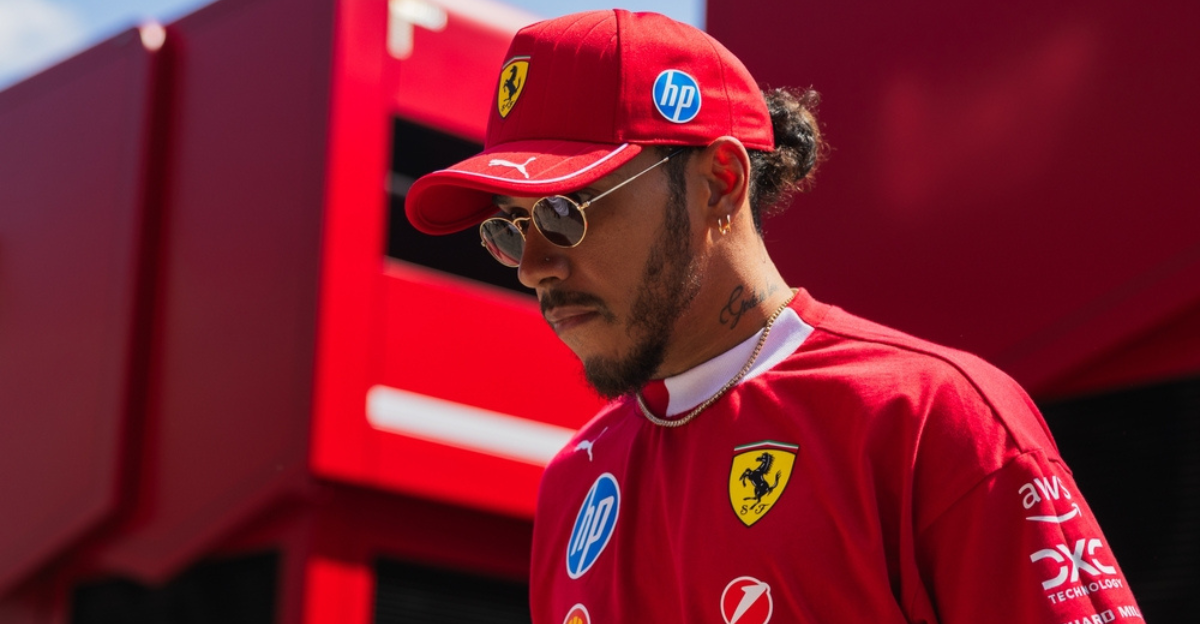
Hamilton’s frustration began after one of his strongest periods of the race. Having passed Oscar Piastri for fifth on lap 35, he quickly closed onto the back of Charles Leclerc. Hamilton was running on fresher tyres and immediately felt he had more pace than his teammate.
According to Sky Sports’ account of the Ferrari radio exchanges, Hamilton told the pit wall: “I’m quicker than Charles. These tyres are better.” Ferrari did not immediately reverse the positions. Hamilton’s tone soon changed: “We are just losing time!”
Leclerc eventually pitted on lap 43, releasing Hamilton, but by then the Briton believed valuable seconds had disappeared. His sarcastic reaction over the radio summed up the irritation: “A great way of wasting time guys, good job.”
That sequence matters because Hamilton eventually finished fourth, directly behind George Russell. The official Formula One result shows Russell crossing the line less than a second ahead of the Ferrari. Leclerc finished fifth.
Read also: Harry Kane breaks silence on Man City verdict
Hamilton therefore did not need to find a huge amount of time to reach the podium.
Leclerc did not refuse a team order
One important detail became clearer after the race. The episode could easily be interpreted as Leclerc refusing to move aside, but Ferrari says that was not what happened.
Leclerc explained that he had never actually been instructed to surrender the position to Hamilton. His discussion with the pit wall concerned whether he should stop for fresh tyres, and the Monegasque felt that the lap Ferrari initially suggested was not the correct moment to pit.
Ferrari team principal Frédéric Vasseur backed that version. In comments reported in Germany, Vasseur denied that Leclerc had ignored an order. He admitted Ferrari had “missed the right moment”, but disputed Hamilton’s suggestion that the delay itself had definitively cost him third place. According to Vasseur, later race circumstances, including the intervention periods, also affected Ferrari’s chances.
Read also: Phil Taylor comes out of retirement for stunning darts return
That creates an important distinction. Hamilton can reasonably argue that he lost time behind a slower teammate, but Ferrari’s mistake appears to have been indecision on the pit wall rather than insubordination from Leclerc.
Mercedes showed Hamilton exactly what he wanted
The contrast became especially painful in the closing stages.
Kimi Antonelli was running on significantly fresher tyres than Mercedes teammate Russell. With seven laps remaining, Mercedes decided that Antonelli had the better chance of attacking Lando Norris and ordered Russell to let him through.
The swap happened quickly.
Read also: ‘If you lie to me, I will leave’: Guardiola’s City warning takes on new weight
Hamilton noticed immediately.
After the race, he told Formula One: “I want to win. I want to win. I’m here to win.” He then pointed directly towards his former team, explaining that Mercedes received the information, made the decision and executed the switch without wasting laps. Formula One’s own interview with Hamilton details how strongly he felt about the comparison.
The Mercedes call did not produce victory, as Norris eventually won the race, but Antonelli finished second and Russell third. Hamilton was the next car across the line.
That is exactly why he was frustrated. This was not a theoretical debate about team orders. The position Ferrari wanted was directly in front of him.
Read also: Harry Kane’s Bayern future suddenly comes with a Tottenham escape route
Ferrari had genuine podium pace
The result also suggests Ferrari had enough performance to challenge Mercedes. Leclerc recorded the fastest lap of the race, with Hamilton fourth on the fastest-lap list, while both cars finished inside the top five. Formula One’s official timing data therefore supports the idea that raw pace was not Ferrari’s main problem at Zandvoort.
Hamilton had also shown strong race pace while recovering positions and believed his tyre offset gave him an opportunity to attack Russell rather than spend several laps behind Leclerc.
Ferrari can reasonably argue that a podium was not guaranteed. Hamilton can equally point to the final classification and ask what might have happened if he had been released immediately.
That disagreement is more significant than the angry radio message itself.
Read also: ‘I’m not confident’: Red Bull chief delivers troubling verdict on Verstappen’s car
The championship makes every lost point expensive
Hamilton is not fighting merely for occasional podiums. After Zandvoort, he has 183 championship points, exactly the same total as Russell, although the Mercedes driver sits second on countback. Antonelli leads both by 59 points with 242. Formula One’s updated drivers’ standings confirm how costly lost opportunities have become.
Hamilton has already won for Ferrari this season, taking victory in Barcelona, and the car has repeatedly shown enough speed to fight near the front. The gap to Antonelli means Ferrari’s problem is now execution as much as outright performance.
The next race makes that particularly sensitive. Formula One heads to Monza from September 4 to 6 for Ferrari’s home Grand Prix. The official 2026 F1 calendar confirms that the Italian race is next.
Before then, Ferrari has a very specific issue to resolve with its drivers and pit wall: when Hamilton and Leclerc are on different strategies and one is clearly faster, the team needs a faster procedure for deciding whether to swap them.
At Zandvoort, Mercedes made that decision immediately.
Ferrari did not, and Hamilton finished behind both Mercedes cars.