Coca-Cola’s top-tier partnership with FIFA runs to 2030. Adidas is contracted through the same year. Both were signed on the assumption that the men’s World Cup would remain the biggest and most commercially valuable event in world sport, with every leading team on the pitch.
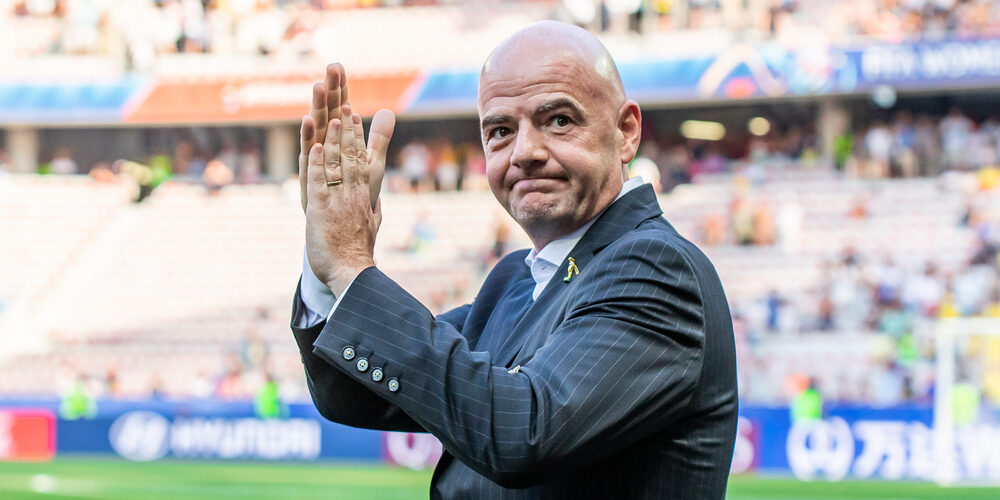
That assumption has been under strain since 28 July, when Infantino unveiled a plan to sell a minority stake in FIFA’s commercial arm to a private-investor group. Three weeks on, the argument has escalated rather than settled.
On Monday 10 August, UEFA, CONCACAF and the AFC issued a joint letter accusing Infantino of “deception” over his handling of the plan. The three confederations, which between them contain 143 of FIFA’s 211 member associations, described the affair as “a failure of judgment” and demanded an independent review.
The plan that lit the fuse
The unveiling on 28 July set out the FIFA Forward Enterprise, a new subsidiary that would take control of commercial and event operations for the men’s and women’s World Cups. FIFA would retain 80 per cent; roughly 20 per cent would be sold to an investor group led by Thrive Capital, the fund run by Joshua Kushner, with JP Morgan advising. Yahoo Sports reported the sell-off was pitched at a $4.2bn investment for the 20 per cent slice, implying a headline valuation of around $20bn for the entity.
Read also: Jamie Carragher: ‘always felt’ Man City were guilty
Backlash was immediate. On 30 July, UEFA’s 55 member federations voted unanimously to boycott all FIFA competitions unless the proposal was pulled and never revisited. Within 72 hours Infantino scrapped it. UEFA has kept the boycott threat in place.
A dispute Adidas and Coca-Cola already know
For FIFA’s biggest brand partners, the governance shock lands on top of an unresolved commercial argument. In late 2024, both Adidas and Coca-Cola filed cases against FIFA at the Swiss Arbitration Centre in Zurich, disputing FIFA’s push to negotiate separate agreements for the revamped Club World Cup on top of their existing top-tier partnerships.
Each of those two Partner deals is understood to be worth roughly $70m per four-year cycle. Adidas’s contract, stretching from 2015 to 2030, has been valued at around $800m all in; Coca-Cola’s seven-year renewal from 2023 at around $400m. Coca-Cola later reached a compromise on the Club World Cup, but the takeaway for other partners is that FIFA is prepared to reopen agreements its biggest sponsors considered settled.
The $14bn cycle riding on 2030
FIFA is targeting revenue of roughly $14bn for the 2027-30 commercial cycle, a figure that leans heavily on renewed and expanded top-tier deals around the centenary 2030 World Cup, jointly staged by Spain, Portugal, Morocco and Uruguay. Every one of those deals is priced on the same premise UEFA is now attacking, that the world’s best players and biggest teams will be there.
Read also: Dana White missed Fury vs Joshua’s kickoff
Confederations do not control how their member associations vote. FIFA’s constitution gives each of the 211 members a single, individual ballot, and Infantino remains scheduled to stand for re-election in March 2027. But sponsors do not price governance disputes the way voters do. They price the risk that the 2030 tournament arrives without a full field, without unified backing, or with a boardroom still fighting the argument that opened in late July.
Infantino apologised to member associations at the FIFA management board’s meeting in Rabat on 5 August. UEFA’s answer the following day, carried by Al Jazeera, was that its confidence in his presidency has been lost, and that its conditions for lifting the boycott have not been met.
Read also: Leeds will receive huge compensation from Manchester City