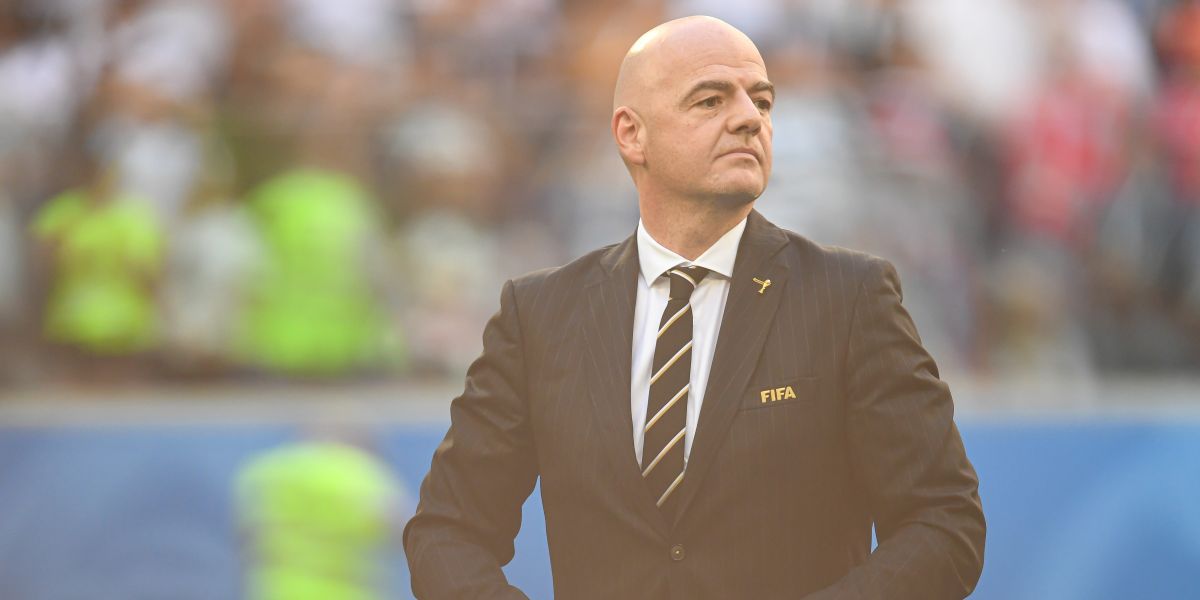
Infantino’s own adviser walks away
A senior member of Gianni Infantino’s inner circle has resigned in protest against the FIFA president’s controversial plan to sell a stake in the commercial operation behind the World Cup.
Carlos Cordeiro, a former president of the United States Soccer Federation and former Goldman Sachs banker, stepped down as an adviser to Infantino on Friday. He had also represented FIFA on the White House task force established for the 2026 World Cup.
Cordeiro described the proposed investment structure as a “bad deal for football” and urged other senior figures inside FIFA to speak publicly. According to an Associated Press report by Graham Dunbar, Cordeiro said he could not remain silent while the organisation considered giving investors a permanent interest in its most valuable competitions.
‘It is the project of one person’
Cordeiro’s resignation was followed by an even more damaging intervention from FIFA chief operating officer Kevin Lamour. Unlike Cordeiro, Lamour has not resigned, but he has publicly challenged the project while still occupying one of the organisation’s most senior executive positions.
Read also: ‘At a breaking point’: Senate’s $40m bombshell could rewrite college football
Lamour said employees had been “deceived” by the lack of openness surrounding the proposal and accused FIFA’s leadership of treating staff with “contempt and intimidation”. His most explosive claim was that the plan had not emerged from a broad internal process.
“It is the project of one person,” Lamour said, directly linking the initiative to Infantino. He also made clear that he was prepared to lose his job after speaking out, significantly increasing the pressure on the FIFA president.
The plan that has split world football
The dispute centres on FIFA Forward Enterprise, a proposed commercial subsidiary that would combine FIFA’s broadcasting, sponsorship, licensing and ticketing rights with the operational delivery of its tournaments.
FIFA intends to raise as much as $4.2 billion by selling minority, non-controlling stakes in the company. The proposed business has been valued at approximately $20 billion and would cover competitions including the men’s and women’s World Cups and Club World Cups.
Read also: Ole Miss takes two LSU players to court in explosive $950,000 transfer fight
As described by Sky Sports, JP Morgan is advising FIFA, while Thrive Capital is expected to lead the proposed investor group. The New York investment company was founded by Joshua Kushner, the younger brother of Donald Trump’s son-in-law Jared Kushner.
Cordeiro says FIFA does not need the money
Cordeiro’s opposition carries additional weight because of his extensive financial background. Before moving into football administration, he spent more than three decades in banking and became a partner and vice-chairman at Goldman Sachs.
He argued that FIFA already holds billions of dollars in reserves, carries no debt and generated approximately $15 billion during the four-year commercial cycle connected to the 2026 World Cup. Selling a permanent share of its leading assets to raise $4.2 billion was therefore unnecessary, in his view.
Only two weeks before his resignation, Goldman Sachs presented Cordeiro as a senior adviser to Infantino and the White House World Cup task force. His sudden departure illustrates how quickly opposition to the proposal has spread inside FIFA’s own leadership structure.
Read also: ‘A bad idea’: FIFA fast-tracks 64-team World Cup bombshell
FIFA insists control will not be surrendered
FIFA has rejected the suggestion that private investors would be allowed to control football’s rules or competitions. The governing body maintains that it would retain complete authority over sporting decisions, governance, the international calendar and the organisation of its tournaments.
Infantino has argued that the new structure would help “democratise football worldwide” by generating billions of dollars for development. Under the proposal, basic funding for FIFA’s 211 member associations could rise from $10 million to $20 million during the next four-year cycle.
The organisation was already predicting record income before the private investment proposal emerged. FIFA’s official financial announcement in March projected $14 billion in revenue between 2027 and 2030, alongside $2.7 billion in development spending.
Europe makes its threat real
The internal revolt arrived only hours after UEFA and its 55 national associations agreed to boycott FIFA tournaments if the investment plan proceeds. That position potentially covers the World Cup and every other competition operated by the global governing body.
Read also: ‘They completely destroyed me’: Lolo Jones accuses Team USA of risking paralysis
“UEFA and its national associations will not participate in FIFA competitions,” the organisation said after an emergency meeting. Concacaf, which represents football in North America, Central America and the Caribbean, later rejected the proposal and criticised the absence of proper governance and consultation.
A separate Associated Press report confirmed that European officials had moved beyond expressing concern and adopted a collective boycott position. With Concacaf also opposed, Infantino is confronting resistance from two confederations representing 96 of FIFA’s 211 member associations.
FIFA appears to leave itself an escape route
FIFA responded on Friday by insisting that “nobody is selling football” and promising to continue consulting its national associations. It also indicated that the commercial subsidiary would not be created without sufficient support from those members.
“FFE would not be established,” FIFA said when explaining what would happen if the proposal failed to receive approval. The wording gives the organisation a route to abandon the initiative without formally admitting defeat.
Read also: The brutal A$6.9m twist behind the Matildas’ historic World Cup run
That response also confirms that the transaction is not yet final. FIFA’s member associations and governing bodies must still approve the structure, meaning the opposition from UEFA, Concacaf and senior FIFA officials could prevent it from advancing.
A resignation Infantino cannot easily dismiss
Cordeiro is not an outside critic with a distant connection to FIFA. He worked closely with Infantino, regularly accompanied him during meetings with Donald Trump and played a prominent role in bringing the 2026 World Cup to the United States, Canada and Mexico.
His departure is therefore more damaging than another statement from a federation or supporter group. It shows that concerns over the investment plan now extend to people who previously operated alongside the FIFA president at the highest levels.
Lamour’s decision to remain inside the organisation while publicly opposing Infantino may be even more significant. A sitting chief operating officer accusing his employer of deception and intimidation represents a rare open fracture within an institution usually known for tightly controlled public messaging.
Infantino’s secure future suddenly looks less certain
Infantino had appeared almost certain to be re-elected unopposed for a fourth and final term as FIFA president in March 2027. Candidates have until November 18 to declare whether they will challenge him in the vote involving all 211 member associations.
The current rebellion does not automatically end his presidency, and Infantino continues to command substantial support among countries that depend heavily on FIFA development funding. However, the combination of a European boycott, Concacaf’s rejection and public opposition from his own senior officials has transformed the political situation.
The proposed sale was presented as a way to unlock unprecedented investment across world football. Within days, it has instead produced one of the most serious internal and institutional challenges of Infantino’s decade in charge.