A comeback overshadowed by questions
Conor McGregor’s long-awaited return to the UFC has been complicated by renewed scrutiny over the recovery from the broken leg that has kept him out of the Octagon since 2021.
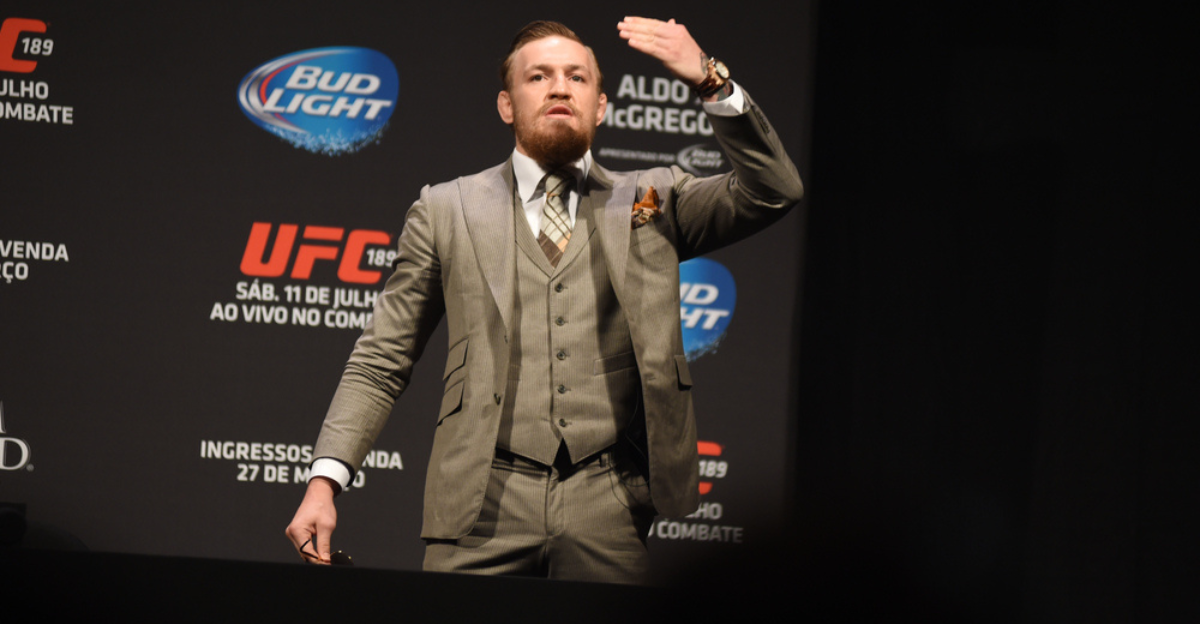
The Irishman is scheduled to face Max Holloway in a welterweight rematch at UFC 329 on July 11 at T-Mobile Arena in Las Vegas. It will be his first fight since UFC 264, where he suffered fractures to his tibia and fibula in the first round of his trilogy bout with Dustin Poirier.
According to the UFC’s official announcement of McGregor vs. Holloway 2, the fight will headline the July card, with the main card beginning at 9 p.m. ET.
But the buildup has not been limited to fight talk. A New York Times report alleged that McGregor used “powerful, banned drugs” during his rehabilitation. The report also raised questions about his time outside the former USADA testing pool and about a therapeutic-use exemption request connected to his recovery.
Read also: Jack Wilshere reveals why he was too scared to ask Lionel Messi for his shirt
McGregor has not accepted the framing of the allegations. He has instead described the matter as a violation of his medical privacy and has argued that the priority after such a serious injury should have been helping him regain basic mobility.
McGregor says his focus was walking again
Speaking to Ariel Helwani, McGregor said the injury left him concerned first about his ability to walk and live normally, not about returning to competition.
As quoted by The New York Post in its report on McGregor’s response, McGregor said: “If you’re gonna ask what I was on, I don’t even know. I don’t know. I don’t want to know. All I want to know is what’s gonna get me back to my f-king feet? To be able to play with my children in a normal capacity again? And that was it.”
He also criticised the way the issue has resurfaced years after the injury.
Read also: Mourinho asks Real Madrid for one more defender and a new midfield brain
“The whole thing is strange to me. You have an injury like that, you’re not gonna walk again. The objective should be to get that athlete, that fighter who’s given his life, his limb, his livelihood for the entertainment of the people and for the profit of the company, it should be, ‘get this man back on his feet,” McGregor said.
McGregor’s wider defence was that he followed medical guidance during a recovery he viewed as potentially life-altering. He did not give a substance-by-substance account of what he took.
UFC gives McGregor public backing
The UFC issued a strongly worded statement defending McGregor and rejecting any suggestion that its split with USADA was connected to him.
According to Jeremy Lambert in Fightful’s report on the UFC statement, the promotion said McGregor sought medical guidance from orthopedic surgeon Dr. Neal ElAttrache after what it described as a “potentially career-ending injury.”
Read also: Josh Hokit clarifies controversial Michelle Obama comments, cites financial gains
“As a result, McGregor did not compete for five years and maintained proper communication with our team throughout, remaining in full compliance with the rules of our comprehensive drug program,” the UFC said.
The organisation also pointed to McGregor’s recent testing history, saying: “McGregor has been tested 19 times over the past two years, including 12 times in 2026, making him the most tested athlete during this time.”
The UFC added that its decision to end the USADA partnership was not related to McGregor. It said discussions about moving away from USADA began before any conversations involving him and described the opposing narrative as “categorically false.”
A sanction but not a failed test
There is another important distinction in McGregor’s anti-doping record. He did serve a suspension, but it was not for a positive test.
Read also: Neymar returns to a standing ovation
As described by the UFC’s official notice on McGregor’s sanction, Combat Sports Anti-Doping announced in October 2025 that McGregor had accepted an 18-month period of ineligibility for whereabouts failures under the UFC Anti-Doping Policy.
The sanction was made retroactive to September 20, 2024, and ended on March 20, 2026. The violations related to missed sample-collection attempts, not a reported failed drug test.
That distinction matters as McGregor prepares to return. The allegations over his recovery remain disputed, while the formal sanction on his record relates to missed testing obligations.
Holloway rematch now carries extra weight
McGregor and Holloway first met in 2013, with McGregor winning by unanimous decision. Their rematch arrives at a very different stage of both careers.
Read also: Two fans turn World Cup watching into a $50,000 job
McGregor is now 37 and has not fought in nearly five years. Holloway, a former featherweight champion, has remained active at the highest level and enters the fight with far less uncertainty around his competitive rhythm.
For McGregor, UFC 329 is already a comeback fight, a legacy fight and a test of what remains after years away. The drug-recovery controversy has added another layer to that return.
The UFC has made clear that it stands behind him. McGregor has made clear that, in his view, the story should begin with the severity of the injury rather than speculation about his rehabilitation.
On July 11, the debate around his recovery will give way to the question that has followed him since the Poirier fight: whether one of the UFC’s biggest stars can still perform at the level that made him famous.