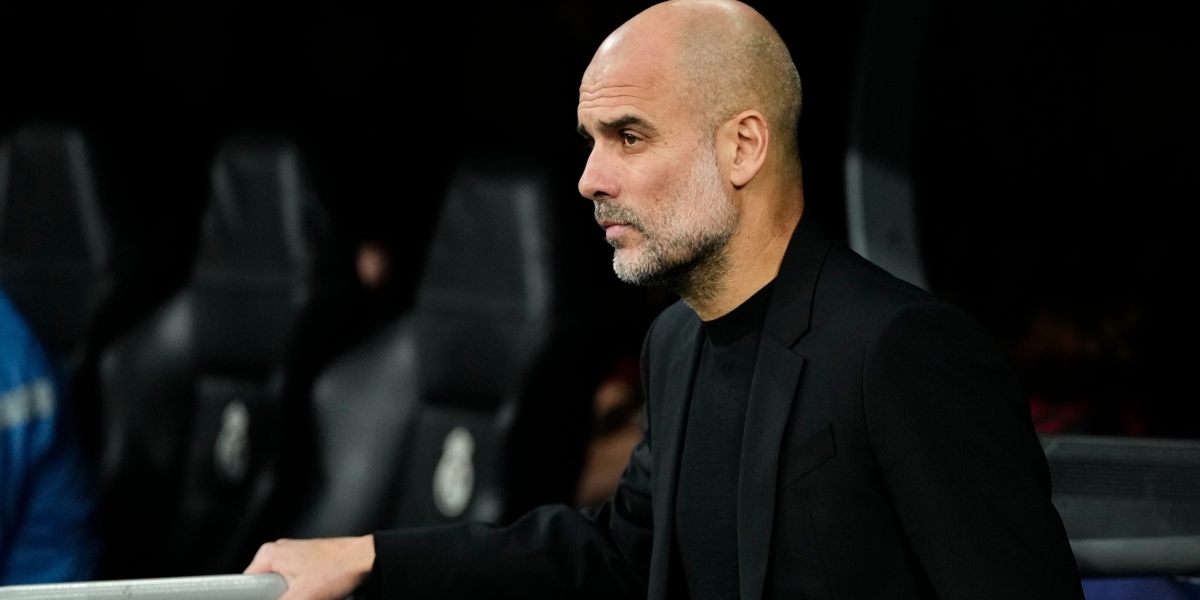
As Pep Guardiola prepares for his eventual departure from Manchester City after a decade at the helm, his legacy is increasingly viewed not just through the lens of silverware, but as a profound philosophical monument to his mentor, Johan Cruyff.
Guardiola himself openly admits he “knew nothing” about football until he fell under Cruyff’s instruction, describing him as “the most influential person in football history,” according to BBC Sport.
Guardiola’s tenure at the Etihad Stadium has been marked by an unprecedented haul of trophies, fundamentally reshaping Manchester City’s standing in world football:
- Six Premier League titles
- One Champions League
- Three FA Cups
- Five League Cups
- One Uefa Super Cup
- One Fifa Club World Cup
A tactical masterclass rooted in Cruyff’s vision
Guardiola’s footballing education began as a Barcelona academy graduate, playing in Cruyff’s iconic 1992 ‘Dream Team’ that lifted the European Cup against Sampdoria at Wembley.
Read also: Javier Tebas breaks silence on what should happen to Man City next
That side, featuring stars like Ronald Koeman, Michael Laudrup, and Hristo Stoichkov, embodied Cruyff’s vision, a philosophy Guardiola has meticulously carried forward and evolved over the years. Cruyff’s belief that “Winning is an important thing, but to have your own style, to have people copy you, to admire you… this is the greatest gift” clearly resonates in Guardiola’s approach.
His tactical brilliance has introduced and refined concepts that have permeated every level of the game, from elite to grassroots. Guardiola’s sides are defined by possession-based football, playing out from the back and demanding goalkeepers excel with their feet, a requirement so strict it led to the departure of Joe Hart upon his arrival at City.
He pioneered the ‘false nine’ tactic, famously deploying Lionel Messi in that role at Barcelona, and has consistently utilized ‘inverted full-backs’ to control the midfield. His teams are also known for a “six-second rule” to swiftly regain lost possession.
Guardiola’s willingness to adapt players to new positions is a hallmark of his tactical ingenuity. He famously converted Javier Mascherano into a central defender at Barcelona and transformed Bayern Munich’s right-back Philipp Lahm into a holding midfielder.
Read also: Messi admitted he targeted one World Cup rival on purpose
At Manchester City, John Stones became a hybrid figure, stepping from defence into a holding midfield role, even playing a ‘number eight’ in the 2023 Champions League final, which City won as part of their historic Treble.
More recently, Matheus Nunes, a £53 million midfielder signed from Wolves, has been deployed as a right-back. This constant evolution, however, isn’t without its risks, as Guardiola was accused of “over-thinking” when his never-before-used starting XI for the 2021 Champions League final against Chelsea, omitting Fernandinho and Rodri, resulted in a 1-0 defeat.
The expanding coaching tree and global influence
Beyond the trophies and tactical innovations, Guardiola’s most enduring impact might be his burgeoning coaching tree, which continues to spread his influence across Europe’s top leagues.
Mikel Arteta, now Arsenal manager, received his first senior coaching post as Guardiola’s assistant. Enzo Maresca, a former member of City’s coaching staff, led Leicester City back to the Premier League and is now expected to succeed Guardiola at Manchester City.
Read also: Cristiano Ronaldo crisis forces Portugal chief into emergency action
Luis Enrique, who worked with Barcelona’s junior teams under Guardiola, later succeeded him at the senior level, winning the Champions League in 2015, and has since managed Paris St-Germain to a second successive final.
Vincent Kompany learned from Guardiola as Manchester City captain and is now flourishing at Bayern Munich, while Xabi Alonso, who played under Guardiola at Bayern, is the new Chelsea manager.
This widespread influence is not lost on those who have witnessed it firsthand. Former City defender Joleon Lescott encapsulated this sentiment, stating, “Pep’s legacy is far greater than Manchester City. His legacy and the importance he has had is huge throughout the football pyramid.
Pep’s influence on coaches and football in general is far greater than anyone realises.” Even opposition managers like Karl Robinson, head coach of Salford City, who faced City in the Carabao Cup, acknowledge Guardiola’s unique intensity: “What did surprise me was that I had never come up against a coach as intense as him. It was like: ‘Wow.’”
Read also: Harry Kane breaks silence on Man City verdict
Guardiola’s impact has changed the face of football at every level in England and beyond. His departure will mark the end of an era at City, but his tactical blueprint and the generation of coaches he has inspired ensure his influence will continue to shape the beautiful game for decades to come.
Sources: www.bbc.com
Read also: Phil Taylor comes out of retirement for stunning darts return