Days before the 2026 World Cup kicked off in North America, Somalia’s Omar Abdulkadir Artan landed at Miami International Airport, was pulled aside by U.S. Customs and Border Protection, and never got any further. Artan, who would have been the first Somali to officiate a World Cup match, was sent home.
“I had the right papers and everything. I had the right visa,” he told reporters afterwards.
FIFA confirmed the denial in a short statement.
“FIFA can confirm that match official Omar Abdulkadir Artan will be unable to train and officiate at the FIFA World Cup 2026 after he was denied entry,” the governing body said.
Read also: Harry Kane breaks silence on Man City verdict
A U.S. official said Artan was found to have “association with suspected members of terror organizations.” The 34-year-old, named Africa’s best male referee in 2025, said he was questioned for 11 hours at the airport about Somali politics and the al-Shabab militant group.
The Nairobi warning
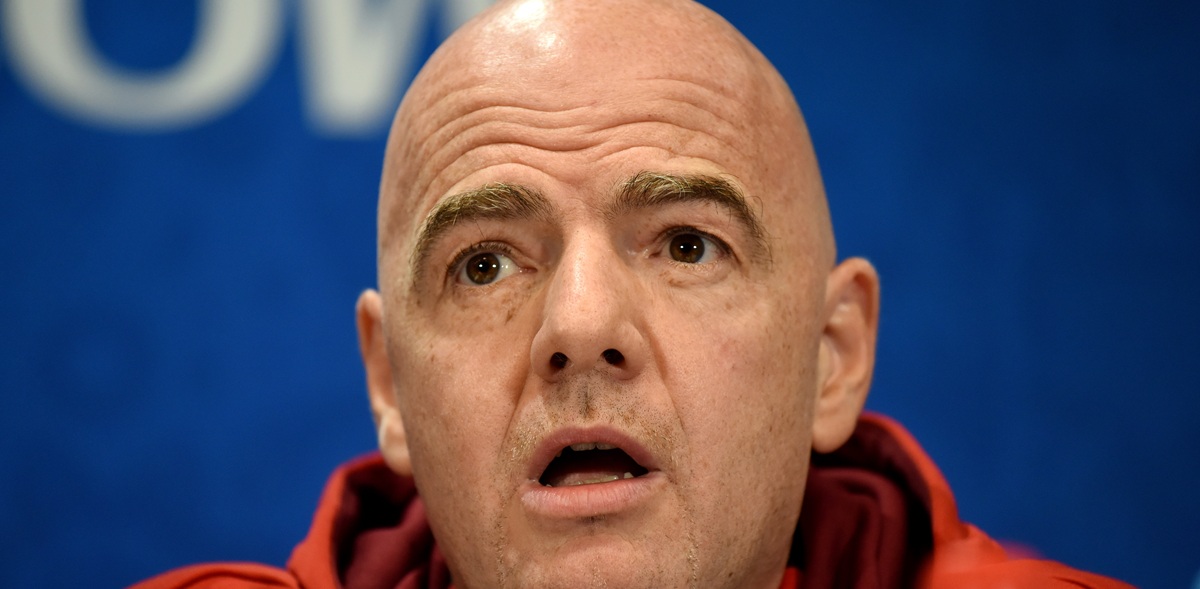
Almost a year earlier, on 30 August 2025, Gianni Infantino had sat next to Confederation of African Football president Patrice Motsepe at a hotel news conference in Nairobi and been asked, bluntly, whether African supporters would be safe and welcome in the United States.
A reporter from South Africa put it directly.
“We are going to play it in a country where some of us do not feel welcome,” he told the FIFA president.
Read also: Phil Taylor comes out of retirement for stunning darts return
He warned that African fans were “a little bit jittery about what is happening in the U.S.” and said the “onus” was on FIFA and CAF to make sure Africa did not feel “outcast” or made into “second-class citizens”, the Associated Press reported at the time.
Infantino’s answer was a promise.
“Everyone will be welcome in North America next year for the World Cup,” he said.
“I think it’s important to clarify this, there is a lot of misconception out there.”
Read also: ‘If you lie to me, I will leave’: Guardiola’s City warning takes on new weight
How it played out
The visa problem was not a misconception. In the months leading up to the tournament, U.S. visa denial rates for sub-Saharan African applicants ranged from about 30% to over 60%, with embassy backlogs stretching for months in Accra, Lagos, Rabat and Cairo. Canadian refusal rates were even higher: the Democratic Republic of Congo was rejected at 96.1%, Kenya at 91.1%.
Artan’s case was the sharpest individual example, but it was not the only one. Ticket-holders from Nigeria, Ghana, Senegal, Cameroon and Côte d’Ivoire struggled to get in. The Somali referee returned to a hero’s welcome in Mogadishu and has since officiated the UEFA Super Cup, becoming the first non-European to do so as Paris Saint-Germain beat Aston Villa 2-1 in Salzburg.
Spain lifted the World Cup on 19 July, beating Argentina 1-0 after extra time at MetLife Stadium in New Jersey, with Ferran Torres scoring the only goal in the 106th minute.
Africa still stands with Infantino
The FIFA president is now in the middle of a separate governance crisis, the fallout from his abandoned plan to sell a stake in future World Cup commercial rights to private investors. The confederation the Nairobi reporters were speaking for has not moved against him.
Read also: Harry Kane’s Bayern future suddenly comes with a Tottenham escape route
On 7 August 2026, CAF unanimously reconfirmed its backing for Infantino. Motsepe, who had sat beside him a year earlier as the “jittery” warning was delivered, framed the vote personally.
“I personally support Gianni Infantino. He’s not just a good friend. He’s a loyal friend. He’s loyal to Africa,” Motsepe said.
CAF’s 54 member associations make up more than a quarter of FIFA’s 211 members, and confederations do not control how those members vote; each association casts its own ballot at Congress. Infantino is preparing to seek re-election in March 2027.
Read also: ‘I’m not confident’: Red Bull chief delivers troubling verdict on Verstappen’s car