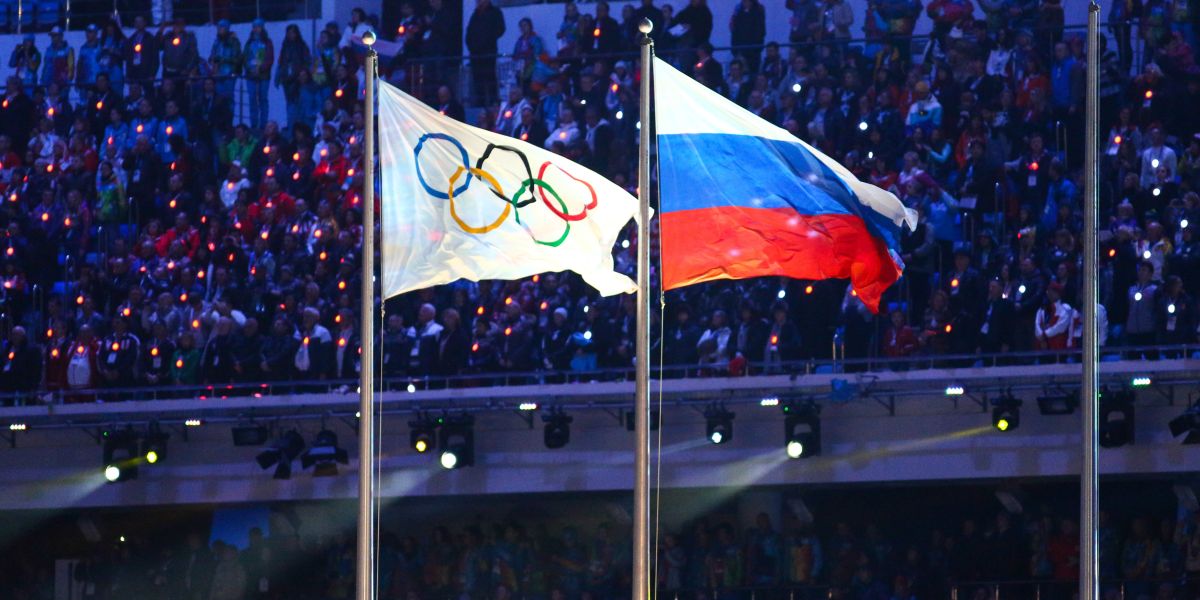
The International Olympic Committee has provisionally lifted the suspension of the Russian Olympic Committee, marking a major step towards Russia’s return to the Olympic movement before the 2028 Games in Los Angeles.
The decision, announced on Tuesday, ends a suspension that had been in place since October 2023. The ROC was punished after it recognised regional sports organisations in Russian-occupied parts of Ukraine, a move the IOC said violated the Olympic Charter and the territorial integrity of Ukraine’s national Olympic committee.
According to the IOC, the suspension has now been lifted after the ROC confirmed that it no longer includes sports organisations from those territories and will not conduct activities there.
A provisional return, but not a full reset
The decision does not mean that Russia has automatically returned to the Olympics without restrictions.
Read also: Manchester City face new panel that could reopen the 115-charge verdict
The IOC has made clear that it has not yet decided whether Russian athletes will be allowed to compete under the Russian flag, wear national colours or hear the Russian anthem at the Olympic Games.
Reported by Reuters, via The Moscow Times, IOC president Kirsty Coventry said: “We made it clear that all athletes had the possibility to compete at the Olympic Games. This is what this decision speaks to. It allows Russian athletes to take part in sports competitions. We thought it was really important for athletes to have that possibility.”
She also said the IOC would continue to monitor Russia closely.
“It was very clear when we strengthened our neutrality bylaw that selection would not be based only on sports performance, but also ability to serve as role models,” Coventry said.
Read also: UK Tax-service (HMRC) is coming after Manchester City now
Flag and anthem decision still to come
The most politically charged question remains unresolved.
At the Paris 2024 Olympics and the Milano Cortina 2026 Winter Games, Russian athletes competed as neutral athletes after being subject to a vetting process. That process was designed to exclude athletes who publicly supported the war in Ukraine or had links to the Russian military.
According to The Guardian, that vetting process has now been removed, but the IOC has still not decided whether Russia can display its flag or colours, or have its anthem played at LA 2028.
That means the decision is best understood as a reopening of the door, not a complete rehabilitation.
Read also: The huge job Jose Mourinho rejected for Real Madrid – and why it could already haunt him
Russian athletes may now have a clearer path back into international competition, but the symbols of state representation remain subject to a later ruling.
Russia welcomes the move
In Russia, the decision was welcomed as a significant breakthrough.
Russian sports minister Mikhail Degtyarev said the IOC move should encourage international federations to reinstate Russian athletes and teams more broadly.
Quoted by Reuters via The Moscow Times, Degtyarev said: “Our country’s return to the Olympic family is a green light for international federations to reinstate all our athletes.”
Read also: 10 things the commission found Manchester City guilty of
That reaction underlines why the decision carries weight beyond the IOC itself. Individual federations still have influence over how Russian athletes and teams return in their own sports, and some may act faster than others.
Football remains a separate case. FIFA and UEFA have not announced an immediate return for Russian national teams or clubs, while World Athletics has also maintained its exclusion of Russian and Belarusian athletes from its competitions.
Doping concerns remain
Russia’s return is also complicated by its long doping history.
The country has been barred from competing under its own flag at several previous Games because of state-sponsored doping and the manipulation of laboratory data. Those issues have not disappeared from the Olympic conversation.
Read also: Leaked Man City video: CEO brands guilty verdict a ‘conspiracy theory’
The Guardian reported that Russian athletes will still have to undergo multiple tests by the International Testing Agency before being cleared, with the Russian Anti-Doping Agency still suspended.
Coventry also said: “We ask to ensure that adequate testing is done on Russian athletes coming into the LA28 Games.”
That means the IOC’s decision is not only about the war in Ukraine. It also sits within a longer dispute about whether Russia can be trusted to meet international anti-doping standards.
Critics warn against normalisation
The decision has already drawn criticism from those who argue that Russia should not be reintegrated while the war in Ukraine continues.
The Guardian quoted UK culture secretary Lisa Nandy as saying: “I am utterly appalled with today’s IOC decision.”
She added that the Russian state should not be represented in international sport while the full-scale invasion of Ukraine is ongoing.
Athlete groups and anti-doping campaigners have also warned that the move risks lowering the standards expected of Olympic members.
For the IOC, the argument is different. Its position is that individual athletes should not automatically be punished for the actions of their government, provided they respect the Olympic Charter and meet the required conditions.
A cautious path towards LA 2028
The ruling gives Russian athletes a much stronger route towards LA 2028, but it does not settle the most symbolic questions.
Daniil Medvedev and other leading Russian athletes may now be closer to competing under normal Olympic structures again, but whether they do so with the Russian flag and anthem remains undecided.
For now, the IOC has chosen reintegration with conditions. Russia is no longer outside the Olympic movement in the same way it was after October 2023, but it has not been fully restored either.
The next major decision will be the one that matters most politically: whether Russia returns to the Games not just with athletes, but with its national symbols.