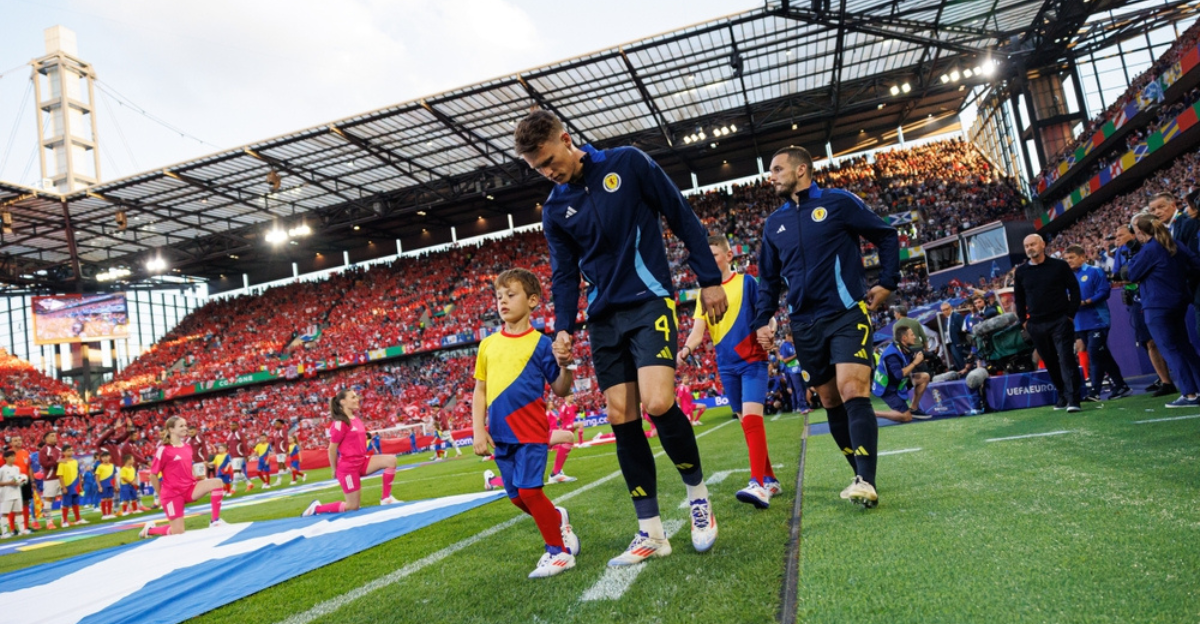
According to The Independent, Scotland has ended a 28-year absence from the World Cup, securing a place at the 2026 finals in North America under manager Steve Clarke. This qualification marks Clarke’s third major tournament in just six years at the helm, a remarkable turnaround for a nation that went two decades without reaching a global stage.
The decisive moment came on Tuesday evening, 18 November, as Scotland overcame Denmark with a thrilling 4-2 victory in a play-off. The match saw a flurry of spectacular goals, including Kenny McLean’s audacious 50-yard strike. Lawrence Shankland, Scott McTominay (with an overhead kick), and Kieran Tierney (a long-range curler) also found the net, propelling the Tartan Army into their ninth World Cup.
Clarke’s historic impact and a challenging group
Steve Clarke is rapidly building a strong case to be considered Scotland’s most successful manager. No other coach has guided the national team to three major tournaments, a testament to his ability to reverse a long period of decline. The Scottish Football Association (SFA) has recognized his achievements, awarding him a new four-year contract.
Despite the euphoria of qualification, Scotland faces a formidable challenge in the group stage. They are set to meet perennial contenders Brazil in Miami, a fixture that will mark the fifth encounter between the two nations. Their pool also includes 2022 semi-finalists Morocco, setting up a demanding path to the knockout rounds. Scotland’s best chance of progression may lie in qualifying as one of the better third-placed finishers, with a crucial match against Haiti also on the horizon.
Read also: Eddie Hall names final opponent before retirement and it's not Tommy Fury
Historically, Scotland has found the World Cup a tough nut to crack. Their previous eight appearances have yielded just four victories:
- Zaire (1974)
- Netherlands (1978)
- New Zealand (1982)
- Sweden (1990)
Notably, the 1978 victory against the Netherlands saw Archie Gemmill’s memorable strike, even though the Dutch went on to reach the final. In 1982, a David Narey thunderbolt against Brazil was not enough to prevent a 4-1 loss, leading to Scotland’s exit on goal difference. Their only point against Brazil came from a stalemate in 1974, while Morocco delivered a 3-0 defeat in 1998.
Ending a three-decade winless streak
The immediate goal for Clarke’s squad will be to end a frustrating 30-year winless streak in major tournaments. Scotland’s last victory on the big stage was a 1-0 triumph over Switzerland at Euro 96, secured by Ally McCoist. Their recent outings in Euro 2020 and 2024 saw them collect just one point in each tournament, with Callum McGregor and Scott McTominay scoring their only goals respectively.
The current squad blends seasoned experience with emerging talent. Captain Andy Robertson, the Europa League-winning skipper for Aston Villa, and deputy John McGinn are both in their thirties, likely making this their final World Cup appearance. Scott McTominay, the Napoli Scudetto MVP, remains a key figure. The team also features youthful call-ups like 19-year-old Findlay Curtis and Tyler Fletcher, who has just 17 minutes of league football under his belt. At 43, Craig Gordon, born six months after Narey’s famous goal against Brazil, is the oldest player and has lived through three previous Scotland World Cup campaigns.
Read also: "We Were Surprised": Red Bull left speechless by FIA's stunning engine judgment
For the passionate Tartan Army, qualification is a moment to savour. As one fan expressed to BBC Breakfast after the Denmark win, comparing it to monumental life events: “The birth of my children, the birth of my grandchildren and tonight… ’cause we’ve not been there for a long time.” Having topped Group C with 13 points in qualification, the focus now shifts to making a lasting impact in the Americas and finally breaking that three-decade-long winless run.
Sources: www.independent.co.uk, independent.co.uk
Read also: Jose Mourinho returns to Real Madrid for a controversial second spell