Three peaks recorded during the final
Spain’s World Cup victory over Argentina generated more than noise and emotion. Seismic instruments across the country recorded ground vibrations as supporters celebrated the decisive moments of the final.
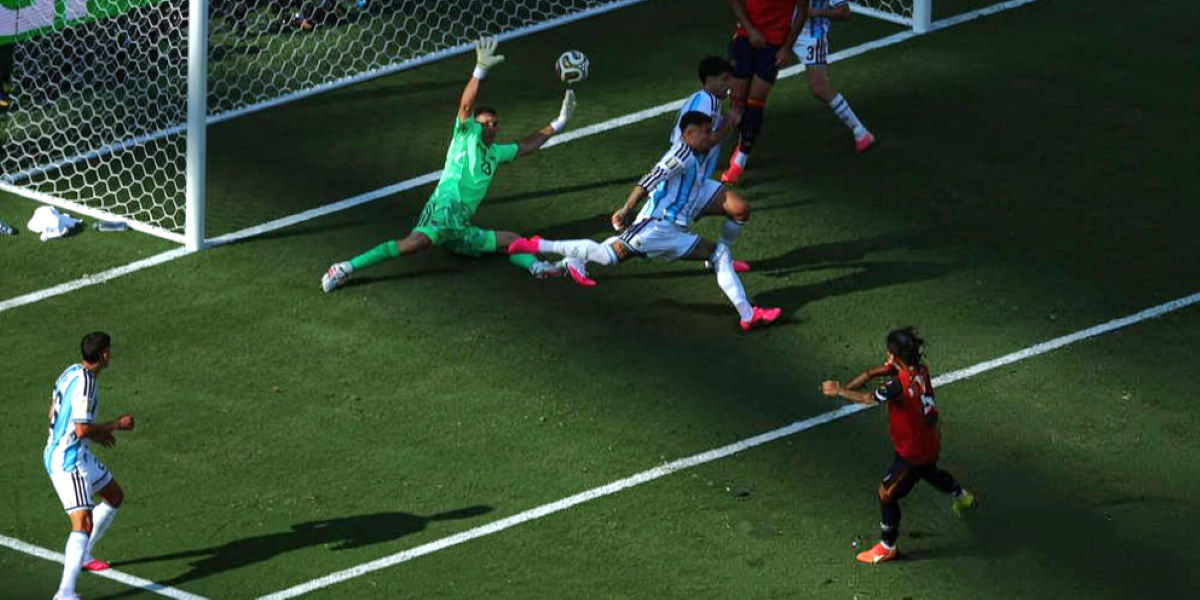
Spain won 1–0 after extra time, with Ferran Torres scoring the only goal in the 106th minute. According to FIFA’s official match report, the victory secured the country’s second men’s World Cup title, 16 years after its first.
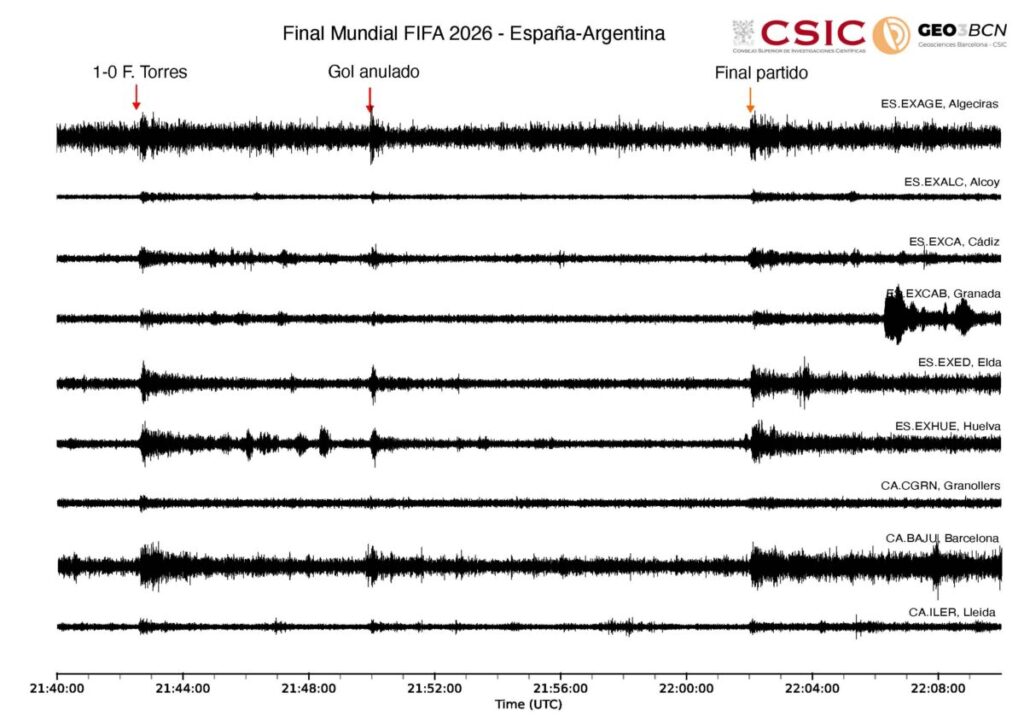
Researchers identified three distinct peaks in seismic activity during the match:
- The celebrations after Torres’ winning goal.
- The reaction to a later goal that was subsequently disallowed by VAR.
- The final whistle, which produced the strongest signal of the night.
According to Digi24’s report on the findings, unusual signals were detected in cities including Algeciras, Barcelona, Cádiz and Granada.
Read also: Messi admitted he targeted one World Cup rival on purpose
Signals detected across Spain
The data came from instruments operated by Spain’s National Geographic Institute and the Cartographic and Geological Institute of Catalonia, together with the educational seismic network run by Geosciences Barcelona.
As described in Cadena SER’s detailed account, researcher Jordi Díaz processed readings from stations in Algeciras, Alcoy, Cádiz, Granada, Elda, Huelva, Granollers, Barcelona and Lleida.
Further signals were detected by educational sensors in several Catalan locations, including Sabadell, Mollet del Vallès, Santa Coloma de Gramenet, Banyoles, Olot and Torroella de Montgrí.
The recordings did not represent a single earthquake travelling across Spain. Instead, instruments in different areas picked up local ground movements produced by supporters celebrating at the same time.
Read also: Cristiano Ronaldo crisis forces Portugal chief into emergency action
Human activity caused the vibrations
Scientists classify the phenomenon as induced seismicity, meaning ground movement generated by human activity rather than natural tectonic processes.
Thousands of people jumping, stamping and moving simultaneously in public squares, homes and neighbourhoods created vibrations sensitive instruments could detect. The signals were generally too weak to be noticed in everyday life and should not be confused with a conventional earthquake.
According to Geosciences Barcelona’s official summary, the instruments captured the precise moment Torres’ extra-time goal triggered celebrations around the country.
Significantly, the signals came from the places where supporters were watching rather than from the stadium in New Jersey, where the final was played.
Read also: Harry Kane breaks silence on Man City verdict
Football has shaken Spain before
Similar patterns have been recorded during previous Spain matches. Sensors detected ground movement during the 2026 semi-final against France and the round-of-16 victory over Portugal.
The same phenomenon was observed during the Euro 2024 final against England. Celebrations following goals from Nico Williams and Mikel Oyarzabal produced measurable vibrations near large gatherings in Madrid and Barcelona.
The latest readings offer a scientific record of Spain’s World Cup celebrations: thousands of separate reactions, occurring at almost the same moment, strong enough to leave a measurable mark beneath several cities.
Read also: Phil Taylor comes out of retirement for stunning darts return