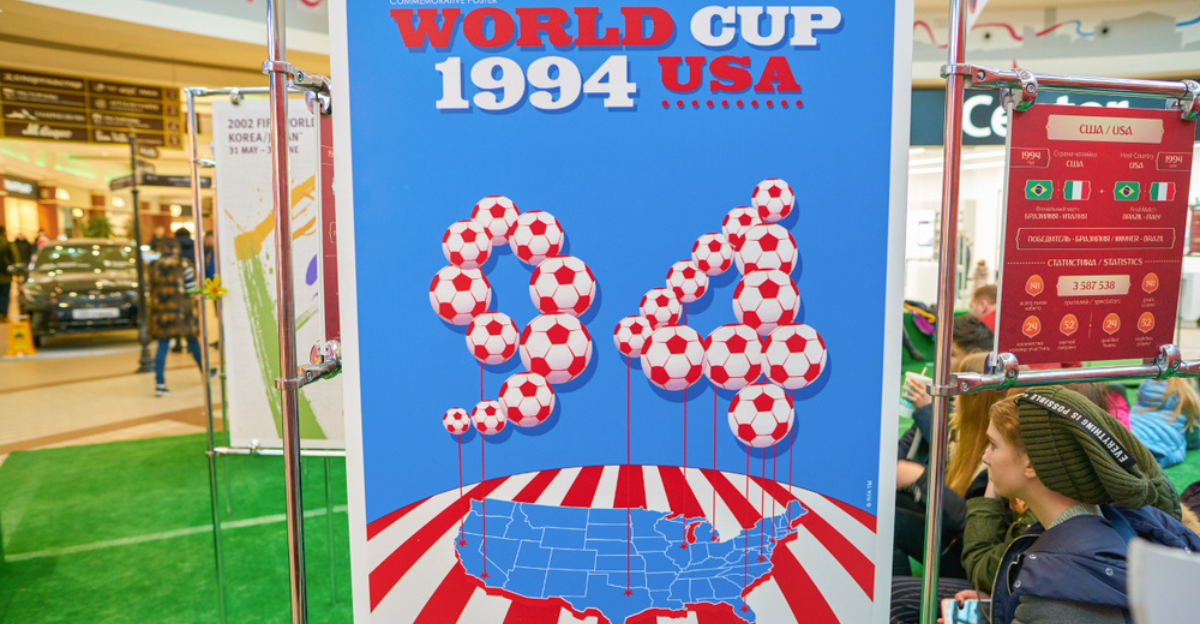
Thirty years ago, the FIFA World Cup landed in the United States, a nation where professional football had largely faltered, with the North American Soccer League (NASL) having collapsed nine years prior. US Soccer, once described as a “mom and pop” volunteer-run organisation operating from a trailer, was tasked with hosting the globe’s biggest sporting event.
FIFA’s decision to award the tournament to the USA came with a significant condition: the host nation had to establish a new professional football league. This mandate, coupled with the vision of former US Soccer president and World Cup Organising Committee chairman Alan Rothenberg, set the stage for a transformative period for the sport.
A new league takes root
The legacy of the 1994 World Cup is perhaps most evident in the birth and subsequent growth of Major League Soccer (MLS). Launched two years after the tournament, MLS saw its first goal scored by Eric Wynalda in April 1996 for San Jose Clash against DC United. What began as a nascent league now boasts 30 teams across North America, a testament to the World Cup’s catalytic effect.
The tournament itself proved to be an unprecedented success, delivering record crowd numbers and substantial profits. Over 3.6 million fans attended the 52 matches, generating more goals per game than the 1990 World Cup. “We didn’t think there was much knowledge or interest in the World Cup in the US,” Alan Rothenberg told BBC Sport. “What we did know is Americans love a big event, so we wrapped ourselves around celebrities and entertainers. We did a lot of things that had never been done before. And it worked.” The tournament was famously infused with Hollywood glamour, featuring stars like Stevie Wonder and Robin Williams.
Read also: Arsenal’s €70m price tag stalls AC Milan pursuit of Gyökeres
Drama on the pitch
Beyond the organisational triumph, the 1994 World Cup delivered unforgettable drama. The USA national team, having qualified for their first World Cup in 40 years in 1990 (where they lost every game), made it out of their group before facing eventual champions Brazil in the last-16 on July 4th, losing 1-0.
The tournament was also marked by controversy and tragedy. Diego Maradona scored against Greece in Argentina’s opening match, but his World Cup ended abruptly when urine samples showed traces of banned substances, leading to his ban before Argentina’s final group game. Colombia, touted as potential winners by figures like Pelé and Johan Cruyff, entered the tournament under a cloud of death threats to their coach over team selection. Their campaign took a tragic turn when defender Andres Escobar scored an own goal against the USA. Ten days later, Escobar was shot dead.
Amidst the turmoil, individual brilliance shone through. Hristo Stoichkov carried Bulgaria to the semi-finals with six goals, sharing the Golden Boot with Russia’s Oleg Salenko. Gheorghe Hagi led Romania to the quarter-finals, providing a source of national pride for a country emerging from political turmoil. For Italy, Roberto Baggio inspired his team in the knockouts, scoring crucial goals against Nigeria, Spain, and Bulgaria. Gianluca Pagliuca, Italy’s goalkeeper, described Baggio’s impact: “From the round of 16 onwards he exploded and carried us all the way to the final. He scored incredibly important goals.”
The final, held at the Rose Bowl in Pasadena, saw Brazil and Italy battle to a goalless draw, ultimately decided by a penalty shootout. Brazil claimed their fourth World Cup title after Roberto Baggio missed the decisive penalty for Italy. Brazil boss Carlos Alberto Parreira, responding to critics of his team’s cautious style, famously remarked, “Like Frank Sinatra in that song, I did it my way.”
Read also: Abu Dhabi United Group financed them for years
The 1994 World Cup was more than just a football tournament; it was a pivotal moment that proved the sport’s commercial viability in the United States and laid the groundwork for MLS, fundamentally altering the landscape of soccer in North America and beyond.
Sources: www.bbc.com, www.bbc.co.uk, www.bbc.co.uk
Read also: Dana White on ownership of new Las Vegas NBA Team: “YES”