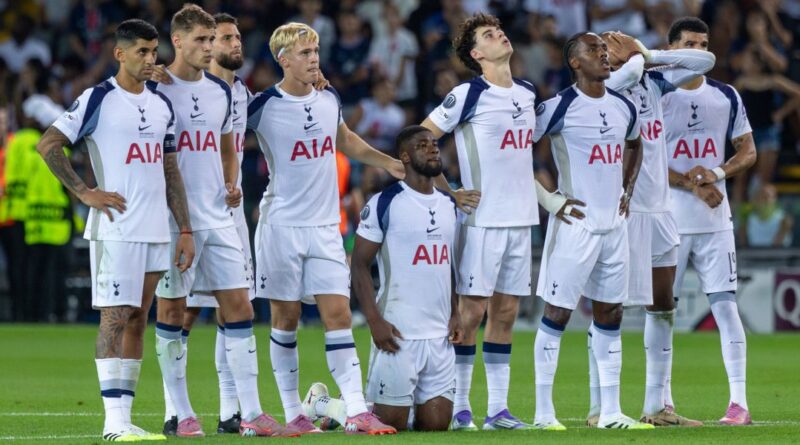
Relegation is no longer unthinkable for Tottenham
Tottenham’s position in the Premier League table is beginning to demand uncomfortable conversations.
After 28 matches, Spurs sit four points above the relegation zone. Since a victory over Everton in October, they have taken 12 points from a possible 57. That sequence two wins in 19 games is not mid-table inconsistency. It is bottom-three form.
The anxiety around the club has grown to match the numbers.
A manager’s frustration surfaces
Following a 4-1 home defeat to Arsenal in the North London derby, Igor Tudor attempted to frame the setback as instructive. According to The Guardian, he suggested the loss could serve as a corrective a moment that clarified what competing at the highest level requires.
Read also: Which F1 stars were worth the money?
After the 2-1 defeat at Fulham a week later, his tone shifted. Tudor described “big problems,” questioned the side’s attacking quality and criticised the midfield’s ability to cover ground. He also said the defence was not prepared to “suffer” to protect a lead and argued Fulham showed greater “brain” in key phases of the match.
Managers often challenge players publicly to provoke a reaction. But Tudor’s remarks carried an edge that suggested deeper concern. He has previously earned a reputation for stabilising teams in difficult situations. This time, the scale of the task appears heavier.
Familiar echoes
The Guardian noted parallels with Antonio Conte’s extraordinary press conference in March 2023, when he turned his frustration toward both squad and ownership.
“Tottenham’s story is this. Twenty years there is the owner and they never won something, but why?” Conte said. He later added: “And I see only 11 players that play for themselves.”
Read also: Klopp under pressure at Red Bull, as exit talk grows
Conte left the club eight days later by mutual consent.
The comparison is not exact circumstances differ but the dynamic is recognizable. When criticism moves from tactics to mentality, it can either sharpen focus or fracture trust.
Injuries and something more
Tottenham’s injury list has been extensive, with multiple first-team absences in recent weeks alongside Cristian Romero’s suspension. Disruption has been constant, and cohesion has suffered.
Yet injuries alone rarely explain a slide that stretches across two seasons.
Read also: Donald Trump honors men’s hockey team, women’s absence raises questions
Recruitment has lacked continuity as managerial styles have changed. Players signed for one tactical approach have been repurposed for another. The result is a squad that feels assembled in phases rather than designed as a whole promising in parts, but inconsistent in execution.
Financial strategy also shapes the picture. Tottenham’s wage-to-revenue ratio has been among the lower tiers of the league’s established elite, a model that prioritises sustainability but narrows margin for error when performances dip.
Meanwhile, the league beneath them has strengthened. Promoted sides are better prepared. Mid-table clubs are better coached. The gap that once insulated established powers has shrunk.
The stakes
For most of the Premier League era, relegation has seemed implausible for a club with Tottenham’s infrastructure, commercial reach and stadium revenues. They were among the founding members of the competition in 1992 and have regularly operated with Champions League ambitions.
Read also: Gulf war put Tom Brady’s Saudi showdown in jeopardy
But the table does not recognise history.
Relegation would mean a steep fall in broadcast income, renegotiated sponsorship exposure and the uncertainty of rebuilding outside the top flight. More than the financial hit, it would represent a structural failure in a league designed to reward scale and resources.
Ten matches remain. Survival is still in Tottenham’s hands.
What no longer feels certain is how stable those hands are.
Read also: Lamine Yamal’s historic treble lifts Barcelona
Sources: The Guardian