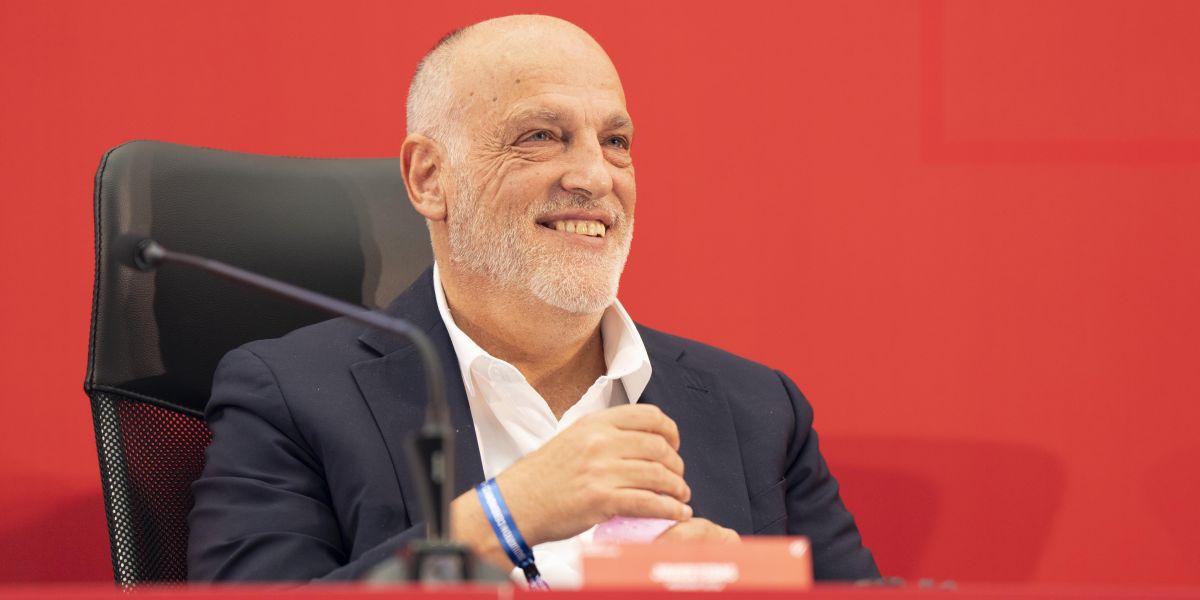
Javier Tebas has reopened his bitter feud with Gianni Infantino after describing the FIFA president’s extraordinary World Cup statement as “pathetic”.
Infantino published a lengthy message following the conclusion of the 2026 tournament, praising its atmosphere, safety and global reach while accusing some journalists and commentators of focusing on controversy rather than football.
The FIFA president argued that his opponents had been “consumed by hate and criticism” and had overlooked the happiness created by the competition. Tebas responded by questioning both the tone and timing of the statement.
Infantino tells critics to pray or watch football
Infantino’s message was released through his personal social media account and FIFA’s official platforms before also being published in full on the governing body’s website.
Read also: Roy Keane goes nuclear on Man City after 114 guilty findings
According to FIFA’s official version of the statement, Infantino told those directing their anger towards the organisation to “reflect, meditate, pray, or watch a football match”.
He presented the World Cup as a celebration of unity and claimed that FIFA had delivered the leading sporting spectacle in the world while others remained behind their screens spreading false information.
Infantino also defended FIFA’s handling of several issues that had overshadowed the tournament, including visa restrictions, refereeing controversies and disciplinary decisions.
As Sky News described in its report on the message, the FIFA president said some commentators had missed the tournament’s joy because they were too occupied by negativity.
Read also: Here is Foden’s Man City exit route
Tebas labels the message ‘pathetic’
Tebas responded publicly and made clear that he regarded Infantino’s argument as an attempt to weaken those demanding explanations from football’s governing body.
Quoted by GOAL in its report on the escalating dispute, the LaLiga president wrote:
“Today, Gianni Infantino wrote a pathetic message on his Instagram account and on FIFA’s account.”
Tebas accepted that football could create emotion and bring people together, but argued that those qualities did not remove FIFA’s responsibility to act transparently and explain controversial decisions.
Read also: Rodri breaks silence on Man City verdict with remarkable 2020 comparison
He said strong organisations should respond directly to difficult questions rather than attempting to undermine those asking them.
The Spanish official then challenged Infantino over the timing of the statement, questioning why the FIFA president had suddenly adopted such a defensive position and whether an undisclosed issue had prompted the intervention.
World Cup controversies remain at centre of feud
Infantino’s message followed a tournament that was commercially successful and widely praised for its football, but also produced several disputes away from the pitch.
Among the most controversial cases was FIFA’s decision to suspend the automatic one-match ban given to United States forward Folarin Balogun following his red card against Bosnia and Herzegovina.
Read also: The wheelchair champion beat the sub-two-hour man, and London Marathon has its 2027 schedule
US President Donald Trump publicly revealed that he had discussed the case with Infantino before Balogun was cleared to play against Belgium. FIFA maintained that the decision had been taken independently by its disciplinary committee.
Supporters and officials from several countries also encountered visa problems, while ticket prices, mandatory hydration breaks and a number of refereeing decisions generated further debate.
According to Reuters’ account published by Channel News Asia, Infantino argued that isolated problems should not be allowed to overshadow the millions of supporters who attended the tournament successfully.
A long-running battle over football’s future
The exchange is the latest confrontation between two of the most powerful and outspoken executives in world football.
Read also: Kimi Antonelli issues warning to George Russell with Mercedes vow
Tebas has repeatedly criticised FIFA’s expansion of international competitions, its governance structure and its plans to consider increasing the 2030 World Cup from 48 to 64 teams.
He has accused FIFA of weakening domestic leagues by creating more matches and placing additional demands on clubs and players. Infantino has argued that larger global competitions create opportunities for more countries and generate revenue that can be invested throughout world football.
The disagreement has therefore developed into something larger than a personal clash. It reflects a continuing battle over who controls the sport’s calendar, commercial income and future direction.
Tebas asks the question Infantino did not answer
Infantino wanted his message to be remembered as a celebration of football and a rejection of hostility surrounding the World Cup.
Tebas interpreted it differently. To the LaLiga president, the statement appeared to replace answers with accusations and portray reasonable concerns as personal attacks.
His response has now ensured that the focus remains on the very issues Infantino wanted to move beyond.
The FIFA president urged his opponents to pray, meditate or watch football. Tebas’s reply was far more direct: why has one of the most powerful figures in sport suddenly become so defensive?