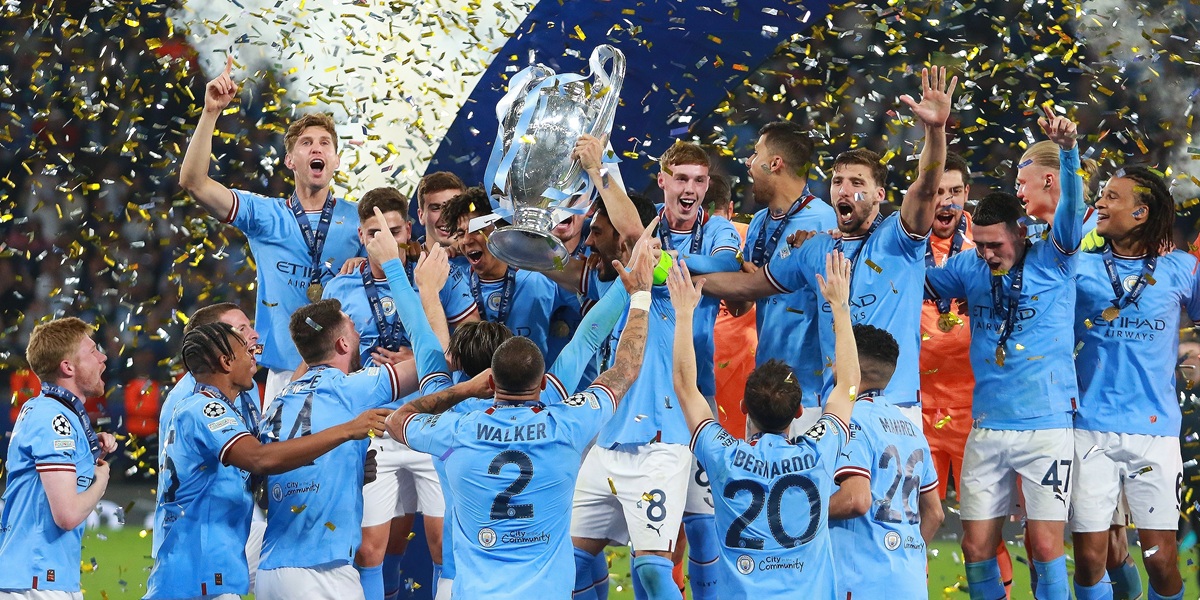
Between 2009 and 2018, Manchester City reported £949.94m in commercial income from its Abu Dhabi sponsors. Only £119.25m of it actually came from those sponsors. The remaining £830.69m was paid in by Abu Dhabi United Group (ADUG), the ownership vehicle of Sheikh Mansour, and funneled through accounts dressed up to look like sponsorship revenue.
That gap sits at the center of the ruling the independent commission handed down on 29 September, after a case heard across 42 days with evidence from 27 witnesses. The commission’s finding on the club’s defense was blunt: the story Manchester City had told was “concocted well after the event in an attempt to obscure and conceal the realities of the disguised funding scheme.”
CEO Ferran Soriano had told the opposite story to his staff. In a message to employees after the ruling, he insisted that “irrefutable evidence has been provided to the Premier League commission that shows it could not happen and that it did not happen”, bank statements, wire transfers, witness testimony. The club’s formal statement repeated the line, calling itself innocent and claiming “a comprehensive body of irrefutable evidence exists in support of all of its positions.”
The 2013 Chumillas email
The commission had already seen a document that undercut the sponsorship story at its source: a 2013 email from Manchester City’s then chief financial officer Jorge Chumillas to Simon Pearce.
Read also: Tottenham have already identified Roberto De Zerbi replacement
“I need to understand the mechanism by which additional sponsorship flows through ADUG. Is it ADUG Shareholder->ADUG->Etihad->MCFC?” Chumillas wrote.
The question mapped the exact route the money took, from the owner’s shareholder, through ADUG, through the Etihad sponsorship and into the club. The commission read it as internal confirmation of what Manchester City publicly denied for the next decade.
The Fordham Arrangement
Running alongside the main sponsorships was a separate structure the commission labeled the Fordham Arrangement. It described the setup as “little more than a front for ADUG” and “a further device by which ADUG funds could be paid into the club in a manner that concealed their true origin.”
Through Fordham alone, Manchester City overstated income by £24.5m and understated expenses by £49.414m. A further three remuneration agreements kept off the books accounted for nearly £17m.
Read also: Joan Laporta tried to make major Barcelona move – he was stopped mid-sentence
Taken together, the commission concluded that the club’s accounts for 2009/10 through 2017/18 “did not show a true and fair view” of its financial position.
‘Knowingly untrue evidence’
The witness findings were the hardest part of the ruling. Of the 27 people who appeared across 42 days of hearings, the panel wrote that “some witnesses on behalf of the club gave false evidence, while other City witnesses were found by the commission to give knowingly untrue evidence and so had been dishonest.”
The commission did not name those witnesses in the public summary. The finding sits in the record and will frame everything that follows, because the same evidence base goes to the appeal.
The appeal filing is due today
Manchester City must file its appeal by Friday, 2 October 2026, under section W of Premier League rules. A new three-person commission will hear it. In its response to the verdict, the club said it was “disappointed and surprised” by the opinion and that the ruling contains “clear material errors, of law, principle and fact, and is unsafe.”
Read also: Caitlin Clark had just two words after seeing the numbers from Fever’s playoff loss
The sanctions hearing is a separate process, timing still to be set, with the Premier League pressing for it to conclude this season. On the current rulebook, the penalty range runs from a fine to a points deduction to expulsion.
Read also: Max Verstappen asked how he prepared for Malaysia heat – his answer left the room laughing