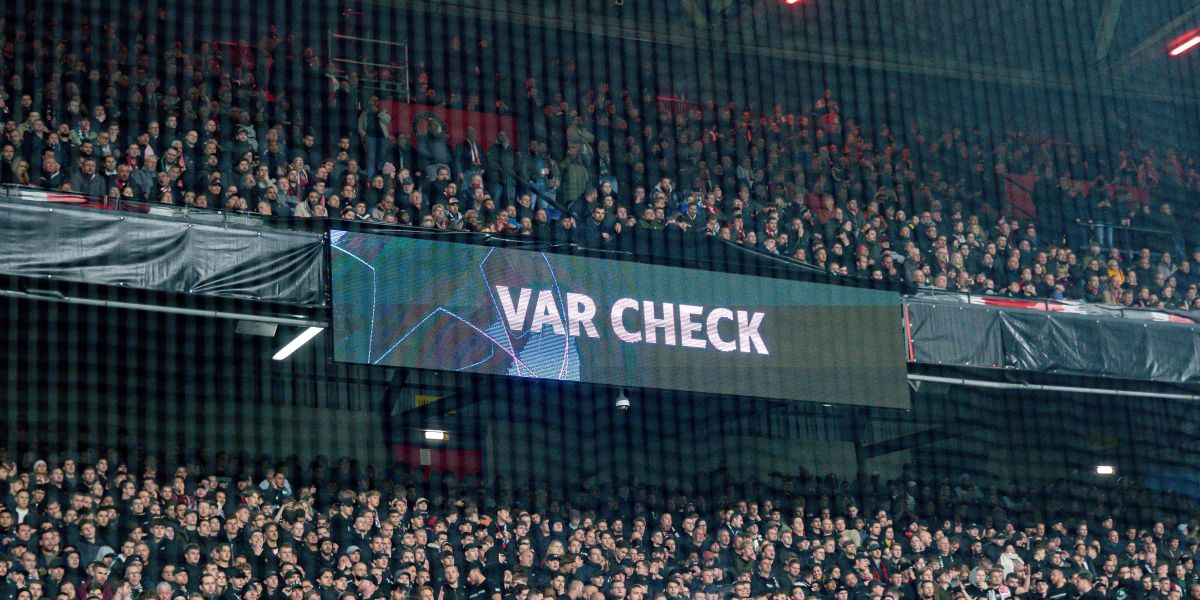
According to The Guardian, the controversy surrounding VAR reached a new peak recently, highlighted by a prolonged review during Sunday afternoon’s match at West Ham. The incident, which saw an Arsenal goal disallowed due to Pablo’s foul on David Raya, brought into sharp focus the technology’s impact on the flow of the game and the patience of fans.
During the review, VAR official Darren England instructed referee Chris Kavanagh to “Just keep delaying,” as the process unfolded. A staggering 2 minutes and 35 seconds (155 seconds) elapsed from the moment the ball crossed the Arsenal goalline until England finally sent Kavanagh to the replay screen. There, Kavanagh meticulously watched 17 replays of the incident, a testament to the intricate, often lengthy, nature of VAR checks.
Fans reject VAR, but its reach grows
Despite such lengthy interruptions and the constant stream of debate, official bodies appear committed to expanding VAR’s remit. This comes in stark contrast to public opinion. A recent survey by the Football Supporters’ Association revealed overwhelming dissatisfaction among Premier League fans:
- 76% of Premier League fans want VAR scrapped entirely.
- Only 3% believe VAR has genuinely improved the sport.
The English Football League (EFL) notably operates without VAR, a point often cited by those advocating for its removal from the top flight. Yet, at the upcoming World Cup, VAR is set to be extended even further, encompassing reviews for second yellow cards and corner kicks. While the Premier League is expected to opt out of using VAR for corner kicks, the global trend points towards greater technological intervention.
Read also: Sacked Spurs boss' Thomas Frank and Ange Postecoglou lands BBC World Cup role
The commercial engine of debate
The paradox of VAR’s expansion amidst widespread fan discontent can be understood through its commercial appeal. The technology, despite its detractors, generates a constant stream of outrage, debate, and engagement, effectively becoming its own spectacle. This “spume and passion” translates into “sweet secondary content,” fuelling television debates, newspaper columns, and online discussions, all of which hold significant commercial value for broadcasters and media outlets.
Howard Webb, chief of Professional Game Match Officials (PGMOL), offered a defence of the process on the Match Officials Mic’d Up platform. “It takes a bit of time because they’re going through a process diligently. Because they really respect the game,” Webb stated, suggesting that thoroughness necessitates the delays. However, critics argue that this diligence often disfigures the game, making definitions of handball, acceptable contact in the penalty area, and offside increasingly unclear. The traditional art of refereeing, which involves judging the ebb and flow and managing the mood of players and crowd, is often lost in the silent, clinical environment of Stockley Park.
Ultimately, VAR represents a significant shift in football’s landscape. While it aims for objective justice, its implementation often alienates the very fans who drive the sport, yet its capacity to generate endless discussion and engagement ensures its continued, and even expanding, presence.
Sources: www.theguardian.com
Read also: LeBron James weighs future after Lakers' early playoff exit
Read also: Mourinho’s explosive Real Madrid comeback: Can he fix a broken giant?