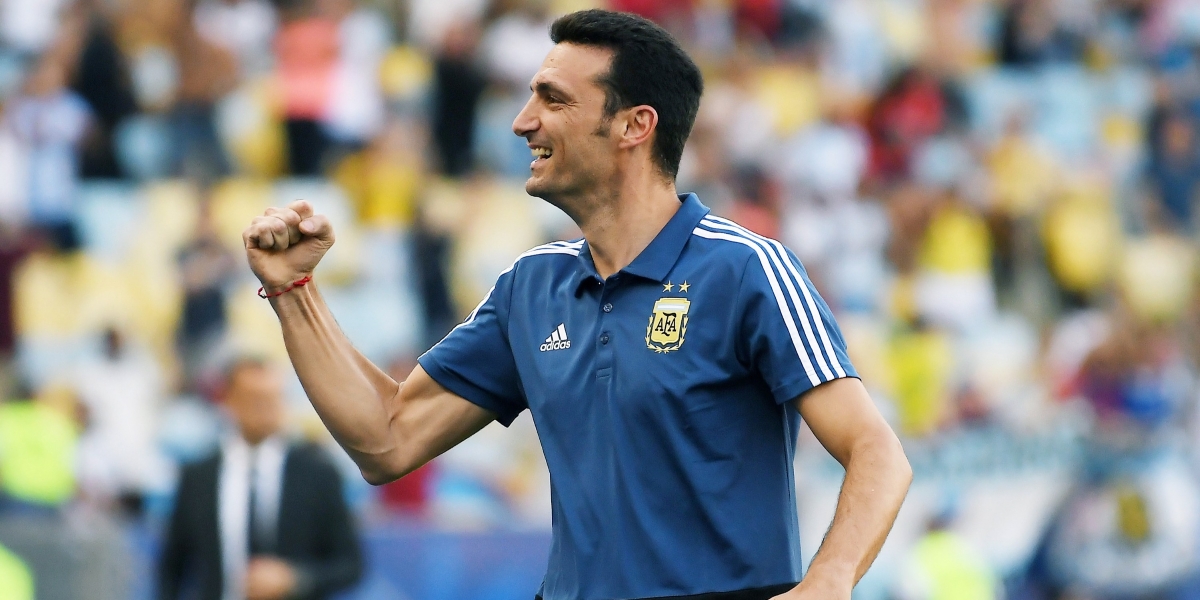
When Lionel Scaloni first called Lionel Messi after the 2018 World Cup, the answer was not the one Argentina needed.
Messi had stepped away from the national team after another painful tournament, and Argentina looked short of direction. Jorge Sampaoli had gone, the squad was unsettled, and Scaloni, then a caretaker coach with no senior managerial record, was handed the job on a temporary basis.
Few saw him as the man to rebuild one of football’s great national teams. In Argentina, the appointment was widely questioned. According to TV 2 Sport, commentator Jonas Schwartz captured the mood by describing the situation as a national embarrassment.
A doubtful beginning
Scaloni’s first task was also his most important: to bring Messi back.
Read also: Thomas Partey cleared to face England as major World Cup controversy erupts
The first attempt failed. Messi was not ready. After years of near misses, public criticism and internal disorder, the captain had little reason to believe Argentina had changed.
But Scaloni was given more time. In November 2018, his temporary spell was extended until the 2019 Copa América in Brazil. With a little more authority behind him, he called Messi again.
This time, the answer changed.
Messi returned, and Argentina finished third at the 2019 Copa América. It was not a trophy, and it did not silence every critic. But it gave the team something it had badly needed: a beginning.
Read also: Egypt and Spain take control as World Cup groups tighten
The method behind the recovery
Scaloni’s success has often been explained through tactics, but his real breakthrough was cultural. He built a team that felt lighter, closer and less burdened by the failures that had come before.
That approach is explored in the documentary “El Método Scaloni”, where the coach reflects on the importance of relationships inside a squad. His idea was simple: footballers give more for teammates they trust, understand and genuinely care about.
It was a major change for Argentina. Previous teams had carried huge talent but also tension, pressure and noise. Scaloni’s Argentina became calmer. The dressing room grew tighter. The hierarchy became clearer. Messi was no longer asked to rescue a broken structure; he was placed at the centre of one that worked.
Messi as leader, not saviour
That distinction mattered. For years, Argentina had treated Messi as both solution and shield. When the team failed, the weight often fell on him. Under Scaloni, the burden was shared.
Read also: US Open golf 2026 payouts: Every player's earnings
Players such as Rodrigo De Paul, Ángel Di María, Leandro Paredes, Emiliano Martínez and Nicolás Otamendi helped form a group built around Messi, but not entirely dependent on him. The captain remained the defining figure, yet the team finally had the emotional balance and tactical structure to support him.
The results followed. Argentina won the Copa América in 2021, beating Brazil at the Maracanã. They then won the 2022 Finalissima against Italy and lifted the World Cup in Qatar later that year. In 2024, they added another Copa América title.
From stopgap to symbol
Scaloni’s rise remains one of the more unlikely coaching stories in modern international football. He began as a stopgap after a failed World Cup. He was doubted, mocked and treated by many as an uninspired appointment.
But he understood something Argentina had been missing. The national team did not only need a system. It needed peace.
Read also: Boston Mayor Michelle Wu: "Boston is clearly the best host city for the World Cup right now"
By convincing Messi to return and giving him a team that felt united rather than fragile, Scaloni changed the course of Argentina’s modern football history. What began with rejection became a partnership that brought the country its greatest era since Diego Maradona.
The first phone call ended with a no. The second helped change everything.
Read also: Schlotterbeck blow leaves Germany counting the cost of World Cup win