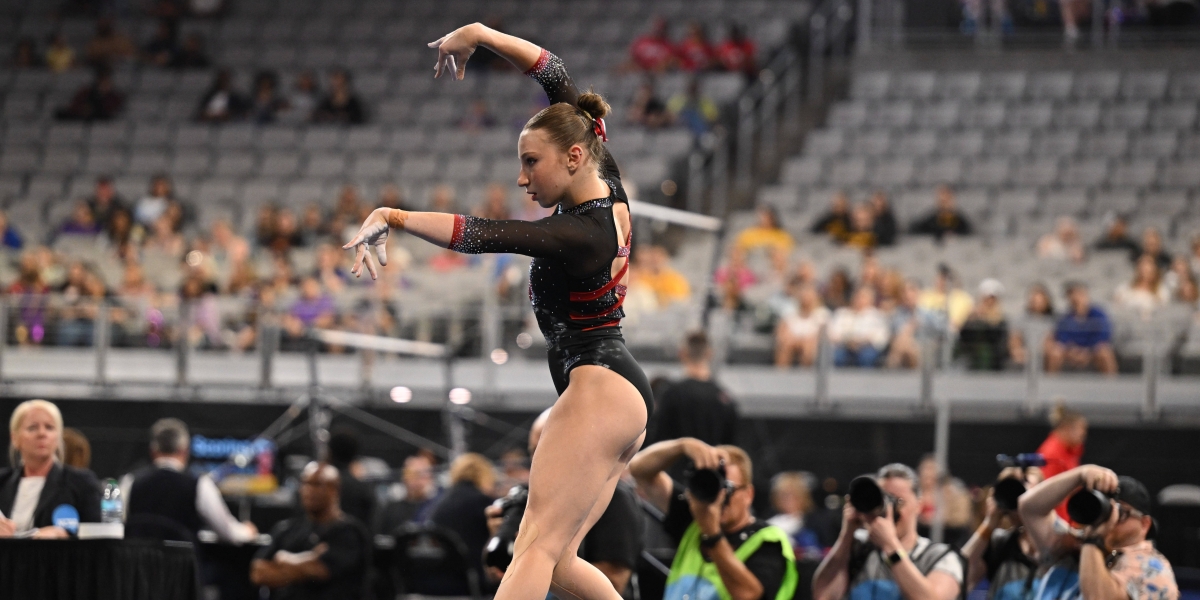
Romania’s Social Democratic Party has called on the government to urgently fund the renewed legal battle over Ana Maria Bărbosu’s Olympic bronze medal.
The dispute surrounding the women’s floor final at the 2024 Paris Olympics was reopened after the Swiss Federal Tribunal set aside the original ruling from the Court of Arbitration for Sport and sent the case back for reconsideration.
The decision means Bărbosu’s position as the official bronze medallist is once again legally uncertain, almost two years after one of the most controversial gymnastics finals in Olympic history.
The Romanian Olympic and Sports Committee has already said it will support the international legal action pursued by the Romanian Gymnastics Federation.
Read also: Cristiano Ronaldo crisis forces Portugal chief into emergency action
PSD demands immediate government support
According to Digi24’s report on the political intervention, the PSD accused the government of failing to provide the money required to defend Bărbosu’s position before CAS.
“The Romanian state must urgently pay the legal costs required to defend Ana Maria Bărbosu’s medal in the dispute with the United States at the Court of Arbitration for Sport in Lausanne,” the party said.
“When a state gives up defending its national values for the sake of petty budget savings, it can no longer be described as reform. It is anti-reform.”
The party said the dispute extended beyond the interests of one athlete and had become a matter of national importance.
Read also: Harry Kane breaks silence on Man City verdict
“This is about much more than correcting an injustice suffered by a Romanian athlete who worked enormously to perform at the highest level,” the statement continued.
“Our national pride, fulfilled by Ana Maria Bărbosu’s success in Paris, is at stake. In matters such as this, there can be no bargaining as if we were at a market.”
How the Olympic controversy began
Bărbosu initially appeared to have won bronze in the floor final on August 5, 2024, after receiving a score of 13.700.
She was placed ahead of Romanian teammate Sabrina Maneca-Voinea, who received the same score but lost the tie-break. Jordan Chiles was provisionally fifth with 13.666.
Read also: Phil Taylor comes out of retirement for stunning darts return
Chiles’ coach, Cecile Landi, then submitted an inquiry regarding the difficulty value awarded for a tour jeté full element.
The inquiry was accepted and Chiles’ score increased to 13.766, moving the American into third place ahead of Bărbosu and Maneca-Voinea.
The Romanian Gymnastics Federation subsequently appealed to CAS, arguing that the inquiry had been submitted four seconds beyond the one-minute deadline available to the final gymnast in the competition.
In its official ruling from August 2024, CAS accepted that argument and restored Chiles’ original score of 13.666.
Read also: ‘If you lie to me, I will leave’: Guardiola’s City warning takes on new weight
The International Gymnastics Federation then placed Bărbosu third, Maneca-Voinea fourth and Chiles fifth.
Bronze medal presented in Bucharest
Bărbosu received a bronze medal during a ceremony in Bucharest on August 16, 2024.
The medal was not the same physical medal originally presented to Chiles during the Olympic ceremony in Paris.
The result represented Romania’s first Olympic medal in artistic gymnastics for 12 years.
Read also: Harry Kane’s Bayern future suddenly comes with a Tottenham escape route
The Romanian parties also indicated during the CAS process that they would support awarding bronze medals to all three gymnasts. However, CAS said it did not have the authority to order that outcome.
Both Chiles and USA Gymnastics later challenged the ruling before the Swiss Federal Tribunal. Maneca-Voinea also filed a separate challenge relating to the deduction applied to her score.
Swiss court sends case back to CAS
On January 29, 2026, the Swiss Federal Tribunal accepted the American request to reopen the Chiles case and returned it to CAS.
The court reportedly identified serious procedural and communication problems in the original arbitration process, particularly regarding the American side’s opportunity to provide evidence.
According to Digi24’s account of the Swiss ruling, the original CAS decision no longer has legal effect while the matter is reconsidered.
The American parties are expected to rely on video material that they say shows Landi made the inquiry within the permitted time.
CAS must now assess that evidence before issuing a new decision.
The Swiss court rejected Maneca-Voinea’s separate attempt to reopen her case.
Separate anti-doping case remains pending
Bărbosu is also involved in an unrelated anti-doping procedure.
The International Testing Agency announced that she had been charged with an anti-doping rule violation after recording three whereabouts failures within a 12-month period.
Athletes in a registered testing pool must provide accurate location information and specify a daily 60-minute period during which they are available for unannounced testing.
Three missed tests or filing failures within 12 months can constitute an anti-doping rule violation.
The ITA imposed a provisional suspension while the case is considered by the CAS Anti-Doping Division, where Bărbosu will be able to present evidence and explanations relating to each alleged failure.
The charge does not involve a positive test for a prohibited substance, and no final judgment has yet been issued.
That case is entirely separate from the Olympic medal dispute, which will return to CAS as Romanian sporting authorities decide how to finance the renewed proceedings.