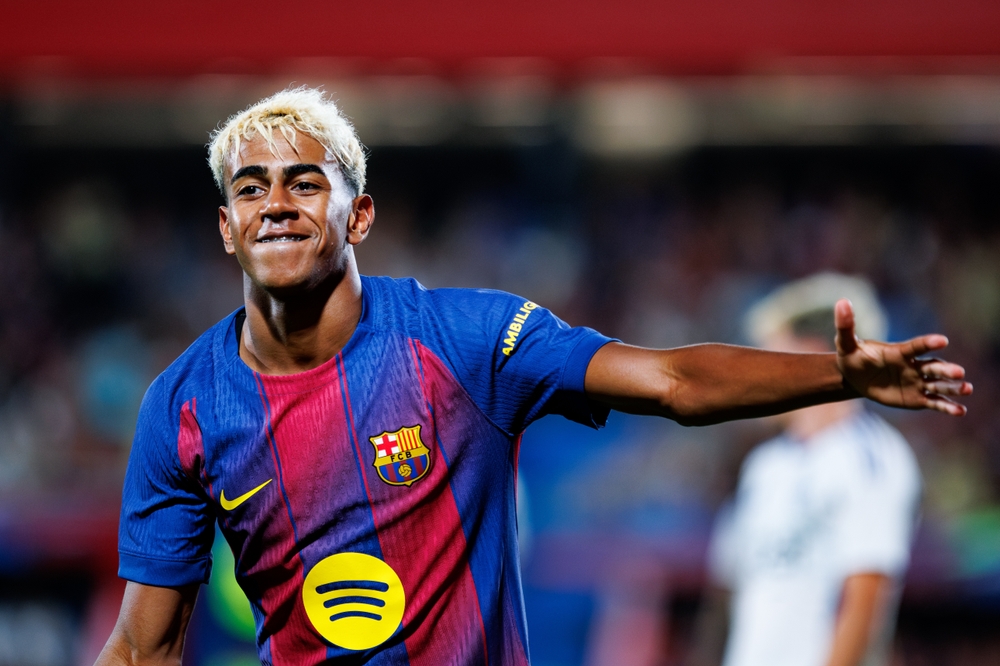
Lamine Yamal has turned an online insult into one of the most recognisable images of the 2026 World Cup.
The Spain winger appeared wearing a black headband carrying the words “EGO YAMAL” during his country’s 3-0 victory over Austria in the round of 32.
The message immediately prompted questions over whether it was simply a fashion choice or a deliberate response to those who have criticised his confidence and public image.
According to NDTV Sports’ report on the headband, Spanish radio station COPE was told that the slogan referred to the nickname “Ego Lamine”, which had been used mockingly by some TikTok users.
Read also: Harry Kane breaks silence on Man City verdict
Yamal reportedly embraces the criticism
Rather than distance himself from the label, Yamal reportedly decided to reclaim it.
COPE cited people close to the player who said he had treated the nickname with humour and chosen to display it publicly during the tournament.
Yamal himself has not directly explained the headband, meaning the interpretation remains based on reporting from those around him.
The distinction is important. The accessory appears to be a response to criticism, but it should not be described as a confirmed statement from the player unless he addresses it publicly.
Read also: Phil Taylor comes out of retirement for stunning darts return
Nevertheless, the message fits with the way Yamal has spoken about confidence throughout his rapid rise.
Confidence or arrogance?
Yamal has frequently faced accusations that his self-belief has developed into arrogance.
Every interview, celebration and reaction is examined by millions of supporters online, while clips presenting him as selfish or overly confident can spread rapidly across platforms such as TikTok.
The teenager has never hidden the importance he places on believing in his own ability.
Read also: ‘If you lie to me, I will leave’: Guardiola’s City warning takes on new weight
“I see myself as much better than how people see me,” Yamal said in an interview with EL PAÍS.
During the same interview, he argued that confidence and egocentrism are often confused. Yamal acknowledged that a degree of ego can be useful, but said self-confidence is more important because external criticism can otherwise overwhelm a player.
For his supporters, the headband therefore represents a teenager refusing to be defined by strangers online.
For his critics, it may reinforce the belief that he enjoys attention and is too willing to place himself at the centre of the story.
Read also: Harry Kane’s Bayern future suddenly comes with a Tottenham escape route
That division is precisely why the message has attracted so much attention.
Online life follows players onto the pitch
Previous generations of footballers could often ignore newspaper criticism once they entered a training ground or stadium.
That separation is considerably more difficult for modern players.
Yamal has grown up in an environment where online reactions are immediate and almost impossible to avoid. A gesture during a match can be clipped, discussed and viewed millions of times before the final whistle.
Read also: ‘I’m not confident’: Red Bull chief delivers troubling verdict on Verstappen’s car
His “EGO YAMAL” headband shows how younger athletes are increasingly prepared to respond in the same environment where criticism begins.
Instead of delivering a formal statement, Yamal used an accessory that could be photographed, shared and interpreted across social media.
The response was simple enough to be understood immediately, while remaining ambiguous enough to generate further debate.
Spain reach the World Cup final
The headband first appeared considerably earlier in Spain’s campaign than the original article suggested.
Yamal wore it against Austria on July 2, before Spain subsequently eliminated Portugal and Belgium to reach the semi-finals.
Spain then defeated France 2-0 in Arlington on Tuesday, July 14. Yamal was involved in the opening goal, reaching the ball before Lucas Digne and drawing the challenge that resulted in Mikel Oyarzabal’s penalty.
Pedro Porro added the second goal after the interval, sending Spain into their first men’s World Cup final since winning the tournament in 2010.
According to The Guardian’s report from the semi-final, Spain controlled the contest and prevented France’s celebrated attack from creating meaningful opportunities.
Yamal did not dominate the match individually, but his movement was decisive in producing the opening goal.
Spotlight continues to grow
Yamal turned 19 one day before the semi-final and is already one of the most closely followed players in world football.
FIFA has highlighted his creativity, dribbling, vision and leadership as central qualities in a player who became Spain’s youngest senior international and goalscorer before winning Euro 2024 at 17.
His World Cup has demonstrated that the attention surrounding him is no longer limited to his football.
The headband became a story because it combined performance, fashion, marketing and social-media culture in a single image.
Whether it was a joke, a calculated reply or a mixture of both, Yamal succeeded in taking ownership of a label intended to criticise him.
Spain will now play for the World Cup trophy on Sunday. As they prepare for the final, the focus will return to Yamal’s ability on the pitch.
The debate surrounding his confidence, however, is unlikely to disappear—and he appears entirely comfortable with that.