The Croatian Football Federation says it is still waiting for FIFA to respond to a formal request for the VAR audio from the country’s controversial World Cup elimination.
Croatia were beaten 2-1 by Portugal in the round of 32 on July 2, but believed they had rescued the match when Joško Gvardiol scored in the 103rd minute.
The goal was eventually disallowed after Connected Ball Technology detected a faint touch from Igor Matanović earlier in the move. That touch meant Mario Pašalić was in an offside position when he received the ball and created the chance for Gvardiol.
According to Josh Lawless’ report for SPORTbible, HNS president Marijan Kustić wrote to FIFA the day after the match and requested access to the communication between the officials.
Read also: Kylian Mbappe had just hit top form – now Real Madrid have a problem
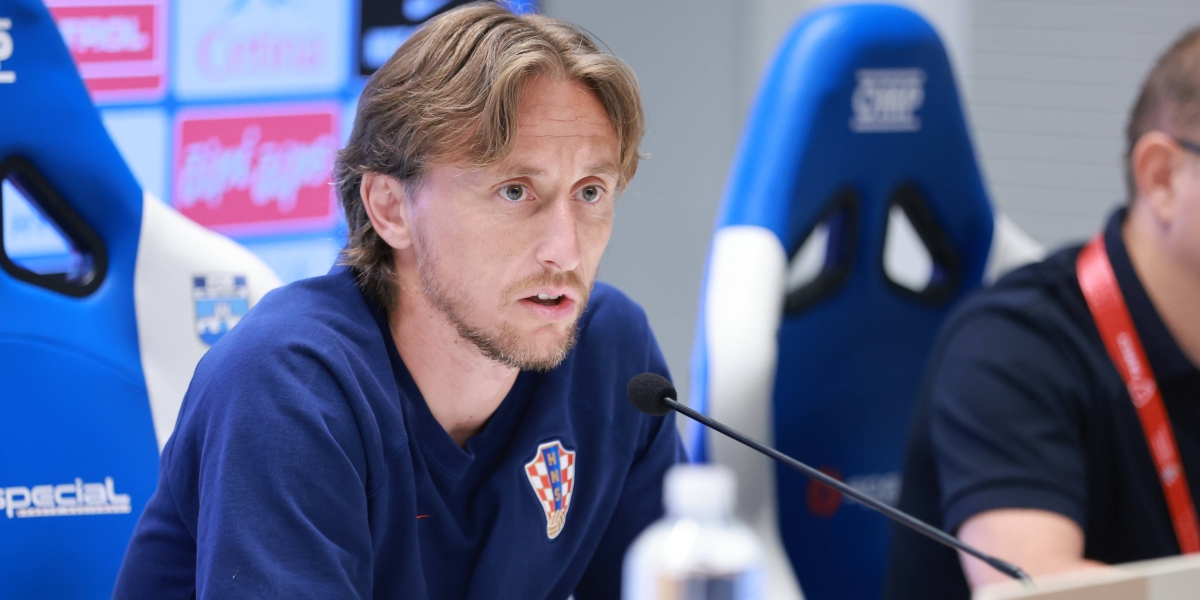
Croatia technical director Stipe Pletikosa says no reply has been received.
“We took an official position and, immediately the day after the incident in the match against Portugal, President Kustić sent a strongly worded letter to FIFA requesting access to the VAR communication regarding that infamous chip,” Pletikosa told RTL.
“We have not received a response to this day.”
Sensor detects slightest of touches
Croatia took the lead through Ivan Perišić in the 53rd minute before Cristiano Ronaldo equalised from the penalty spot.
Read also: Premier League boss breaks silence with damning Manchester City statement
Gonçalo Ramos then scored in the fourth minute of added time to put Portugal 2-1 ahead.
As recorded by FIFA’s official match centre, Gvardiol appeared to equalise nine minutes later, during an unusually long period of second-half stoppage time.
The move began with a cross towards Matanović. Television replays initially appeared to show the striker missing the ball before it struck Portugal defender Renato Veiga and fell to Pašalić.
Pašalić then supplied Gvardiol, who finished past Diogo Costa.
Read also: Kasper Schmeichel finds completely new path after football retirement
However, a sensor inside the Adidas Trionda match ball registered contact from Matanović. Because the striker had touched the ball, Pašalić was judged to have become involved from an offside position.
The referee was also required to determine whether Veiga had deliberately played the ball, which could have reset the offside phase. He concluded that the contact from the Portuguese defender did not constitute a controlled, deliberate play.
Matanović admits contact with his hair
Matanović later accepted that the technology may have detected a touch that could not be clearly seen on conventional replays.
“Honestly, I think I felt slight contact with my hair,” he said, as quoted by SPORTbible.
Read also: Andy Murray reveals one major regret about Nadal and Djokovic
“I asked the referee. I was not 100 percent sure whether I had touched it. He told me that they have a chip in the ball, that there had been slight contact and that it was therefore offside.”
FIFA subsequently explained that the ball’s internal inertial measurement unit, or IMU, had provided conclusive evidence of contact.
“According to the data provided by Connected Ball Technology housed within the Adidas ball Trionda, the official match ball of the FIFA World Cup, it was proven that contact was made by Croatia’s Igor Matanović in the build-up to the goal against Portugal, allowing the referee to correctly determine offside and disallow the goal,” FIFA said.
The governing body added that the sensors can identify extremely light touches and display the data through the “heartbeat graphic” seen during broadcasts.
Read also: Manchester United told to ‘nick’ two Man City stars if relegation hits
Croatia questions how VAR was used
Croatia’s objection appears to concern more than whether Matanović touched the ball.
The federation reportedly wants to understand how the information was communicated, which parts of the incident were reviewed and why referee Espen Eskås was sent to the pitchside monitor if the sensor data had already established the touch.
Croatia have also raised concerns about the penalty awarded to Portugal earlier in the second half.
Pletikosa stressed that refereeing mistakes are inevitable, but argued that changes to the presentation and administration of matches were damaging the sport.
“For the first time, FIFA has stopped protecting football,” he said. “It has had better and darker periods, but it has always protected the game.
“I am not talking about referees. They will always make mistakes; that is a normal and integral part of the game.
“But the hydration break, the chips, the 18 minutes of halftime in the Croatia-England match — it has gone so far that the game is no longer being protected.
“I am surprised that the people working there, who should recognise these situations and protect the game, are not reacting at all.”
Pletikosa’s comments about the wider tournament represent his own assessment rather than an independent finding that the rules were incorrectly applied.
FIFA explanation did not include audio
FIFA therefore has not remained entirely silent over the disallowed goal.
Its technical explanation confirmed why the offside decision was made and how the connected ball established Matanović’s contact.
However, that statement did not include recordings or transcripts of the conversations between the referee and the video officials.
According to Pletikosa, it also did not answer the specific questions contained in Kustić’s letter.
SPORTbible said it had contacted FIFA for further comment. At the time of publication, the governing body had not publicly confirmed whether it intends to release the communication.
VAR audio is not routinely made available immediately after World Cup matches, although football authorities have increasingly used selected recordings in educational programmes and official reviews.
Bilić replaces Dalić after elimination
The defeat also brought an end to Zlatko Dalić’s nine-year spell as Croatia manager.
Dalić led the country to the 2018 World Cup final, third place in 2022 and the 2023 Nations League final, making his tenure the most successful in the national team’s history.
Slaven Bilić has since been appointed for a second spell in charge.
According to the Croatian Football Federation’s official announcement, its executive committee unanimously approved Bilić’s appointment on July 13. He previously managed the national team between 2006 and 2012.
The new coach inherits a side preparing to move beyond several members of the generation that produced Croatia’s finest international results.
The controversy surrounding the Portugal defeat will nevertheless remain part of the conclusion to Dalić’s era, particularly while the federation continues to wait for the VAR communication it requested from FIFA.