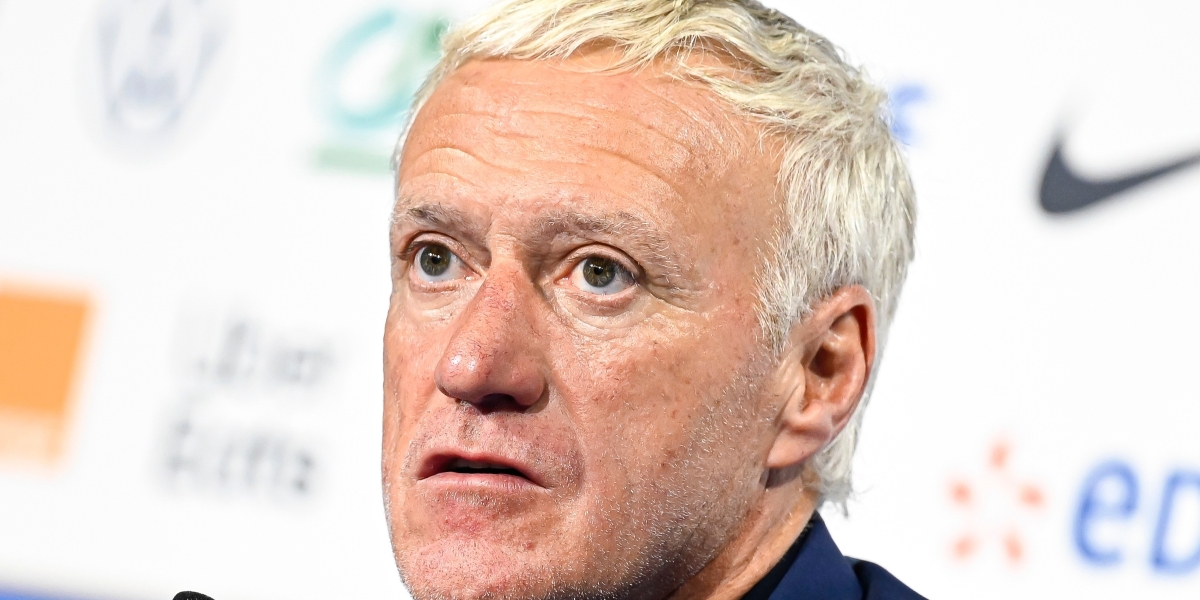
Didier Deschamps questioned whether referee Iván Barton was ready for a World Cup semi-final after France’s 2-0 defeat to Spain.
France’s hopes of reaching a third consecutive final ended in Arlington on Tuesday, July 14, as goals from Mikel Oyarzabal and Pedro Porro sent Spain through to Sunday’s deciding match.
Deschamps acknowledged that his team had fallen below its previous level and accepted that Spain had been stronger. However, he was unhappy with several decisions made by the Salvadoran referee.
“The most important thing is what we did not do well,” Deschamps said, according to Yves Leroy’s report for L’Équipe.
Read also: ‘If you lie to me, I will leave’: Guardiola’s City warning takes on new weight
“I do not want to come across as a whiner because we lost, but was the referee at the required level for a World Cup semi-final? I will not go into the details of the decisions.”
Deschamps unhappy with several decisions
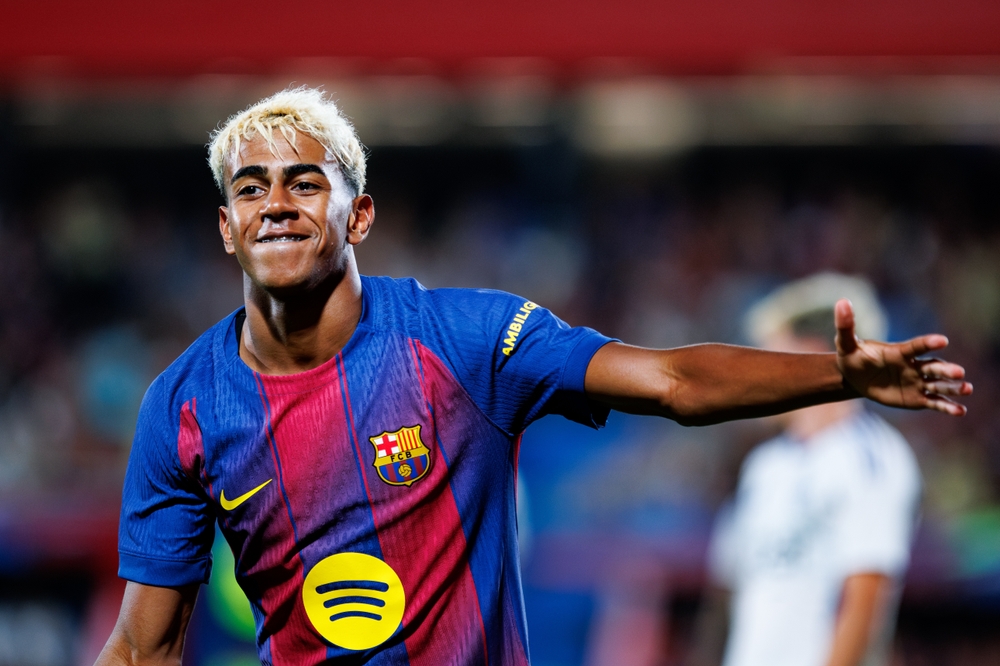
The main incident came in the 22nd minute, when Lucas Digne attempted to clear the ball but caught Lamine Yamal inside the French penalty area.
Barton awarded a penalty, which Oyarzabal converted to give Spain the lead.
The decision prompted debate because the ball had made contact with Yamal’s arm shortly before Digne’s challenge. Former international referees have since supported the decision, arguing that the winger’s arm was close to his body and had not made him unnaturally bigger.
Read also: Harry Kane’s Bayern future suddenly comes with a Tottenham escape route
Deschamps did not argue that the penalty alone decided the match. He suggested there had been several questionable moments while admitting that some decisions had also benefited France.
Spain’s overall superiority was difficult to dispute. Luis de la Fuente’s side controlled the midfield, restricted France’s celebrated attack and rarely appeared in danger after Porro doubled the lead in the 58th minute.
“We were a little below our level, and we made more technical mistakes than in our recent matches,” Deschamps said.
“To hope for more, we needed to be at our maximum. Unfortunately, we were not.”
Read also: ‘I’m not confident’: Red Bull chief delivers troubling verdict on Verstappen’s car
France record historically low attacking figure
France produced an expected-goals figure of only 0.3 during the semi-final.
According to ESPN’s analysis of the match statistics, that was the country’s lowest total in a World Cup match since Opta’s records began in 1966.
Kylian Mbappé, Ousmane Dembélé and Michael Olise had been among the tournament’s most productive attacking players before the semi-final, but Spain prevented all three from making a decisive contribution.
France struggled to progress through the central areas, while their forwards were frequently isolated against Spain’s organised defence.
Read also: Man City hit back at Premier League with explosive accusation
Deschamps introduced Rayan Cherki, Désiré Doué, Manu Koné and Theo Hernández during the second half, but the changes failed to alter the course of the match.
The defeat ended France’s pursuit of a third World Cup title, although their tournament is not completely over. They will contest the third-place play-off in Miami on Saturday.
Spain match historic unbeaten record
Spain’s victory extended their unbeaten sequence to 37 matches, equalling the men’s international record established by Italy between 2018 and 2021.
La Roja have not lost since a friendly against Colombia in March 2024 and have now reached their first World Cup final since winning the competition in 2010.
Read also: Manchester City CEO says everything is one big “conspiracy theory”
As described by the Associated Press, Spain also recorded their sixth clean sheet in seven matches at the tournament while neutralising one of its strongest attacks.
Spain can establish a new record by avoiding defeat in Sunday’s final at New York New Jersey Stadium in East Rutherford.
Their opponents will be determined by Wednesday’s second semi-final between England and defending champions Argentina.
FIFA plans first World Cup final halftime show
While Spain prepare for the final, FIFA is facing questions over plans for an unprecedented halftime performance.
The governing body has confirmed that the first halftime show in the history of the men’s World Cup final will take place on Sunday, July 19.
Madonna, Shakira, BTS and Justin Bieber will headline the performance. Burna Boy, Venezuelan conductor Gustavo Dudamel and the PS22 Chorus featuring Coldplay will also appear.
According to FIFA’s official announcement, the televised performance will last 11 minutes and has been curated by Coldplay frontman Chris Martin.
The show is being produced by Global Citizen in partnership with Live Nation and Done + Dusted. It will support the FIFA Global Citizen Education Fund, which aims to improve access to education and football for children in underserved communities.
FIFA has not, however, publicly confirmed the full length of the halftime interval.
Reports differ over possible extension
Reports currently offer different accounts of how much additional time will be required to construct and remove the stage.
According to Yahoo Sports’ account of reporting by The Athletic, FIFA is aiming to limit the complete interval to approximately 20 minutes.
The Times has reported that the break could instead reach around 30 minutes, allowing broadcasters to show the full performance and still analyse the opening half.
Neither duration has been officially confirmed by FIFA.
Even a 20-minute interval would exceed the limit stated in football’s Laws of the Game.
IFAB rules set 15-minute limit
Law 7 states that players are entitled to a halftime interval that must not exceed 15 minutes.
The competition regulations must specify the duration, while the interval may only be altered with the referee’s permission.
The permission clause does not explicitly allow the referee to override the stated maximum.
Under the official law published by the International Football Association Board, any interval lasting 20 or 30 minutes would therefore appear to conflict with the existing rules unless a special amendment or exemption has been approved.
A longer break could also create concerns for players, whose bodies are accustomed to returning to action after approximately 15 minutes. Teams may need to conduct an additional warm-up before the second half to reduce the risk of injury.
FIFA tested a similar format during the 2025 Club World Cup final at the same stadium. That halftime interval lasted approximately 24 minutes.
England and Argentina renew historic rivalry
Before the final, England and Argentina will meet in Atlanta for the first time in a competitive match since the 2002 World Cup.
The rivalry remains closely associated with the 1986 quarter-final, when Diego Maradona scored both goals in Argentina’s 2-1 victory.
His first became known as the “Hand of God”, while his second was later voted the World Cup’s Goal of the Century.
England manager Thomas Tuchel expects Wednesday’s semi-final to contain similar intensity, although he has insisted that his players will not rely on the history of the fixture for motivation.
“It is a big rivalry,” Tuchel said, as quoted by England Football.
“It is two big football nations, as everyone who follows football and everyone who follows the World Cup knows.
“We expect an intense match. We expect an emotional match. I expect a match with a lot of momentum swings, and anything else would surprise me.”
The winner will face Spain on Sunday, when football’s biggest match will be accompanied by an entertainment programme unlike anything previously staged during a World Cup final.
Before then, France must recover for the third-place play-off, while Deschamps and his players continue to reflect on a semi-final in which refereeing questions were overshadowed by their inability to trouble Spain.