Denmark has joined eight other European Union countries in calling for financial consequences against international sports organisations that readmit Russian and Belarusian athletes.
The initiative, led by Estonia, asks the European Commission to consider excluding bodies such as the International Olympic Committee, World Aquatics and the International Fencing Federation from Erasmus+ and other EU funding programmes.
The letter was sent to Glenn Micallef, the European Commissioner for Intergenerational Fairness, Youth, Culture and Sport.
Denmark, Estonia, Finland, Latvia, Lithuania, the Netherlands, Poland, Romania and Sweden have all endorsed the proposal.
Read also: Harry Kane breaks silence on Man City verdict
According to the letter published by Estonia’s Ministry of Culture, organisations whose decisions conflict with European values should not receive financial support from the EU.
Nine countries call for financial pressure
The signatories argue that allowing Russian and Belarusian athletes, officials and teams to return ignores the conditions facing Ukrainian competitors.
Many Ukrainian athletes have been displaced, lost access to training facilities or joined the country’s armed forces since Russia launched its full-scale invasion in February 2022.
“In this context, any assertions that sport can be separated from politics ring hollow when thousands of innocent Ukrainians have lost their lives and when sport continues to be instrumentalised by the Russian and Belarusian regimes,” the letter states.
Read also: Phil Taylor comes out of retirement for stunning darts return
The countries want affected organisations to be prevented from receiving funding through Erasmus+ and other relevant EU programmes until they demonstrate what the letter describes as a renewed commitment to the bloc’s principles.
They have also proposed limiting the organisations’ involvement in EU-backed forums and cooperation platforms, including the EU Sport Forum.
The request is political rather than legally binding. It will be for the European Commission to decide whether funding conditions can or should be changed.
Danish minister condemns Russia’s return
Danish Culture Minister Zenia Stampe has strongly criticised the gradual reintegration of Russia into international sport.
Read also: ‘If you lie to me, I will leave’: Guardiola’s City warning takes on new weight
“I am deeply concerned that Russian athletes are once again being allowed to participate in international competitions,” Stampe said in comments carried by Ritzau and published by Viaplay Sport News.
“It is absurd that a Russian can have a gold medal placed around their neck while bombs are raining down on Ukraine. It is unbearable.”
Stampe said Denmark would oppose what she regards as a wider attempt to normalise Russia’s position in world sport while the invasion continues.
Her comments came after several governing bodies relaxed restrictions that had been introduced following the attack on Ukraine.
Read also: Harry Kane’s Bayern future suddenly comes with a Tottenham escape route
IOC provisionally lifts Russian suspension
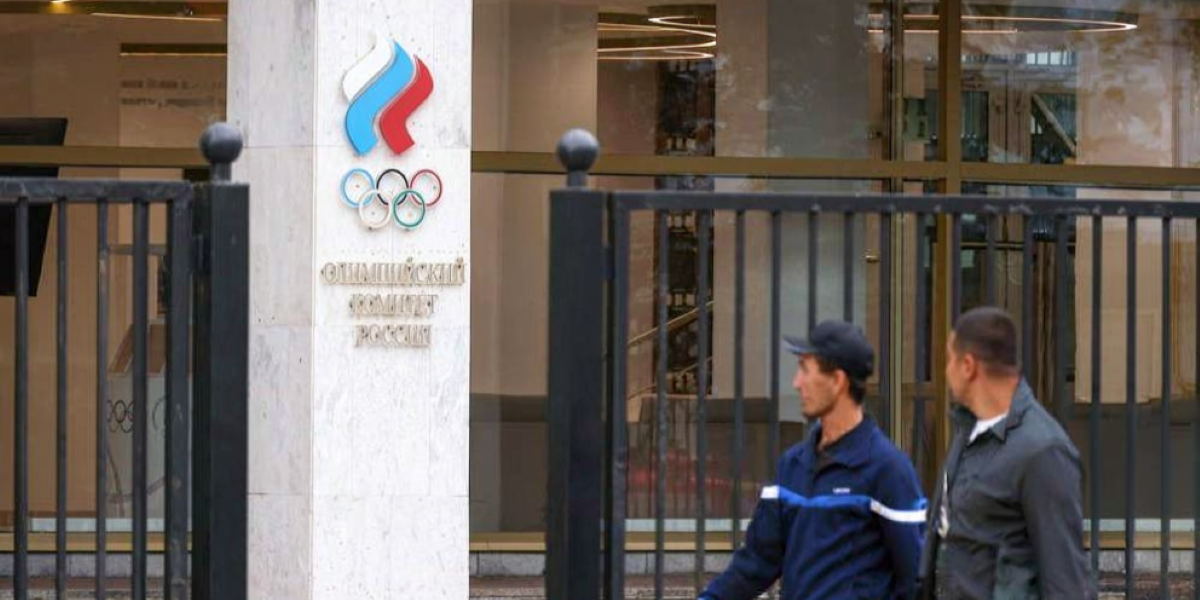
The immediate trigger for the joint letter was the IOC executive board’s decision on July 7 to provisionally lift the suspension of the Russian Olympic Committee.
The ROC had been suspended since October 2023 after incorporating regional sports organisations from territories that fall under the jurisdiction of Ukraine’s National Olympic Committee.
In its announcement of the decision, the IOC said those organisations were no longer members of the Russian committee. The ROC also confirmed that it would not conduct activities in the affected territories.
The decision means the IOC’s previous recommendations restricting the participation of Russian athletes and teams are no longer generally applicable to international federations.
Read also: ‘I’m not confident’: Red Bull chief delivers troubling verdict on Verstappen’s car
However, the IOC has not yet fully restored every aspect of Russia’s Olympic status.
It said a separate decision on the use of the Russian flag, anthem, colours and other national identification at future Olympic Games would be taken at the appropriate time.
The IOC will also continue to prevent Russia from hosting its events and will not invite Russian government or state officials to Olympic events.
World Aquatics allows flags and anthems
World Aquatics went further in April when it removed the special participation guidelines previously applied to senior Russian and Belarusian athletes.
The decision allows them to compete in World Aquatics events with their national uniforms, flags and anthems rather than as neutral athletes.
Russia and Belarus have also regained their full membership rights within the international federation.
World Aquatics has not, however, removed every condition.
Under the federation’s updated participation policy, Russian and Belarusian competitors must pass at least four consecutive anti-doping tests and complete background checks conducted by the Aquatics Integrity Unit before being cleared to compete.
World Aquatics president Husain Al Musallam said the organisation wanted pools and open-water venues to remain places where athletes from all countries could compete peacefully.
The nine European countries believe that approach fails to recognise how Russia uses elite sport for political purposes.
Erasmus+ funding placed at centre of dispute
Erasmus+ is best known for supporting education and student exchanges, but the programme also funds European sporting cooperation, partnerships and projects promoting inclusion, integrity and physical activity.
The joint proposal seeks to use access to that funding as leverage over governing bodies.
It does not call for individual athletes to lose EU money directly. Instead, it targets international organisations whose policies allow Russian and Belarusian representatives to return.
A Reuters report published by The Star said the IOC, World Aquatics and the International Fencing Federation had not immediately responded to requests for comment.
The disagreement is likely to intensify as qualification for the 2028 Los Angeles Olympics progresses and more federations reconsider the restrictions introduced after the invasion.
For Denmark and the other signatories, the principle is clear: sporting autonomy should not automatically entitle organisations to European financial support when their decisions conflict with the values the EU says it is defending.