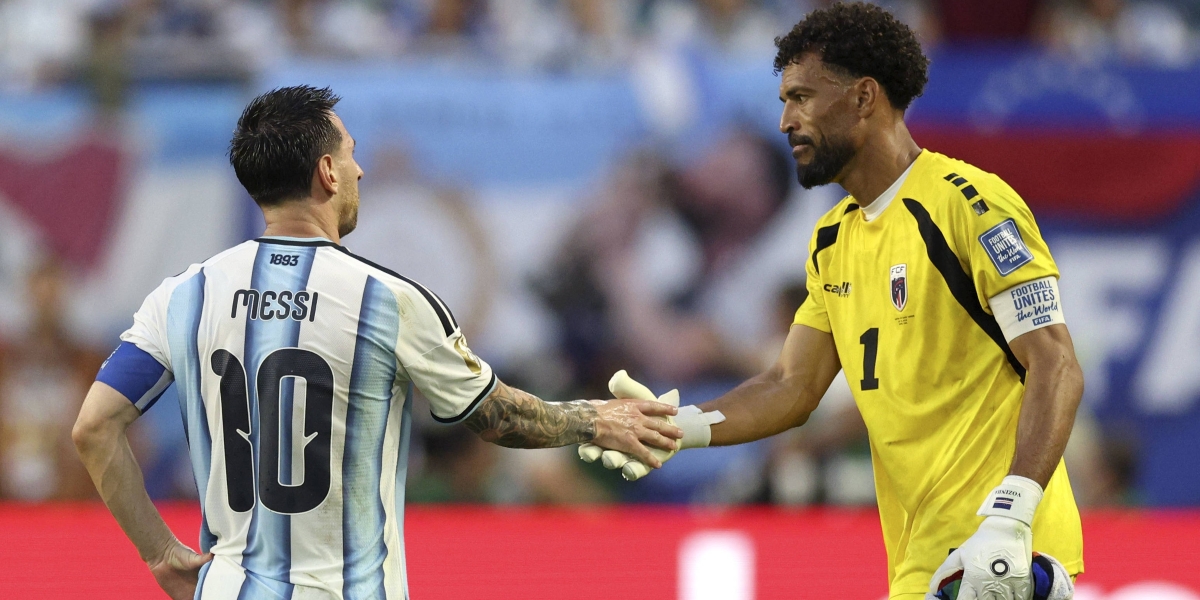
Cape Verde may have left the World Cup before the latter stages, but the tournament’s surprise package can claim a distinction that neither finalist will be eager to discuss.
The island nation were the only team at the tournament to face both Spain and Argentina without losing to either during the regulation 90 minutes.
Spain were held to a goalless draw during the group stage, while defending champions Argentina were forced into extra time after their knockout meeting finished 1-1 at the end of normal time.
The statistic became complete when Argentina defeated England to join Spain in the final. The two footballing giants overcame almost every opponent placed before them, but neither could beat Cape Verde inside 90 minutes.
Read also: ‘If you lie to me, I will leave’: Guardiola’s City warning takes on new weight
Spain frustrated in historic opener
Cape Verde’s first World Cup match could hardly have presented a more intimidating challenge.
The debutants faced European champions Spain in Atlanta, with Luis de la Fuente’s side expected to make comfortable work of one of the tournament’s smallest nations.
Spain dominated possession and registered 27 attempts, including seven on target. Cape Verde nevertheless defended with discipline and determination to secure a remarkable 0-0 draw.
According to FIFA’s report from the match, Cape Verde remained organised throughout and repeatedly frustrated Spain despite spending long periods without the ball.
Read also: Harry Kane’s Bayern future suddenly comes with a Tottenham escape route
Goalkeeper Vozinha played a central role, producing several important saves as his team survived sustained pressure.
Ferran Torres also struck the crossbar, but Spain could not find a breakthrough in what became one of the biggest surprises of the group stage.
The result was not simply a respectable opening performance. It ultimately made Cape Verde one of the few teams to avoid defeat against Spain during their run to the final.
Argentina pushed into extra time
Cape Verde encountered the other finalist in the round of 32 after progressing from their group unbeaten.
Read also: ‘I’m not confident’: Red Bull chief delivers troubling verdict on Verstappen’s car
Argentina took the lead through Lionel Messi in the 29th minute, but Deroy Duarte equalised shortly before the hour mark.
The score remained 1-1 until the end of normal time, meaning the reigning world champions had failed to defeat the tournament newcomers inside 90 minutes.
Argentina eventually regained the lead when Lisandro Martínez scored early in extra time. Sidny Lopes Cabral then produced an outstanding curling finish to make it 2-2, briefly placing one of the greatest shocks in World Cup history within reach.
The decisive moment arrived in the 111th minute, when Diney Borges inadvertently turned Messi’s corner into his own net.
Read also: Man City hit back at Premier League with explosive accusation
As described in FIFA’s match report, Argentina survived a major scare to win 3-2 after extra time and advance to the last 16.
Cape Verde therefore did not remain unbeaten in the official result. However, they were level after 90 minutes, preserving the unusual statistic now being shared before the final.
A remarkable World Cup debut
The achievement becomes even more striking when the countries involved are compared.
Spain and Argentina entered the final as two of the strongest teams in international football. Argentina are attempting to retain the trophy they won in 2022, while Spain reached the final following an impressive and defensively assured campaign.
Read also: Manchester City CEO says everything is one big “conspiracy theory”
Cape Verde, by contrast, arrived at their first World Cup representing a country with a population of little more than half a million people.
They had already defied expectations by finishing ahead of Cameroon in African qualifying before progressing from a group containing Spain, Uruguay and Saudi Arabia.
FIFA described their qualification for the knockout stage as a historic achievement after the newcomers conceded only twice across their three group matches.
Their tournament eventually ended against Argentina, but only after Lionel Scaloni’s side had been forced to play an additional 30 minutes.
The performance also left a clear impression on the Argentina coach, who acknowledged the problems Cape Verde had caused the defending champions.
More than a statistical curiosity
The statistic does not mean Cape Verde were stronger than either finalist, nor does it erase their eventual elimination.
It does, however, provide an appropriate summary of a team that consistently proved far more difficult to defeat than their modest profile suggested.
Spain produced 27 attempts and failed to score. Argentina needed extra time and an own goal to survive.
No other team at the tournament faced both finalists. Cape Verde did so during their first appearance on football’s biggest stage and remained level after 90 minutes on both occasions.
When Spain and Argentina meet for the trophy, one of them will finally lose.
Cape Verde can watch knowing that neither managed to defeat them in regulation time.