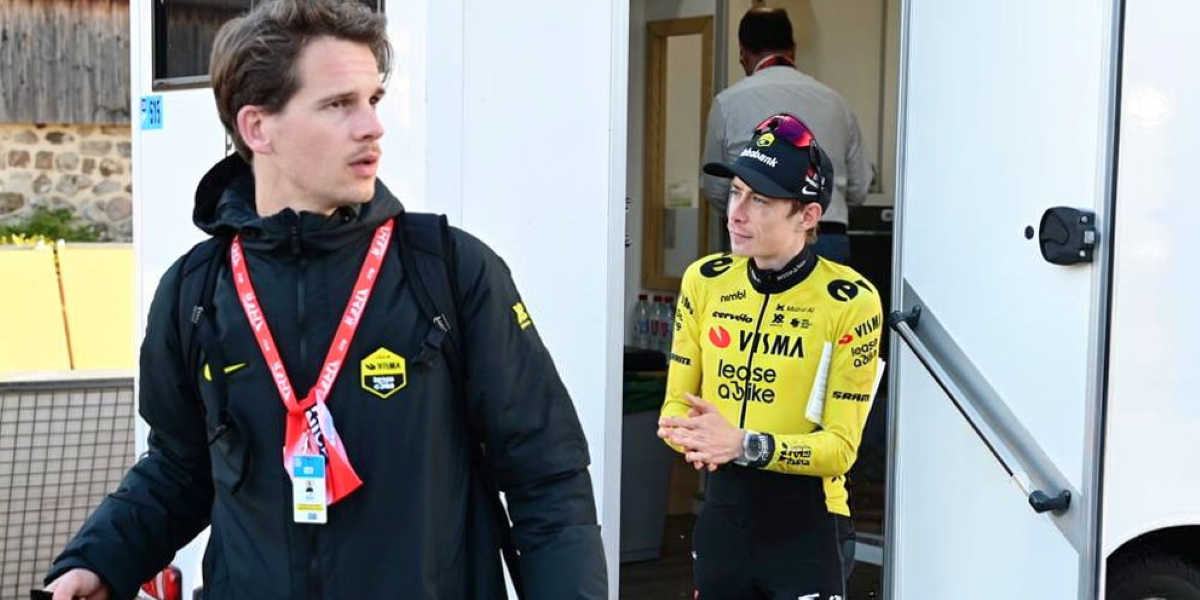
The controversy surrounding Jonas Vingegaard’s 2am anti-doping test has taken a significant turn.
A Paris judge authorised the overnight controls carried out on Vingegaard and race leader Tadej Pogačar before Stage 15 of the Tour de France.
Vingegaard was tested at approximately 2am, while Pogačar was visited three hours later. Both controls took place outside the usual testing period of 6am to 11pm.
According to The Guardian’s report on the judicial authorisation, the International Testing Agency asked a specialist Paris judge for permission to conduct the tests during the night of July 18 and 19. The request was subsequently approved.
Read also: Kasper Schmeichel finds completely new path after football retirement
Night tests require serious suspicion
Under the UCI’s anti-doping regulations, a rider cannot normally be tested between 11pm and 6am unless they have selected that period as their daily testing window or agreed to the control.
The exception is when anti-doping authorities have a “serious and specific suspicion” that a rider may be involved in doping activity.
French law also requires judicial approval for such an intervention. However, neither Vingegaard nor Pogačar has been accused publicly of an anti-doping violation, and the authorities have not disclosed the information that led them to request the overnight controls.
The ITA has also confirmed that other teams were subjected to night-time or early-morning testing during the Tour. Any results will only be made public if an apparent rule violation is discovered.
Read also: Andy Murray reveals one major regret about Nadal and Djokovic
Vingegaard lost sleep before decisive stage
Vingegaard said the testers’ arrival interrupted what had until then been a good night’s sleep.
“I was sleeping very well. It’s good that they test, but when it’s affecting performance and your sleep, I don’t think it’s so good,” he said.
The Danish rider spent around 40 minutes completing the procedure before returning to his room. Pogačar, who was tested at 5am, later said he managed only around four hours of sleep in total.
The Slovenian described the timing of Vingegaard’s control as “inhuman” and suggested that the disturbed sleep could have played a small part in the crash later that day. There is, however, no evidence establishing a connection between the test and the accident.
Read also: Manchester United told to ‘nick’ two Man City stars if relegation hits
Visma rejects link to crash
Vingegaard fell as the peloton negotiated a right-hand bend shortly after leaving a roundabout with just over 20 kilometres remaining.
He suffered a broken collarbone and was forced to abandon the race before the final climb to Plateau de Solaison. Surgery is now required.
As described by Cyclingnews in its account of the accident, Visma | Lease a Bike sports director Marc Reef rejected speculation that tiredness caused the crash.
“I don’t think it’s something to speculate on,” Reef said.
Read also: Thierry Henry issues blunt warning over Liverpool’s £123m signing
“The boys were ready, he was ready, and he was also feeling good during the stage.”
Reef instead pointed to a motorcycle braking sharply in front of the peloton and what he called a “strange situation” around the roundabout.
Riders question the safety risk
The controls have nevertheless prompted a wider debate over whether anti-doping authorities should be permitted to interrupt riders’ sleep during a three-week race.
Remco Evenepoel, who won Stage 15, called the practice “disrespectful” and “inhuman”. The professional riders’ association, CPA, has also questioned whether night-time testing places athletes’ health, recovery and safety at unnecessary risk.
Read also: Roy Keane goes nuclear on Man City after 114 guilty findings
The ITA accepts that such controls can disrupt rest but insists they may be necessary to detect substances taken in small doses and cleared quickly from the body.
According to Cycling Weekly’s report on the ITA’s response, the organisation said:
“Effective testing must, in limited and justified circumstances, be capable of occurring outside standard daytime hours.”
Vaughters defends controversial tactic
Jonathan Vaughters, the manager of EF Education-EasyPost and a former rider who admitted doping during his career, has defended the controls.
“Testing at 2am is one of the very effective ways to prevent microdosing with peptides, EPO, growth hormone and testosterone,” he wrote on X.
“If the UCI had tested us at 2am in 2001, we would all have been suspended and saved the sport 25 years of drama.”
His intervention highlights the uncomfortable dilemma now facing cycling. Night-time controls may affect the welfare and performance of riders who have done nothing wrong, but they can also close a testing window once exploited by previous generations.
For Vingegaard, the debate comes too late to change the outcome. Within hours of being woken by testers, his bid to win a third Tour de France ended with a fractured collarbone beside the road.