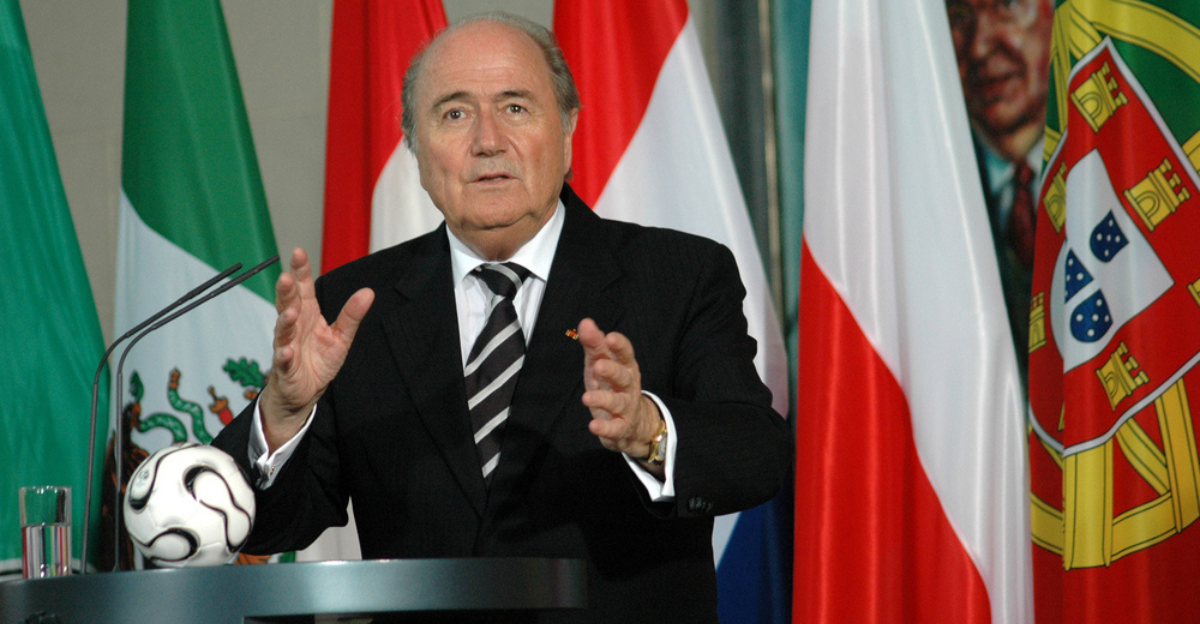
Former FIFA President Sepp Blatter has publicly condemned current chief Gianni Infantino’s controversial plan to sell a minority stake in the World Cup, accusing him of “selling our game.” However, Blatter’s criticism has been met with swift backlash, with many pointing to his own scandal-ridden tenure at the helm of world football’s governing body.
Infantino is spearheading a scheme to raise an estimated $4.2 billion from private investors, working in conjunction with JPMorgan. The plan involves establishing a new commercial entity, FIFA Forward Enterprise (FFE), which would grant FIFA’s 211 national member associations tradable equity stakes. The proposals have already sparked significant opposition, most notably from UEFA, which has reportedly told Infantino he is “crossing a line.”
UEFA threatens World Cup boycott
The severity of the situation is underscored by UEFA nations calling an emergency meeting, with a potential World Cup boycott on the table if Infantino does not reconsider the plans. Adding to the pressure, UK Prime Minister Andy Burnham slammed FIFA’s intentions, stating they amounted to “selling out.”
A key element of Blatter’s criticism centers on Infantino’s relationship with US President Donald Trump. The Trump administration has reportedly been approached by FIFA regarding the potential deal, building on a strong relationship forged when Infantino co-hosted the tournament in the United States during the summer.
Read also: Everyone laughed at Fernando Alonso's retirement joke – but they aren't laughing anymore
Writing on his X account, Blatter stated: “The close relationship between the FIFA President and the US President has reached a financial dimension that is deeply damaging football. No one has the right to sell our game.”
Blatter’s past casts a long shadow
Blatter’s strong words, however, have not resonated universally. Infantino was elected as FIFA president in February 2016, succeeding Blatter, who had spent 17 years in power before his tenure ended amidst a corruption investigation in May 2015. That period saw seven high-ranking FIFA officials arrested and charged with taking over $150 million in bribes. Swiss authorities raided the Baur au Lac hotel in Zurich on May 27th, 2015, as part of the probe.
The investigation focused on widespread corruption, including broadcasting and commercial rights, hosting votes for major tournaments, and the controversial decisions to award Russia and Qatar the 2018 and 2022 World Cups. Though Blatter was re-elected two days after the initial arrests, he announced his resignation shortly thereafter due to immense pressure from sponsors, UEFA, and looming legal threats.
A subsequent criminal investigation uncovered a suspect payment of $2 million from Blatter to then-UEFA President Michel Platini in 2011. This led to the FIFA Ethics Committee suspending both Blatter and Platini from football for eight years. While both have since been acquitted twice of criminal fraud in Swiss civil courts, their bans from football remain intact.
Read also: ‘I knew he was open’: Welsh boxer sends rival through ropes in terrifying first-round knockout
The irony of Blatter’s current critique was not lost on observers. One fan, responding to Blatter’s comments, remarked: “Sepp Blatter; the man who ran FIFA for 17 years and was banned for ethics violations is now the voice of moral authority on corruption in football. The fact that he’s the most credible critic in this situation tells you everything about how deep this rabbit hole goes.”
As The Times reported, FIFA’s plans to sell a minority stake in the World Cup mark a significant shift, one that is clearly stirring deep divisions within the football world, even prompting criticism from its most controversial former leader.
Read also: “Thank whoever they like”: Fury as swimmers are told to stay silent on $1.27m Rinehart bonuses