Senegal government refuses to pay
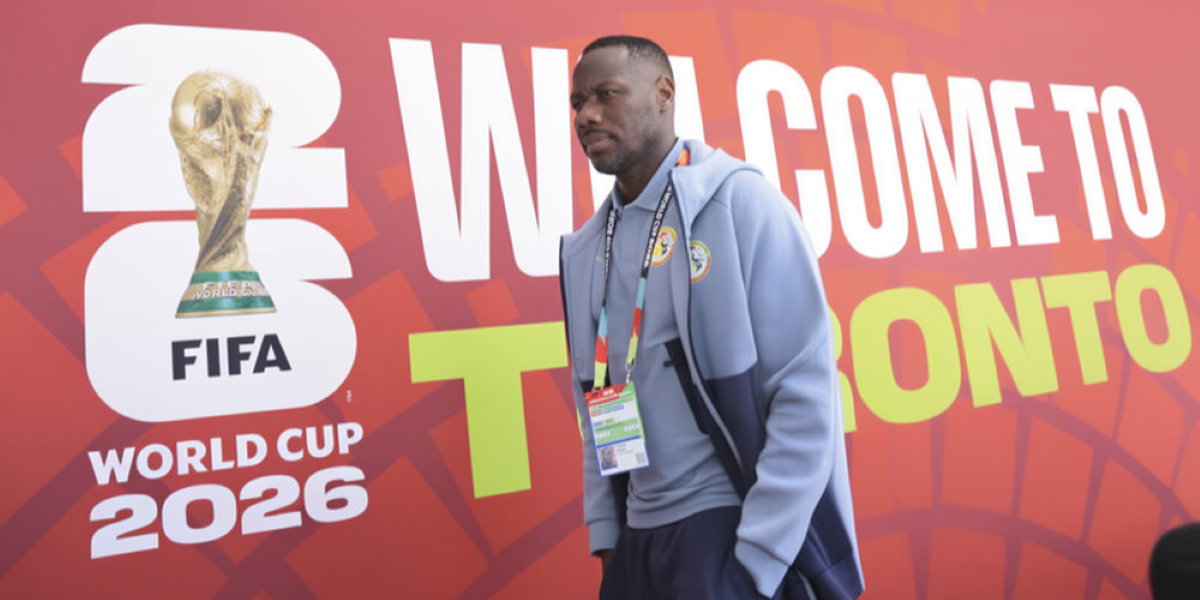
A bitter dispute over former national team coach Pape Thiaw’s contract could drag Senegalese football into court. The Senegalese government has informed the country’s football federation that it will not fund the three-year agreement signed with Thiaw during the 2026 World Cup.
The government argues that the contract was negotiated and signed without the required approval from the Ministry of Youth and Sports. As the state traditionally finances the national coach’s salary, its refusal leaves the Senegalese Football Federation, known as the FSF, facing a potentially significant bill.
According to an investigation by Senegalese newspaper Sud Quotidien, Sports Minister Djirèye Clotilde Coly informed the federation of the decision in a formal letter. The newspaper reported that it had obtained a copy of the correspondence.
Contract signed during the World Cup
Thiaw signed the agreement with the FSF in New Jersey on June 22, one day before Senegal faced Norway in their second group match at the World Cup. The hurried timing has become central to the increasingly acrimonious dispute.
Read also: ‘It is the project of one person’: Infantino’s inner circle cracks as FIFA adviser quits
The three-year contract provided Thiaw with a monthly salary of 30 million CFA francs, approximately €45,700. It also included a signing bonus of 120 million CFA francs, worth around €183,000, and one per cent of the FIFA prize money received by Senegal.
The agreement contained an early-termination clause requiring eight months of salary to be paid if the contract was ended for any reason. That would leave compensation of approximately 240 million CFA francs, or €365,000, potentially payable following Thiaw’s dismissal.
‘He refused to sit on the bench’
The contract was signed after months of tension between Thiaw and the federation over his salary and employment conditions. FSF president Abdoulaye Fall claimed the coach had initially threatened not to travel to the United States unless his financial demands were resolved.
According to Fall, the intervention of Senegalese President Bassirou Diomaye Faye was required to persuade Thiaw to join the delegation on the day of its departure. The disagreement then reached another critical point before the match against Norway.
Read also: ‘At a breaking point’: Senate’s $40m bombshell could rewrite college football
“The contract was signed on the eve of the match against Norway, after Thiaw refused to sit on the bench,” Fall said, as quoted in A Bola’s report. The federation president has accused the former coach of allowing the negotiations to disrupt the national team’s World Cup preparations.
Government says it never approved the deal
The Ministry of Sports has acknowledged that the federation decided to continue working with Thiaw. However, it maintains that the state never formally approved either the new three-year term or the accompanying salary increase.
That distinction could determine who must pay the former coach. The FSF signed the agreement, but the government was intended to act as the third-party payer responsible for his wages.
Some legal observers quoted in Senegalese reporting argue that the contract cannot take financial effect against the state without ministerial approval. Others believe the signed agreement remains binding on the federation, regardless of whether the government agreed to fund it.
Read also: Ole Miss takes two LSU players to court in explosive $950,000 transfer fight
World Cup exit brought immediate dismissal
Senegal’s campaign ended with a dramatic 3-2 defeat by Belgium in the round of 32 on July 1. The Lions of Teranga had led 2-0 late in the match before Belgium completed an extraordinary comeback in extra time.
Thiaw and his entire coaching staff were dismissed on July 12 following an internal assessment of the tournament. The decision came less than three weeks after he had signed the lucrative new agreement.
The federation said it wanted to reorganise the national team after a campaign marked by poor results, logistical problems and internal disagreements. Thiaw’s contract had already become a source of tension before the players entered their first match.
Federation could inherit the full bill
Sud Quotidien reported that some figures within the federation believe the FSF should pay the eight-month termination settlement. If that happens, the organisation would be responsible for approximately €365,000 before any outstanding salary, bonus or legal expenses are considered.
Read also: ‘A bad idea’: FIFA fast-tracks 64-team World Cup bombshell
No lawsuit had been publicly filed when the dispute was reported. However, the refusal of the government to accept responsibility means court proceedings are considered possible unless Thiaw and the federation reach an agreement.
As described by Ndarinfo, the disagreement could also raise questions about the legal conditions under which Thiaw was dismissed. Several people inside the FSF had reportedly already challenged the handling of the contract and the decision to remove him.
A familiar power struggle returns
The confrontation reflects a recurring problem in Senegalese football, where the federation chooses the national coach but the government finances the position. That structure allows disagreements over sporting decisions to develop into disputes over public money.
In 2024, the state rejected the federation’s attempt to extend Aliou Cissé’s tenure, citing unmet sporting objectives and a decline in the national team’s performances. A similar conflict occurred in 2004, when the government resisted calls to dismiss Guy Stéphan because of the compensation it would have been required to pay.
Read also: ‘They completely destroyed me’: Lolo Jones accuses Team USA of risking paralysis
The Thiaw case is potentially even more damaging because the disputed contract had already been signed. Senegal must now determine whether the federation had the authority to make the commitment alone and who is responsible for paying the consequences.
Another crisis for Senegalese football
The contract battle follows a turbulent period for the national team. Senegal’s World Cup preparations were disrupted by administrative failings, internal tension and public disagreements involving coaches, officials and players.
What began as a delayed employment negotiation now threatens to become a costly legal confrontation. Thiaw has lost his position, the government has refused the bill, and the federation may be left defending an agreement signed during the most important tournament in world football.
Unless one side backs down, Senegal’s next major contest may not take place inside a stadium. It could be decided in a courtroom.