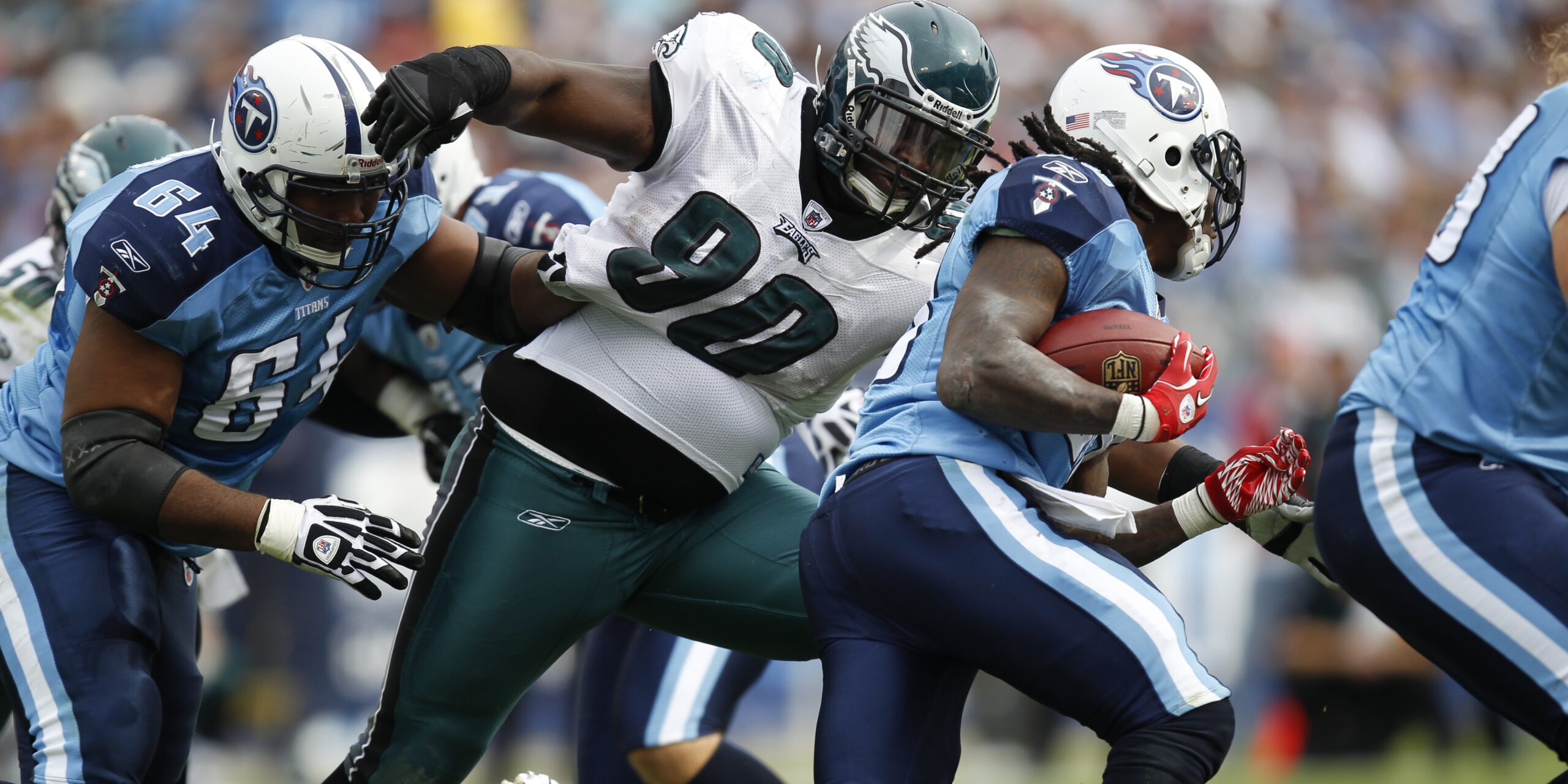
Chris Johnson has stopped short of blaming football for his ALS, but he is no longer pretending the question can be ignored.
In a letter published at The Players’ Tribune and addressed to his four children, the former Tennessee Titans running back writes that the reaction he now gets from specialists is impossible to miss.
“I’ve seen a lot of neurologists at this point and been to basically every major ALS clinic in the country, and in my experience, as soon as you say you played football it’s like, ‘Ahh, OK.'”
He cites a study finding that former NFL players were nearly four times as likely to develop and die from ALS as the U.S. male population overall, describing the result as a shock while cautioning that he is “not an expert” and that other environmental factors could be involved.
Read also: Trump insists he outdrew the NFL. The cameras kept panning past empty seats
“I can’t help but wonder if there’s any connection between my career and where I am now,” Johnson writes.
From 2,006 yards to a diagnosis
Johnson revealed the diagnosis on June 29 in a taped interview with Michael Strahan on ABC’s Good Morning America. He told the network he had been diagnosed in 2025, at 39, and that doctors classified his case as sporadic ALS, the form that accounts for the vast majority of cases.
The first sign was weakness in his right hand. His grip failed, and his speech and mobility followed. He now communicates through a speech-generating device triggered by his eyes and programmed with a recording of his own voice.
Nicknamed CJ2K after his 2,006-yard rushing season in 2009, Johnson was NFL Offensive Player of the Year that year and set the single-season NFL record with 2,509 yards from scrimmage. Across 10 NFL seasons with Tennessee, the New York Jets and Arizona Cardinals, he made three Pro Bowls and finished with 9,651 rushing yards and 55 rushing touchdowns, according to the Titans.
Read also: Buffalo answers 'Lake America' with 'O Canada' at Highmark opener
The NFL’s long neurological shadow
Amyotrophic lateral sclerosis, often called Lou Gehrig’s disease after the New York Yankees first baseman who died of it in 1941, attacks the motor neurons that control voluntary muscle movement. There is no cure.
Football’s link to neurological illness has been fought over in courtrooms and research journals for more than a decade, most publicly around chronic traumatic encephalopathy. The ALS strand is less understood, but the study Johnson refers to has pulled it back into view, and his name carries weight. His 2009 season is still the benchmark other backs are measured against.
Johnson stops well short of a verdict. He notes in the letter that “anybody can get ALS” and that a single study is not proof.
Still here
“I want people to know I am still me,” Johnson said in his interview with Strahan. “ALS has changed what my body can do, but it hasn’t changed who I am.”
Read also: Coulthard names the reason behind Leclerc's crash
In the letter, Johnson writes that in the weeks after going public he saw friends and former teammates bring back the Ice Bucket Challenge, the ALS fundraising campaign that went viral in 2014.
Read also: Messi opens up on painful farewell