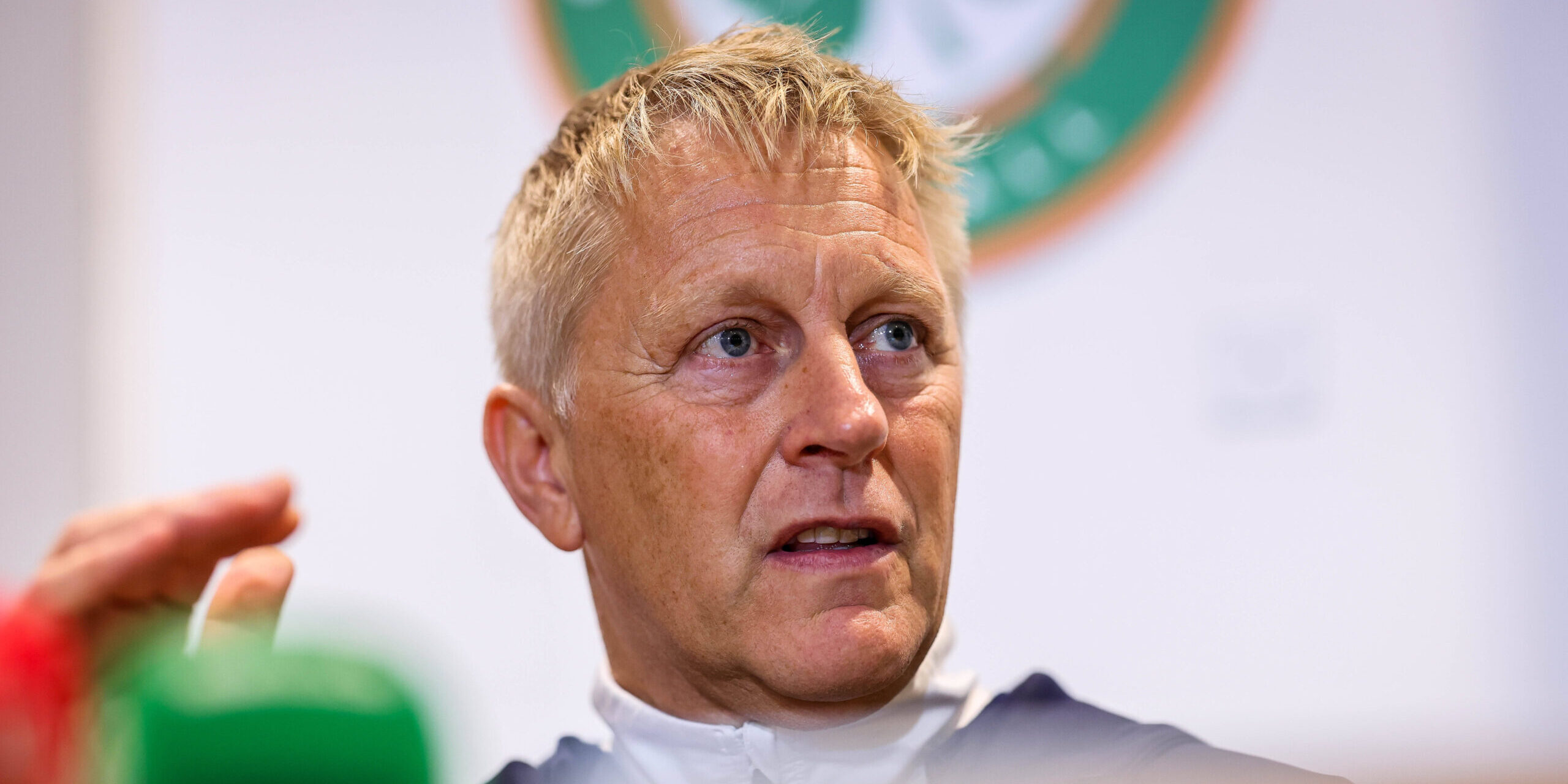
Speaking as he named a 26-man squad in Dublin on Wednesday, Hallgrímsson said he had gone through the question with every player individually before deciding how to approach the matches.
“Yeah, I’ve spoken to all of them individually on that because you shouldn’t be doing this on a group talk (chat) and obviously we have different opinions, different strength of opinions,” the Icelander told reporters, according to the Irish Examiner.
Asked specifically whether the squad would take part in pre-match handshakes or make some other visible gesture, he was quoted by the Irish News as saying it would be for the squad itself to decide.
“Asking about shaking hands and stuff, we’ll take that when it comes. It’ll be down to the players themselves what they want to do.”
The paper reported that the group has looked at Ireland’s women’s basketball team, who in 2024 stood by their bench during Israel’s anthem and declined to shake hands after their EuroBasket qualifier, as one template for a symbolic protest.
‘None of us feel comfortable’
Hallgrímsson has spent much of the summer defending the FAI’s decision to play, while acknowledging the range of views inside the dressing room.
“None of us feel comfortable playing these games, but once we have decided to play them, we all stick together and play as one,” he said in his squad-announcement press conference, quoted by The Journal.
“We want to represent Ireland with the best games and performances as we can. That’s the agreement between all of us. We don’t all share the same opinion and that’s just human nature.”
The FAI has repeatedly warned that refusing to fulfil the matches would expose the association to UEFA disciplinary action, a line reiterated when leading Irish players and public figures joined a boycott call earlier this year, Al Jazeera reported.
Two fixtures at neutral venues
Both legs of the Israel tie have already been pushed away from their originally scheduled homes. Israel’s “home” game on 27 September has been moved to a neutral venue, and Ireland’s return fixture on 4 October will be played behind closed doors at the 4,500-capacity TSC Arena in Bačka Topola, in northern Serbia, the FAI confirmed.
Ireland’s association cited “operational challenges” in staging the Aviva Stadium fixture against Israel, a decision taken as the “Stop the Game” campaign intensified. Fans halted May’s friendly against Qatar twice by throwing tennis balls marked with Palestinian flags onto the pitch, Al Jazeera reported at the time.
RTÉ pulls back its coverage
The broadcast side of the story has moved just as quickly. Trade union SIPTU, which represents many RTÉ staff, publicly urged the national broadcaster to refuse to show the matches and pledged to back workers who declined to cover them.
Read also: LeBron James and Kevin Hart line up unexpected showdown as talks reach final stage
RTÉ has since scaled back its plans: the two Israel fixtures will air only with the basic UEFA world feed, with no studio presence, no commentary team and no panel analysis, The 42 reported. Long-serving Sport reporter Tony O’Donoghue is travelling to Serbia but will not carry out his usual pitchside duties.
“Our Union gives a guarded welcome to [Friday’s] media reports that suggest that RTÉ will not provide normal coverage of the unwanted matches, and if they do go ahead, there will be no commentary, no panel or studio analysis,” SIPTU deputy general secretary Greg Ennis said in a statement to the same outlet.
Squad notes
Dara O’Shea will captain the side in the absence of the injured Nathan Collins, with Evan Ferguson, Josh Cullen, Jack Taylor and Oisin McEntee also ruled out. Séamus Coleman and Robbie Brady, both currently without a club, keep their places. Leeds defender Liam Kitching earns a first senior call-up.
Ireland open the window away to Kosovo on 24 September, three days before the trip to face Israel.
Read also: Chael Sonnen eats humble pie: 'We got it wrong' on Aspinall's eye injury
Read also: Robert Lewandowski gets the call as one glaring omission steals the spotlight