Two sporting images tell a brutal story
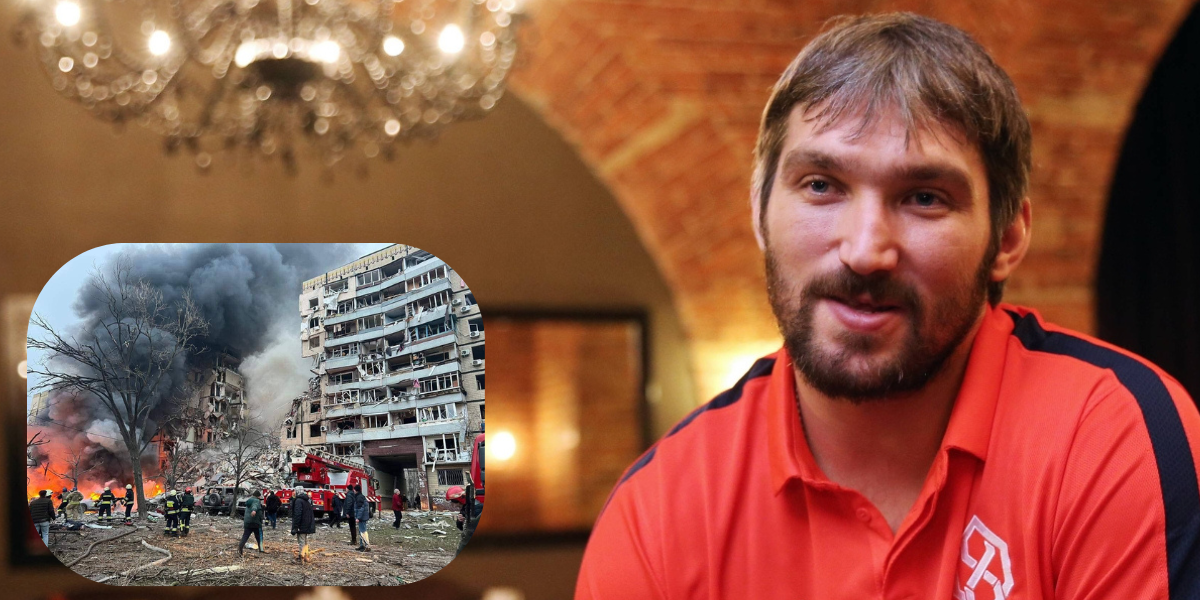
One image showed a Ukrainian tennis player’s apartment in flames. Another showed the most prolific goalscorer in NHL history standing behind Russia’s foreign minister in a campaign video for the political party that has kept Vladimir Putin in power.
The two events were not directly connected, but their timing created a striking contrast. On 12 September, a Russian Kalibr missile destroyed Dayana Yastremska’s family apartment in Odesa. Five days later, Washington Capitals captain Alex Ovechkin explained why he had agreed to appear in an election advertisement for Putin-backed United Russia.
Yastremska shared footage of the ruined building and revealed that a Roland Garros towel was among the few recognisable objects left behind. “A piece of world tennis survived a Russian missile. Our home did not,” she wrote, as described by The Independent.
The Ukrainian also tagged the WTA and International Tennis Federation, arguing that the wreckage demonstrated what sporting “neutrality” looked like from her side of the court.
Read also: Chelsea trio in doubt for Friday's test at unbeaten Brentford
Ovechkin defends his decision
Ovechkin addressed his appearance in the United Russia advertisement during the Capitals’ media day in Washington. The campaign video showed him standing behind Russian Foreign Minister Sergey Lavrov ahead of Russia’s parliamentary election.
“I’m Russian, and I support my country,” Ovechkin told reporters, according to Reuters.
The 41-year-old said he had been asked to participate and had not hesitated to accept. He also attempted to separate his support for Russia from the war being fought in Ukraine, adding: “I’m for peace and love.”
There is no evidence that Ovechkin explicitly endorsed a particular missile attack or directly supported the killing of Ukrainian civilians. His critics, however, argue that appearing in a political advertisement for Putin’s ruling party cannot be separated from the government conducting the invasion.
Read also: Russian missile destroys tennis star’s home and leaves WTA’s ‘neutrality’ in the rubble
Russia’s election from 18 to 20 September is the country’s first parliamentary vote since the full-scale invasion of Ukraine began in February 2022. United Russia has remained the dominant political force throughout the war and has consistently supported Putin’s policies.
The political relationship he cannot escape
Ovechkin has repeatedly insisted that he is an athlete rather than a politician, but his relationship with Putin stretches back years. In 2017, he launched the Putin Team movement to rally public support around the Russian president.
He became more cautious after the invasion of Ukraine, calling for peace while continuing to describe Putin as “my president”. His Instagram profile picture has also continued to show him standing alongside the Russian leader.
The latest advertisement has therefore renewed questions about whether Ovechkin can credibly distance himself from politics. He was not merely pictured at a state ceremony or caught beside a government official. He voluntarily appeared in campaign material for Russia’s ruling party alongside Lavrov and RT editor-in-chief Margarita Simonyan, as detailed by The Guardian.
Read also: Ovechkin declared persona non grata in Latvia as NHL stays silent
Ovechkin has confirmed that he intends to return permanently to Russia once his NHL career ends. For now, he remains one of the most celebrated athletes in North American sport after breaking Wayne Gretzky’s all-time NHL goals record in 2025.
Capitals defend their captain
The Washington Capitals have attempted to move the focus back towards hockey. A team spokesperson said Ovechkin was approached while living in Moscow during the summer and emphasised his long-standing contribution to the Washington community.
The club added that its focus was on the coming season and Ovechkin’s continued impact on the ice. The explanation did little to satisfy those who believe his appearance gave sporting legitimacy to Putin’s political system.
Former NHL goaltender Dominik Hašek was among the strongest critics. He accused Ovechkin and former player Viacheslav Fetisov of choosing to “officially support Russia’s imperialist war in Ukraine”, as quoted by Reuters.
Read also: WNBA star challenges Sydney Sweeney backlash with one blunt question
Republican congressman Joe Wilson has also asked the NHL to review its policies concerning players who appear in political advertisements for foreign governments. The league has so far directed questions about Ovechkin back to the Capitals, while Russian national and club teams remain excluded from international ice hockey competition.
Peaceful words meet the reality in Ukraine
Ovechkin’s position rests on a distinction between supporting Russia and supporting its war. He says he loves his country, wants peace and does not involve himself in political decisions. His opponents argue that the distinction collapses when he willingly promotes the ruling party responsible for prosecuting the invasion.
That debate is no longer taking place in abstract terms. Ukrainian athletes are competing while missiles land beside the homes of their relatives, destroy their apartments and leave them waiting for messages confirming whether their families are alive.
Ovechkin did not order the missile that struck Yastremska’s apartment, and he did not defend that specific attack. Yet while the Ukrainian stood among the ruins and challenged the sporting world’s neutrality, one of Russia’s most recognisable athletes chose to appear in a campaign for Putin’s party and then declared that he still supported his country.
Read also: Cristiano Ronaldo makes major retirement admission after “25 years of sacrifice”
His words called for peace. The images from Odesa showed the reality against which those words will be judged.