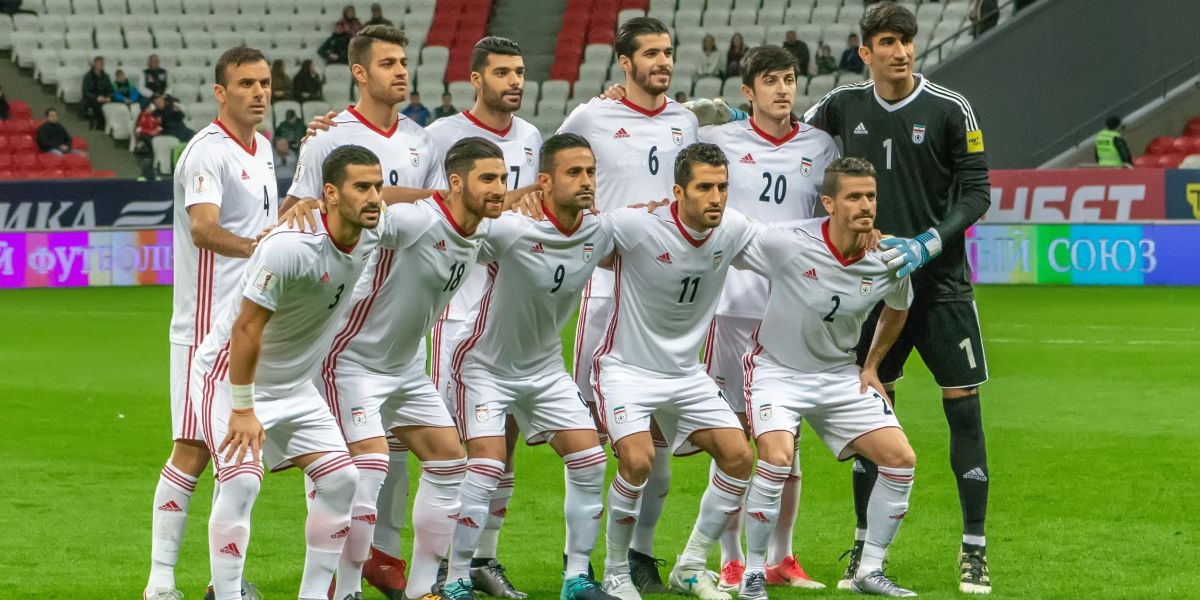
Iran’s place at the 2026 FIFA World Cup is under review, with senior football officials acknowledging that rising tensions with the United States could affect the country’s involvement in the tournament.
The United States is set to co-host the expanded 48-team finals alongside Canada and Mexico. However, recent military escalation between Washington and Tehran has cast uncertainty over Iran’s participation.
According to Mail Sport, Iranian football federation president Mehdi Taj said discussions are underway at senior levels of government and sport to determine how the country should respond.
“It’s not possible to say exactly, but there will certainly be a response. This will be studied by the country’s high-ranking sports officials and there will be a decision on what’s going to happen.
Read also: Kimi Antonelli issues warning to George Russell with Mercedes vow
“But what we can say now is that due to this attack and its viciousness, it is far from our expectations that we can look at the World Cup with hope.”
Taj did not outline specific measures under consideration, and it remains unclear whether any formal steps toward withdrawal have been initiated.
What happens if a team withdraws?
Under FIFA regulations, a qualified team that withdraws from the World Cup can face disciplinary measures, including fines or suspension, unless mitigating circumstances are accepted by the governing body. FIFA has not publicly commented on Iran’s remarks.
Political withdrawals from the tournament are rare, but there is precedent.
Read also: John Stones has been convicted: “Nothing to say”
Rather than a single pattern, past cases have reflected the politics of their time. In the 1930s, disputes centered on hosting rights. Uruguay declined to defend its 1930 title at the 1934 tournament in Italy following disagreements linked to European nations’ earlier refusal to travel to South America. Argentina later opted out of the 1938 finals in France, objecting to consecutive European hosts instead of the expected continental rotation.
Decades later, Cold War tensions shaped another episode. The Soviet Union withdrew from 1974 World Cup qualifying after refusing to play a second-leg match in Santiago, Chile. Soviet authorities described the stadium as an “arena of torture and execution of patriots” who supported the late President Salvador Allende. After FIFA rejected a request to move the match to neutral ground, the USSR did not travel and was disqualified.
Decision pending in Tehran
Whether Iran ultimately follows a similar path remains uncertain. Any withdrawal would carry sporting, financial and diplomatic consequences, particularly given the scale of the 2026 tournament, which will be the largest in World Cup history.
For now, Iranian officials say the matter will be reviewed internally before a final decision is announced.
Read also: Gyokeres says bloody socks is normal procedure
Sources: Mail Sport, FIFA historical records
Read also: Botev Plovdiv president shot in the head after Bulgaria’s Nations League tie