Ferrari will be allowed to introduce its revised halo-mounted winglets from the Japanese Grand Prix onward, following discussions with the FIA after initial concerns in China.
The component first appeared during practice at the Chinese Grand Prix but was removed before qualifying when questions were raised about its legality. The FIA had initially viewed the design as potentially “borderline,” prompting Ferrari to avoid any risk of penalties.
According to AutoRacer, via F1 Technical, the governing body has now approved the concept after further evaluation with FIA technical delegate Jo Bauer.
What the upgrade actually does
The winglets are designed to improve airflow around the cockpit, acting like a small windscreen that helps guide air more efficiently toward the rear of the car.
Read also: Tiger Woods confirms shock return weeks before Masters
The expected performance gain is modest—likely only hundredths of a second—but in Formula 1, even marginal improvements can make a meaningful difference over a race distance.
Ferrari is also expected to refine the design further, with thinner materials potentially unlocking additional aerodynamic gains.
Closing the gap to Mercedes
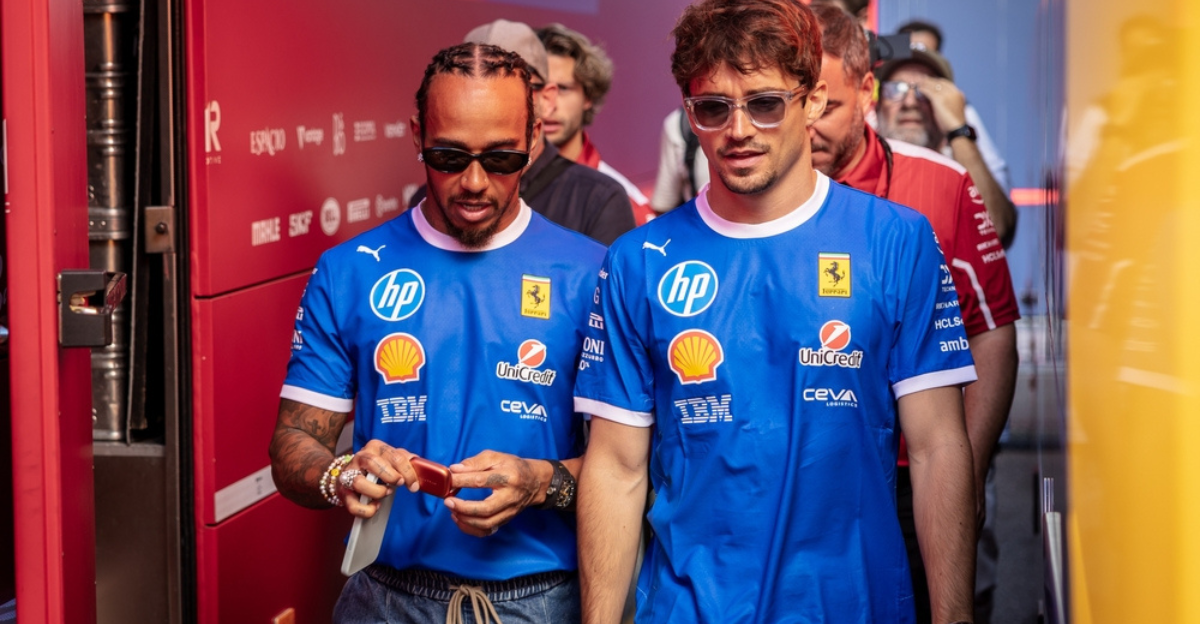
Ferrari has shown early promise this season, with Charles Leclerc and Lewis Hamilton both leading races in Australia and China.
However, the team has struggled to match Mercedes over longer stints, particularly on race pace. Incremental upgrades like the halo winglets could help reduce that gap as development continues.
Read also: Spurs consider permanent manager switch during international break
The “Macarena” wing still on hold
Alongside the halo concept, Ferrari is working on a more ambitious upgrade: a rotating rear wing system, nicknamed the “Macarena” wing.
Tested during practice in China, the system pivots when activated by the driver to reduce drag and increase straight-line speed. Unlike the halo winglets, it has the potential to deliver gains worth tenths of a second.
For now, though, reliability concerns and limited testing opportunities have delayed its race debut.
Ferrari team principal Frederic Vasseur explained:
Read also: Klopps wife on potential Liverpool return
“With the system today, you don’t have a test between the races, so that means if we want to put mileage on the parts, we need to do FP1.”
“We will do it again probably next week [in Japan].”
Small gains, big impact
Ferrari’s immediate focus remains on incremental improvements, but in a tightly contested field, even small gains can be decisive.
The approved halo upgrade may not be a game-changer on its own, but it represents another step in Ferrari’s effort to close the gap to Mercedes.
Read also: Quadruple dream over but season alive
Sources: AutoRacer, F1 Technical
Read also: The top 20 greatest WWE stars of all time