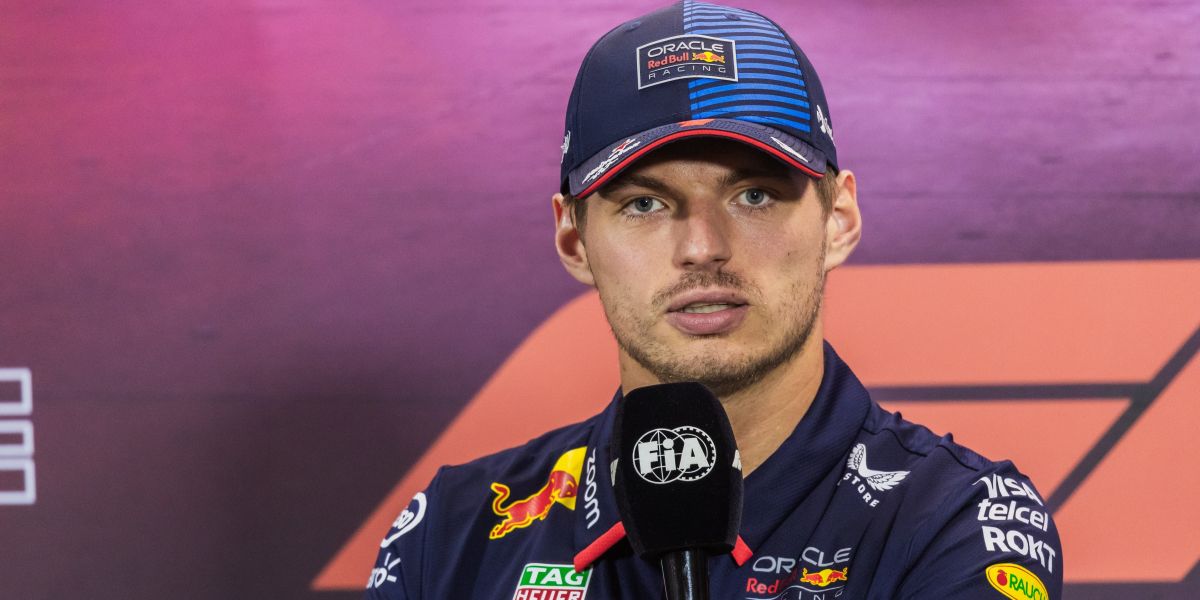
Max Verstappen brought an unusual edge to the start of the Japanese Grand Prix weekend when a routine Formula 1 media session at Suzuka was interrupted by a personal objection. According to the original report by Stuart Codling and Ronald Vording for Motorsport.com, the Red Bull driver made clear that he would not speak while Guardian journalist Giles Richards remained in the room, saying, “I’m not speaking before he’s leaving.” The moment immediately drew attention because it suggested that tensions from last season had not disappeared, even with a new race weekend under way.
Rather than reading as an isolated flash of frustration, the exchange appears to reflect a longer running grievance about how Verstappen believes he has been covered, particularly by British media outlets. The Suzuka incident gave that frustration a very public expression and turned a standard press conference into another chapter in a dispute that has followed him through several major controversies in recent Formula 1 seasons.
A question from Abu Dhabi that still lingers
According to Codling and Vording, the dispute is understood to stem from the post race press conference after the 2025 Abu Dhabi Grand Prix. In that session, Richards asked Verstappen whether he regretted his collision with George Russell in Spain, an incident that resulted in a 10 second penalty and reduced what could have been a 10 point finish to a single point. In the context of a championship battle decided by only two points, the question clearly struck a nerve.
Verstappen reacted sharply and argued that the focus on Spain ignored the wider story of his season. He said, “You forget all the other stuff that happened in my season,” before pushing back further on the emphasis placed on Barcelona. That earlier exchange already showed how irritated he was by the way certain moments from his campaign were being singled out, and the scene at Suzuka suggests that irritation has carried over into 2026 rather than fading with time.
Read also: Tiger Woods keeps Masters hope alive as online reaction turns to his physique
A broader complaint about British coverage
This is not the first time Verstappen has voiced distrust toward British based Formula 1 coverage. Over the past few years he has repeatedly suggested that the sport’s media environment is skewed against him, especially when incidents involving aggressive driving, stewarding decisions, or title defining moments dominate the conversation. According to the original report, he has linked that feeling not only to individual journalists or outlets, but also to what he sees as a broader imbalance in how Formula 1 is discussed and interpreted.
That argument surfaced clearly after he secured his fourth world title in Qatar in 2024. As cited in the original report by Codling and Vording, Verstappen said, “The problem in F1 is that 80 to 85% of the media is British,” and added that some of the things written about him were not fair. Whether one agrees with that view or not, it has become a consistent part of the way Verstappen explains the criticism that follows him, particularly during seasons when the title fight is shaped by repeated clashes and intense scrutiny of his driving style.
Why the Suzuka incident carries wider meaning
The Suzuka confrontation also lands against the backdrop of older disputes that still shape how Verstappen is viewed. In 2022, he briefly refused to engage with Sky Sports F1 after comments linked to the controversial finish of the 2021 Abu Dhabi Grand Prix, a race that remains one of the most divisive moments in recent Formula 1 history. The FIA later said that “human error” played a role in the way that race was restarted, a conclusion that has continued to influence how later arguments around fairness, stewarding, and media framing are understood.
Taken together, the Suzuka moment says as much about Verstappen’s relationship with the sport’s media as it does about one journalist or one press conference. According to the report by Stuart Codling and Ronald Vording, the episode reflects a deeper sensitivity around how his actions are framed, how previous controversies are revisited, and how unresolved tensions from a championship fight can quickly return to the surface. What happened in Suzuka therefore felt less like a passing confrontation and more like a reminder that, for Verstappen, the battle over perception is still very much alive.
Read also: Liverpool weigh Alonso move as pressure builds on Slot
Sources: Motorsport.com
Read also: FIA trims Suzuka qualifying energy limit after early 2026 concerns