Gordon deal became possible because Barcelona’s numbers changed
According to Louise Taylor in The Guardian article “Anthony Gordon set for Barcelona medical before £69.3m move from Newcastle”, FC Barcelona have agreed a £69.3 million deal with Newcastle, while Gordon is set for a significant pay rise and has personally wanted the move to Barcelona. The article also described that the transfer window does not open until June 15, so the formalities can only be completed slightly later, even though the clubs are working to get the key parts of the deal in place before then.
The interesting part is not only the fee. The interesting part is the timing. For several years, Barcelona have been known as the club that could almost find money for big names, only to then struggle with registrations, salary limits, deferred payments and LaLiga’s financial controls. When a player like Gordon suddenly becomes realistic, it looks from the outside like a financial leap. From the inside, it perhaps looks more like an account where several pieces have fallen into place at the same time.
If a club under financial pressure suddenly manages to move heavily in the market, people naturally ask where the money is coming from. That is a fair question. It is just not the same as proof that fraud is taking place at the club. The public explanation, for now, lies in LaLiga rules, commercial agreements and an aggressive chase for new revenue.
VIP seats changed Barcelona’s room to manoeuvre
According to Sergi Solé in Mundo Deportivo’s article “Barcelona increase LaLiga salary cap by €81 million after league approves VIP seats deal”, Barcelona’s squad cost limit was increased from €351.284 million to €432.807 million after a deal involving 475 VIP seats at Spotify Camp Nou. The agreement generated €100 million and was linked to the companies Fortia Advisor Limited and New Era Visionary Group, which received exploitation rights over a 30 year period.
Read also: Kasper Schmeichel finds completely new path after football retirement
This is where the sudden financial shift gets its most concrete explanation. Barcelona have not necessarily found a secret cash box. The club have sold future commercial value, and that value can affect how much the club is allowed to spend on wages, amortisation and player registrations. A major transfer is therefore not only about cash sitting in an account. It is about how LaLiga assesses the club’s revenue, obligations and future financial room.
According to Mundo Deportivo’s article “Barcelona set to enter the summer under LaLiga’s 1:1 rule after Lewandowski exit”, a return to the 1:1 rule means that Barcelona can reinvest 100 percent of the financial room freed up through sales or salary reductions. Without that position, the club would in several cases only be able to use a lower share of freed up wages and transfer income.
A sale, a salary reduction or a commercial revenue stream can look moderate when viewed in isolation, but it changes a lot if it gives the club full access to reinvest. Barcelona may still be under pressure, still have debt and still depend on creative solutions. But a creative accounting structure is not automatically criminal financing.
Sponsorships are the other major key
According to FC Barcelona’s own article “FC Barcelona and Nike, a renewed strategic alliance”, the new Nike agreement came into effect from the 2024 to 2025 season, and the club itself highlighted higher sponsorship payments, a signing bonus, performance bonuses for titles and greater control over retail and e commerce. FC Barcelona described the deal as the biggest sponsorship agreement in the club’s history.
Read also: Andy Murray reveals one major regret about Nadal and Djokovic
Those kinds of agreements explain why Barcelona can appear more forceful, even while the debt narrative still hangs over the club. An improved Nike setup, an expanded Spotify Camp Nou, more premium revenue and continued sponsorship income do not change the past. They change the club’s future revenue picture, and that is exactly what the LaLiga system reacts to.
Here, the suspicion becomes more psychological than legal. People have become used to Barcelona lacking money, which makes any major deal feel almost unnatural. But a club with Barcelona’s brand can still raise enormous commercial sums, especially when it mortgages or sells access to future income. It can be risky and short term, but it is not a general sign that fraud is taking place.
Money laundering begins in football’s payment flows
According to the FATF report “Money laundering through the football sector”, football has become a global industry where investment has grown explosively, while regulation has not always kept pace. The report highlights that the sector can be misused by people who want to invest illegal money, precisely because clubs, transfers, ownership and commercial agreements can create complex money flows.
That does not mean there is public proof that, for example, the mafia has financed Barcelona’s pursuit of Anthony Gordon. But football’s system is built on valuations that are not an exact science. What is a player precisely worth? What is an agent fee precisely worth? What are 475 VIP seats precisely worth over 30 years? How much should a sponsor pay for global visibility? When the answers cannot be measured objectively, the industry becomes attractive to actors who want to hide, move or legitimise money.
Read also: Manchester United told to ‘nick’ two Man City stars if relegation hits
According to Bruna Szego in AMLA’s interview “AML in the football sector”, football creates significant money laundering risks because of the sport’s global popularity, large money flows, cross border transactions and, at times, opaque corporate structures. She also pointed out that Europol has identified football as the sport in the EU most often affected by criminal organisations.
That applies directly to a situation like Barcelona’s. Not because Barcelona are therefore guilty of anything, but because a club under financial pressure, with major sponsorships, stadium renovation, international companies and expensive transfers, belongs to the category that authorities have started to examine more closely.
According to Hogan Lovells’ analysis “Football agents and professional football clubs subject to the new EU anti money laundering regulation”, new EU rules from July 10, 2029 will apply to football agents and professional clubs in transactions with investors, sponsors, agents and player transfers. The requirements include customer due diligence, ongoing monitoring, record keeping and reporting of suspicious transactions.
The EU is not legislating in this way because all clubs are criminal, but because the structure is vulnerable. A transfer like Gordon’s can be completely legitimate, while that type of deal is still exactly the kind of transaction regulators want better insight into.
Read also: Thierry Henry issues blunt warning over Liverpool’s £123m signing
The complaint against Laporta was Barcelona’s darkest thread
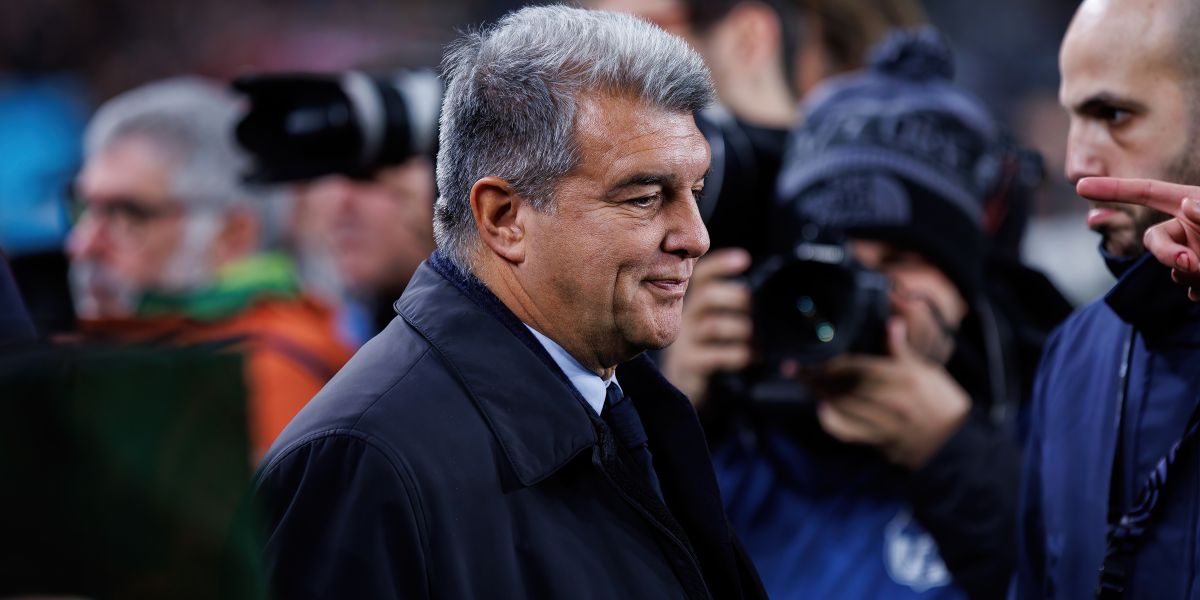
According to Santi Giménez in the AS article “A Barça member reports Laporta to the Audiencia Nacional”, a Barcelona member filed a complaint against Joan Laporta, several directors, his brother and club officials, with allegations including money laundering, illegal commissions, tax matters and foreign financial transactions. The complaint mentioned, among others, Barça Vision, New Era Visionary Group, Limak, Nike and the VIP seats, while FC Barcelona rejected the accusations as detached from reality and based on false or manipulated documents.
It is not that the complaint proves anything. But the words in the complaint, money laundering, commissions, international companies and stadium related agreements, fit the areas where anti money laundering authorities usually become interested. It does not directly affect the Gordon deal, but it does touch some of the financial mechanisms that make a Gordon transfer possible.
According to Comunicación Poder Judicial’s court statement “Audiencia Nacional rejects a complaint against Joan Laporta and his board for money laundering”, the complaint was not admitted by the Audiencia Nacional because the court did not consider itself competent to investigate the alleged matters. The statement mentioned possible offences such as money laundering, unfair administration, document falsification, tax crime and criminal organisation, but the rejection was procedural and not a ruling on the substance.
The complaint cannot be used directly as proof that Barcelona have dirty money inside their system. It can be used as proof that there are publicly known suspicions around some of the club’s financial agreements.
Read also: Roy Keane goes nuclear on Man City after 114 guilty findings
The Negreira case does not help
According to Ramón Fuentes in Mundo Deportivo’s article “Tax authorities conclude that the Negreira payments were not for referees”, the Spanish tax authority concluded in a report that the payments to José María Enríquez Negreira could not be documented as payments to referees or as payments intended to influence sporting results. Mundo Deportivo also wrote that no payments to any referee were documented.
The Negreira case is still part of Barcelona’s darker period, because it has made the club easier to suspect. The case concerns past payments, the refereeing environment and possible sporting influence. However, it is important to point out that the relevant issue is not that Barcelona have had scandal cases. The relevant issue is whether there are documented links between criminal networks and the revenue that now gives the club room to operate. So far, the public sources do not point to such a connection.
Gordon deal sits in the shadow of a system problem
Could a possible mafia or gang have influenced Barcelona’s sudden financial room and therefore their ability to buy Anthony Gordon? As a hypothesis, the question can be asked, because football’s money flows are vulnerable, because Barcelona have used complex commercial agreements, and because some of the club’s agreements have been subject to complaints and suspicion. As a concrete claim, it does not hold up based on the publicly available material.
The most likely explanation is drier and more rooted in football finance, namely that Barcelona have gained greater room within LaLiga’s system. Whether something else comes out in the future is something only Joan Laporta and his inner circle know. The hope, of course, is that football remains “clean”.
Sources: The Guardian, Mundo Deportivo on VIP seats, Mundo Deportivo on the 1:1 rule, FC Barcelona on the Nike agreement, FATF on money laundering in football, AMLA interview on money laundering in football, Hogan Lovells on EU rules, AS on the complaint against Joan Laporta, Poder Judicial on the rejection of the complaint, Mundo Deportivo on the Negreira case