Infantino confirms Trump call
FIFA president Gianni Infantino has publicly addressed one of the most controversial disciplinary decisions of the World Cup, after Folarin Balogun was allowed to face Belgium despite being shown a red card in the previous round.
Balogun was sent off during the United States’ 2-0 win over Bosnia and Herzegovina, a decision that normally carried an automatic one-match suspension.
That would have ruled him out of the last-16 match against Belgium. Instead, FIFA suspended the implementation of the ban for a one-year probationary period, allowing the American striker to play.
According to AP, U.S. President Donald Trump said he called Infantino to ask for a review after learning that a red card could keep Balogun out of the Belgium match. Trump said he did not initially understand the consequences of a red card, but felt the decision was unfair once he saw what it meant.
Read also: Ferrari issues unusual statement as Christian Horner rumours grow
FIFA says the decision was independent
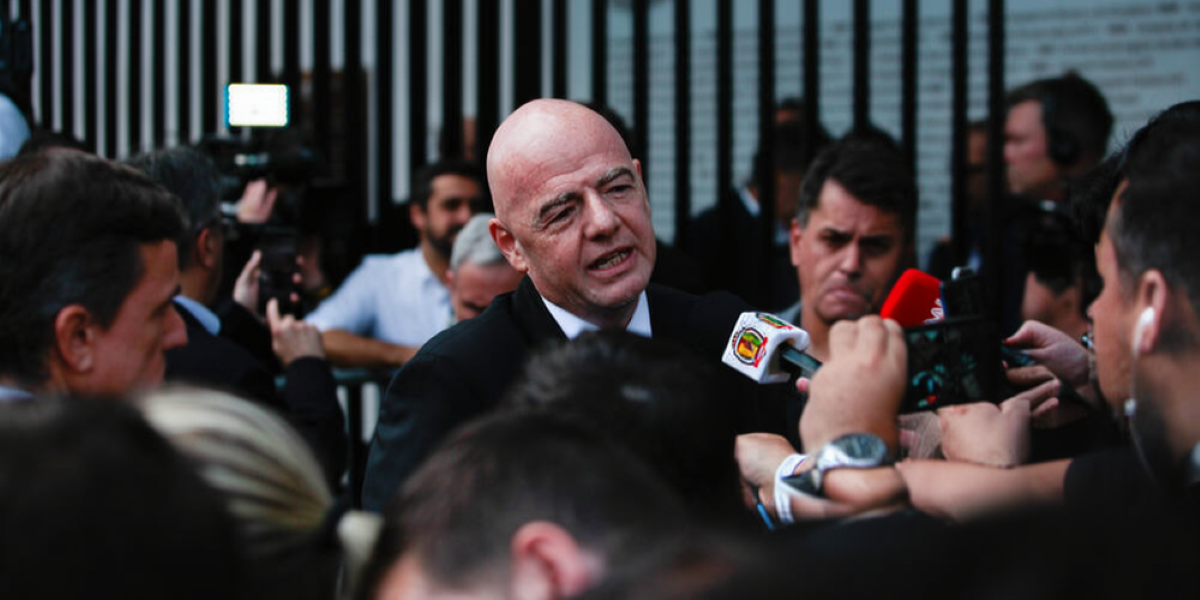
Infantino confirmed that he had received the call, but insisted that the case was already being handled by FIFA’s judicial bodies.
According to The Guardian, Infantino said: “FIFA’s judicial bodies are independent. They operate autonomously, apply the FIFA Disciplinary Code, and decide cases based on the applicable regulations and the specific facts before them.”
That is also FIFA’s official line.
There is no public sign of a split between Infantino and FIFA on the matter. Instead, the governing body is trying to defend three things at once: the independence of its disciplinary process, the integrity of referee Raphael Claus, and Infantino’s handling of a call from the president of a World Cup host nation.
Read also: Jamie Carragher: ‘always felt’ Man City were guilty
That balancing act has not ended the criticism, but it does mean the story should not be framed as Infantino and FIFA being at odds.
Trump denies applying pressure
Trump has argued that he only asked for the incident to be reviewed.
“All I did was ask for a review because I didn’t think it was a foul,” he said. “I didn’t tell him what to do. I can’t tell him what to do.”
The president also said he did not believe Infantino personally made the decision, suggesting instead that it had been handled by a committee.
Read also: Dana White missed Fury vs Joshua’s kickoff
That matches the position FIFA has taken publicly. The organisation says its disciplinary committee acted under Article 27 of the FIFA Disciplinary Code, which allows a judicial body to suspend the implementation of a disciplinary measure in certain cases.
FIFA also backs the referee
The controversy has not only centred on Balogun’s availability.
Trump also criticised Brazilian referee Raphael Claus, who had shown the red card after a VAR review. He described Claus as “very suspect” and urged people to examine his past, without giving further detail.
FIFA responded by defending the official.
Read also: Leeds will receive huge compensation from Manchester City
According to Rediff, FIFA described Claus as one of the world’s leading professional referees and a valued member of its elite group of World Cup officials. The governing body also said he had shown the highest standards of professionalism and integrity throughout his career.
FIFA’s support for Claus does not necessarily contradict the decision to suspend Balogun’s ban. The governing body is effectively saying that the referee remains respected, while a separate disciplinary body still had the authority to delay the punishment.
Criticism remains fierce
The explanation has done little to calm European criticism.
The Guardian also reported that UEFA called the decision “unprecedented, incomprehensible and unjustifiable” and said FIFA had crossed “a red line”. Belgium also challenged Balogun’s eligibility before the match, but FIFA dismissed the appeal because the Belgian federation was not considered a party to the original disciplinary case.
Read also: Huge Super League twist as Real Madrid head back towards old allies
Balogun started against Belgium, but his presence did not save the United States from elimination. Belgium won 4-1 and advanced to the quarter-finals.
The sporting issue ended on the pitch. The governance issue did not.
FIFA and Infantino are publicly aligned, but the case has still left the organisation facing uncomfortable questions about political influence, transparency and the limits of presidential access in football’s disciplinary system.