This was not the goodbye he had in mind
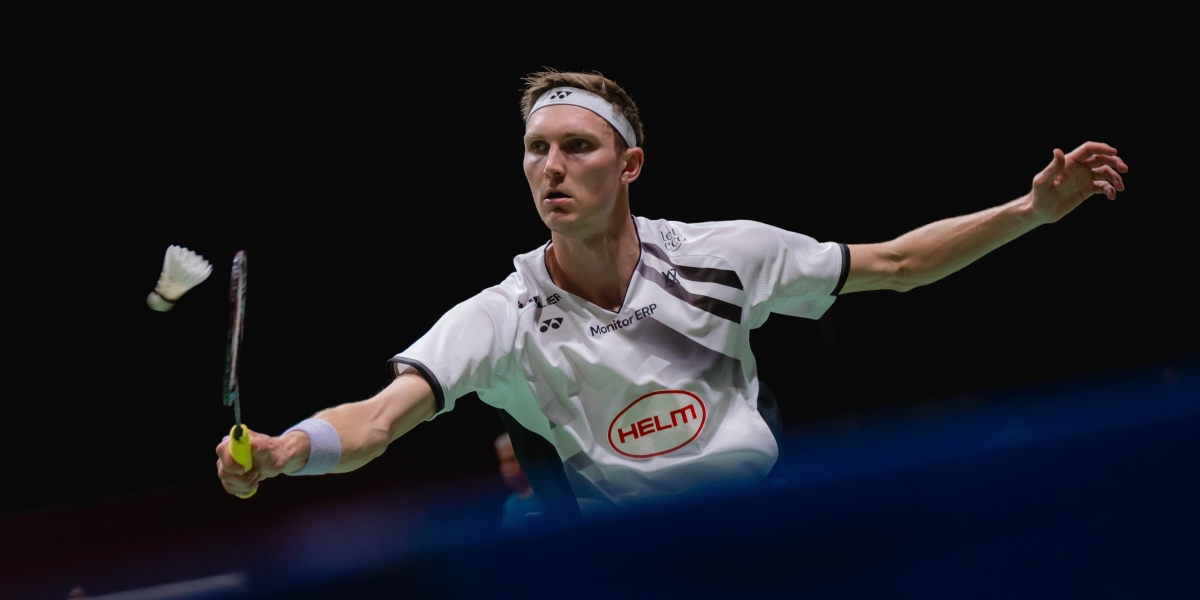
According to his interview on The Average Not Average Podcast, Viktor Axelsen is not retiring because the hunger disappeared. Quite the opposite. He talks like someone who would still be playing if the body had allowed it. The drive is still there, the joy is still there, but the body is no longer cooperating. In Outlook India’s report on his retirement announcement, the same point comes through clearly, the back problems and the nerve pain after surgery in April 2025 made it impossible for him to train and compete at the level elite badminton demands.
That is also why this retirement feels heavier than the usual end of a great career. There is no romantic finish line here, no carefully staged last run, no neat final chapter. In his interview, Axelsen more or less says as much himself when he talks about reaching a point of no return and not getting any “last dance”. You can hear the frustration in that. He is not describing a player who had seen enough. He is describing a player who ran out of room.
The body had been warning him for a long time
According to his podcast interview, the problems had been going on for much longer than the retirement post itself suggests. He traces it back to the period before Paris 2024, when the back was already a serious and ongoing problem, and he speaks about being barely able to move at the Singapore Open that year. The public timeline around him fits that picture. In March 2025, as reported by Olympics.com and The Indian Express, Axelsen announced that he would undergo endoscopic treatment for his back in an effort to compete pain free again.
The surgery in Germany in April 2025 was clearly meant to save the career. And for a while, it looked as if it might buy him more time. Flashscore’s December report notes that he returned after roughly six months out and even reached the semi finals at the Denmark Open. But the same report says the back problems came back, and worsened, with Axelsen speaking in his podcast about severe nerve pain and being unable to train.
Read also: Harry Kane’s Bayern future suddenly comes with a Tottenham escape route
By March 2026, Flashscore was also reporting comments from Dr. Morten Zebitz saying the back problems did not look optimistic and that Axelsen had suffered a new prolapse on top of the underlying wear in his back.
He built his career on taking nothing for granted
One of the more revealing parts of the interview is not about the injury at all. It is the way Axelsen talks about the years behind him. The diets, the sleep routines, the reading between sessions, the constant search for a better edge, all of it fits the version of him people have watched for years. He has never really sold himself as a magician or a natural genius. He has sold his extreme work ethics, even when he talks about talent, he does it almost dismissively, as if talent is only useful until discipline takes over.
That is probably why the question about whether being extreme in every area can become too much, is such a fair one. Not because it explains the injury, there is no basis for saying that, but because it gets at the shape of his career. Axelsen has spent years living inside a very narrow, very demanding version of excellence. That mindset helped make him one of the greatest players the men’s game has seen. It also meant there was never much distance between the athlete and the person. In this interview, maybe more than before, he sounds aware that retirement is not just about losing matches. It is also about learning how to live without that constant inner pressure.
The list of achievements still looks absurd
Even without another comeback, the career is full enough that nothing really needs adding. On his own official facts page, the list runs from World Junior Champion in 2010 to the Dubai Finals titles, World Championships, All England, World Tour Finals, and Olympic gold. Olympics.com’s Paris 2024 coverage records his second straight Olympic singles title, won against Kunlavut Vitidsarn on 5 August 2024. That made him only the second men’s singles player to win two Olympic gold medals.
Read also: ‘I’m not confident’: Red Bull chief delivers troubling verdict on Verstappen’s car
What is interesting, though, is that Axelsen does not speak about the career like someone obsessed with public ranking. He mentions the Dubai Super Series Finals in 2016 with real affection, partly because he had been in so many finals before getting that one over the line. He also points to the Thomas Cup with Denmark as a huge moment. Athletes often remember the wins that shifted something inside them, not just the ones that looked biggest on the poster.
Denmark, Dubai and the years in between
When Axelsen speaks about having had ups and downs with Badminton Denmark, the background is worth knowing though. In 2021 he left the daily national team setup in Brøndby and moved his training base to Dubai. Badminton Europe’s report at the time made clear that he was no longer part of the regular national team training environment, while BadmintonPlanet’s coverage laid out the reasons he gave, better conditions, health considerations, less travel strain around Asia, and more time with family.
That move said a lot about him. He had reached a point where he wanted to shape everything himself, down to the training environment and the daily rhythm. In the interview, he talks about NAS as a second home. It was not just a training base, it was the place where he could build the setup he believed in could give him the edge against other athletes.
At the same time, the story with Denmark never fully ended. In November 2025, Badminton Denmark announced a new coaching and training agreement that brought him back into the Brøndby environment in a more formal way. So when he says there were ups and downs, that sounds less like one dramatic fallout and more like a long relationship that kept changing shape.
Read also: Man City hit back at Premier League with explosive accusation
The sport is still going to hear from him
The most convincing thing in the interview is that he does not sound like someone about to disappear. He talks about using his voice in the sport, staying involved, maybe coaching, continuing with Yonex, building the podcast, and being more open with people than he could be while he was still competing every week. That all sounds believable, mainly because he has already been larger than just his match results for a while. He built his own environment, thought hard about the sport around him, and has never been shy about speaking on bigger issues in the world.
There is also something very humane in the way he talks about time. He keeps coming back to his two girls, to friends, to family, to ordinary life, and to the small freedom of no longer having that voice in the back of his head telling him he cannot do this or that because everything must serve performance. That may end up being the most interesting part of the whole story. Not the medals, not the records, not even the injury, but what happens when a man who spent years controlling every detail suddenly has to build a life that is not organised around the next tournament.
And as he said himself as a side-joke “I might even change the daily ritual of coffee before matches to daily does of red-wine instead”, suggesting, there is another life on the horizon when Viktor Axelsen as a badminton-player is being put on the shelf.
Read also: Manchester City CEO says everything is one big “conspiracy theory”