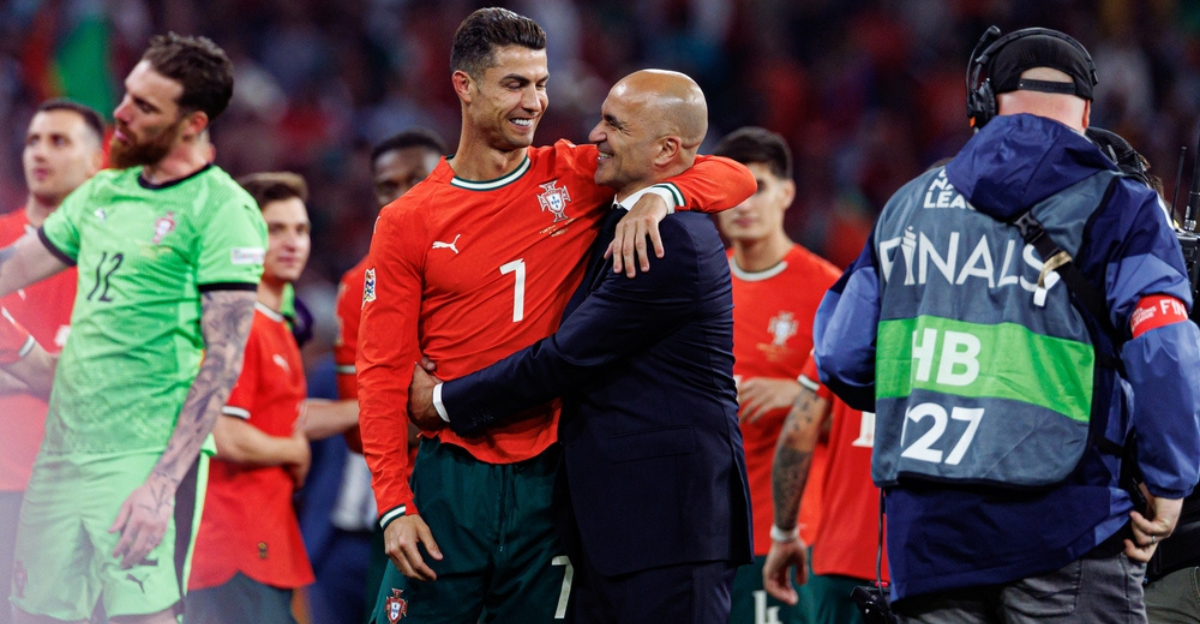
Portugal’s World Cup win over Croatia ended with celebration, confusion and another major VAR debate.
Roberto Martínez’s side won 2-1 in the Round of 32, with Gonçalo Ramos scoring the decisive goal in added time after Cristiano Ronaldo had earlier equalised from the penalty spot.
But the biggest talking point came even later, when Joško Gvardiol thought he had forced extra time for Croatia.
The goal was ruled out for offside after a VAR review, with FIFA’s connected ball technology playing a crucial role in the decision.
Read also: Kylian Mbappe had just hit top form – now Real Madrid have a problem
Croatia denied at the death
According to SPORTbible, Gvardiol believed he had made it 2-2 in the 103rd minute after finishing from close range.
The move was checked because Mario Pašalić was in an offside position when the ball reached him in the box.
At first glance, the key question was whether Igor Matanović had touched the ball before it came through to Pašalić. If there was no touch, the goal could stand. If Matanović had made contact, Pašalić was offside.
That is where the ball itself became part of the decision.
Read also: Premier League boss breaks silence with damning Manchester City statement
The ball detected the touch
FIFA later explained that the sensor inside the official Adidas Trionda match ball detected contact from Matanović during the build-up.
The technology showed that Matanović had touched the ball before it reached Pašalić, which meant the Croatian midfielder was offside when he became involved in the move.
According to adidas, the Trionda ball contains a 500Hz inertial measurement unit motion sensor chip, which sends ball data to the VAR system in real time.
Adidas says the technology can help officials make faster offside decisions and identify individual touches of the ball.
Read also: Kasper Schmeichel finds completely new path after football retirement
In this case, it proved decisive.
Why the referee still went to the screen
The controversy was not only about the sensor.
Norwegian referee Espen Eskås was also sent to the VAR monitor to judge whether Portugal defender Renato Veiga had deliberately played the ball after Matanović’s touch.
If Veiga had made a deliberate play, the offside phase could have been reset.
Read also: Andy Murray reveals one major regret about Nadal and Djokovic
The officials decided he had not, meaning Pašalić’s offside position still counted and Gvardiol’s goal was disallowed.
That explanation did not calm Croatian frustration.
Martínez defends the decision
According to The Guardian, Portugal coach Roberto Martínez rejected the idea that his team had benefited from a fortunate call.
“The balls now have a chip in them, and it is clear why VAR intervened,” Martínez said.
Read also: Manchester United told to ‘nick’ two Man City stars if relegation hits
He added that the decisions were correct and insisted there was “no bad decision or lucky call.”
Croatia coach Zlatko Dalić saw it differently.
“Emotions have been literally killed,” he said, according to The Guardian.
He argued that VAR can sometimes help, but said football had gone too far with the technology.
Ronaldo’s record and Portugal’s relief
The decision kept Portugal’s 2-1 lead intact and sent them into the last 16, where they will face Spain.
It also preserved a historic night for Ronaldo, who became the oldest player to score in a World Cup knockout match when he converted his penalty.
For Croatia, the ending was brutal.
They had led through Ivan Perišić, pushed Portugal to the edge and believed they had found one final answer.
Instead, the match was decided by a touch so small that many viewers could not see it clearly on replay.
The ball detected it. VAR acted on it. Croatia went home.