For four years, LIV Golf operated with the kind of financial security rarely seen in professional sport. Saudi Arabia’s Public Investment Fund supplied the money needed to recruit major champions, stage lucrative tournaments and challenge the PGA Tour.
That certainty is disappearing. Sky Sports reports that PIF will end its direct funding when the 2026 season concludes, forcing LIV to rebuild its business model.
A new investor remains unnamed
LIV says it has reached a signed, board-approved agreement with a new lead investor. Chief executive Scott O’Neil expects the deal to be completed in September.
The identity of the investor and the financial terms remain private. O’Neil has only said that the new partner will “carry and fund” the league during its next phase.
Read also: Abu Dhabi United Group financed them for years
According to LIV Golf’s official announcement, more than a dozen other parties have expressed interest in acquiring minority stakes.
The league believes that structure can finance seasons through 2030. However, the agreement must still be finalised before LIV can claim that its long-term future is secure.
Players could become the owners
The most significant change concerns the golfers themselves. LIV plans to make its players the league’s majority equity holders instead of simply paying them enormous guaranteed contracts.
That creates potential rewards if the business grows, but it also transfers greater responsibility and financial risk to the players. They will have a direct interest in whether teams, sponsorships and media rights become profitable.
Read also: Dana White on ownership of new Las Vegas NBA Team: “YES”
The calendar is also expected to shrink from 14 tournaments to ten central events. The proposed structure includes five global Team Majors and five signature tournaments.
LIV describes the project as a diversified, multi-partner model. In an earlier strategy announcement, the league claimed that its revenue had doubled during 2026, although it provided no detailed public accounts.
Rahm becomes the crucial test
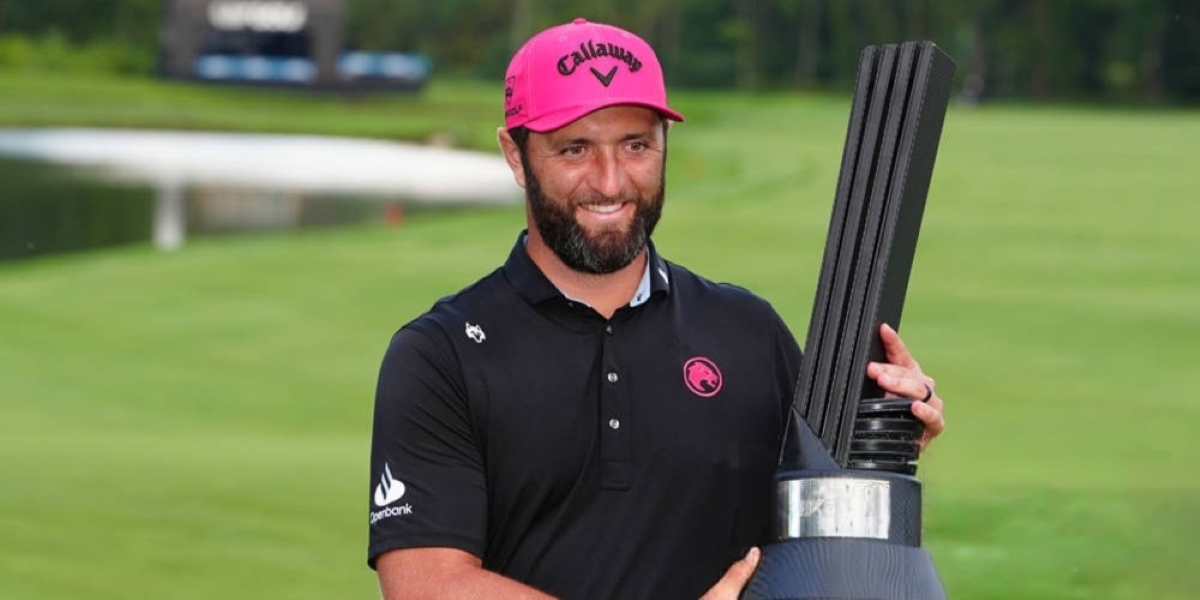
No player represents the importance of the transition better than Rahm. The Spaniard joined LIV at the beginning of 2024 after accepting one of the biggest contracts in golf history.
His name brought sporting credibility and international attention. Losing him during the restructuring would therefore damage more than the quality of LIV’s fields.
Read also: Aymeric Laporte exposes ugly side of Pep Guardiola relationship
Rahm has not said that he intends to leave. When asked whether he might personally invest in the competition, he replied: “Never say never.”
He added that LIV had not asked him for money, but left the possibility open. AS reported that Rahm was aware of several proposals intended to develop the league beyond its original model.
Bryson DeChambeau presents another major challenge because his existing agreement reportedly expires after 2026. O’Neil has publicly acknowledged that keeping both DeChambeau and Rahm would strengthen the new project.
The unlimited-money era is over
The scale of the change is difficult to overstate. Golf Monthly reports that Saudi investment had exceeded $5.3 billion by February 2026.
Read also: Manchester City face new panel that could reopen the 115-charge verdict
That money proved that a new league could rapidly reshape professional golf. It did not prove that the competition could support itself without continued injections from a sovereign wealth fund.
LIV now has to retain its stars, attract outside capital and create a product capable of generating sustainable returns. Its survival is no longer only a question of Saudi ambition.
Rahm’s decision will not determine LIV’s future by itself. Yet if its most important players refuse to become owners of the next version, the promised new era could end before it properly begins.
Read also: UK Tax-service (HMRC) is coming after Manchester City now