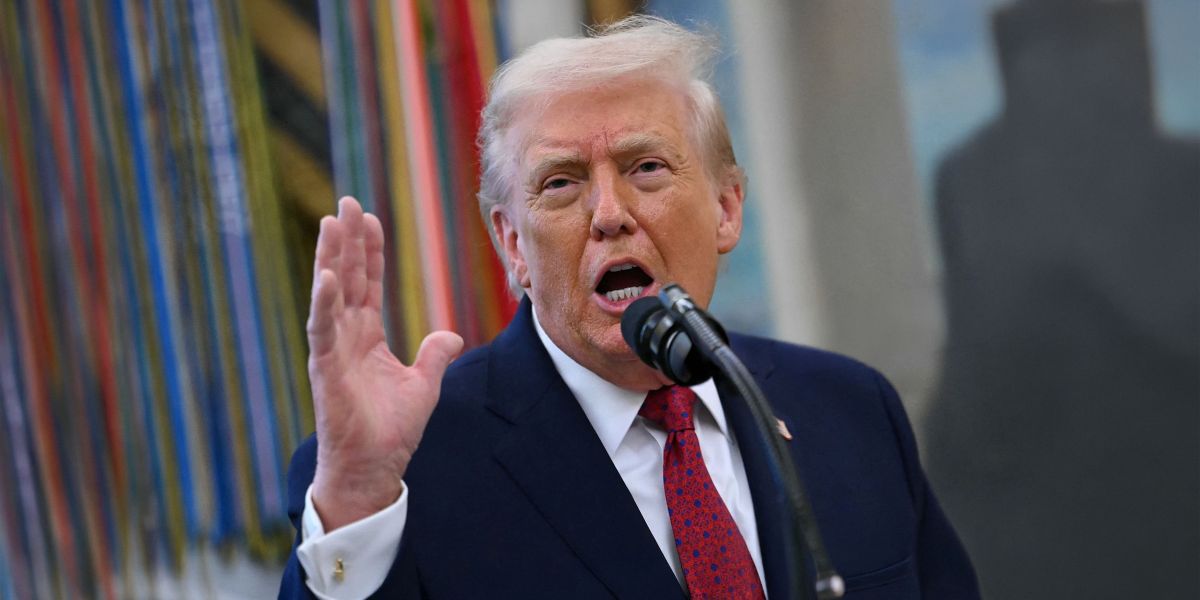
Donald Trump made AB Hernandez one of the most recognisable teenage athletes in America when he personally intervened in the debate surrounding her participation in California school sport. Now, the federal case built around Hernandez and a handful of other transgender competitors has collapsed in court, although the administration has already indicated that it may appeal.
According to The Guardian’s report on the ruling, US judge Cynthia Valenzuela dismissed the Department of Justice’s lawsuit and terminated the case. The administration had argued that California’s policy, which allows transgender students to compete on teams matching their gender identity, violated Title IX protections against sex discrimination.
A teenager became Trump’s political target
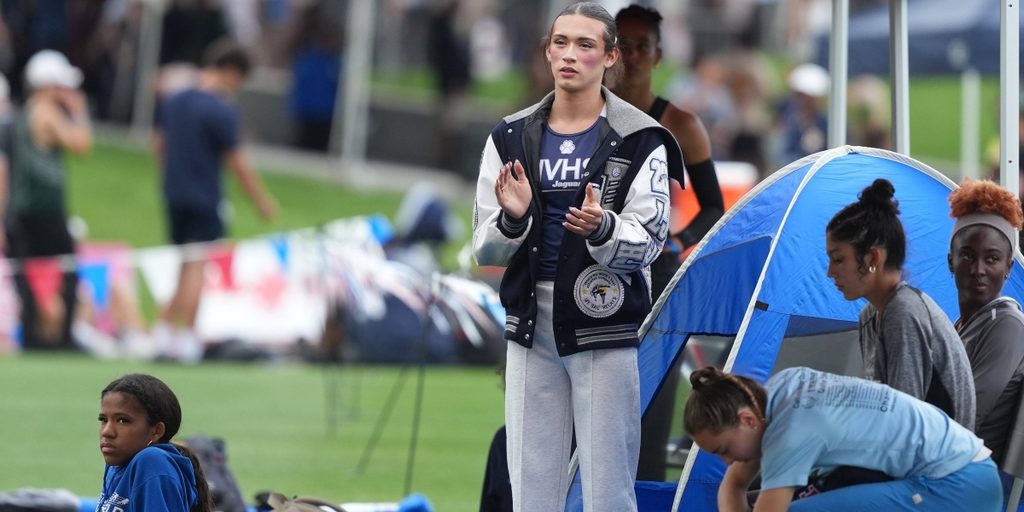
Hernandez was 16 when she won the high jump and triple jump at California’s state championships in 2025, while also taking silver in the long jump. Before the competition, Trump singled her out on social media and described her participation as “NOT FAIR, AND TOTALLY DEMEANING TO WOMEN AND GIRLS”, while claiming that he was ordering local authorities to stop her from competing if necessary.
The attack transformed a high school competition into a national political spectacle. As described in The Guardian’s profile of Hernandez, the teenager faced heckling, harassment and intense attention from activists and media outlets, even though her own classmates and several fellow competitors publicly supported her.
Read also: Roy Keane gives Manchester City stars brutal message over medals after guilty verdict
Hernandez refused to allow the controversy to diminish her achievements. “As long as you know you’ve put in the time, the work, the effort, that’s all that matters,” she said when discussing the criticism surrounding her participation.
The scale of the federal intervention was striking. California officials estimated that fewer than 10 transgender student-athletes were actively competing within a public school system containing almost six million students, yet the administration’s lawsuit cited five transgender athletes while seeking a statewide ban.
The ruling exposes a crucial weakness
Valenzuela did not establish a nationwide right for transgender girls to compete in female sport. Instead, she found that the federal government had failed to provide California with clear notice that its education funding depended on banning transgender athletes from girls’ teams.
Trump’s executive order on transgender participation was not enough to establish that condition retroactively. The federal government has also repeatedly changed its interpretation of Title IX over the past decade, weakening its argument that California should have understood that federal money was at risk.
Read also: Where Erling Haaland could end up if he leaves Man City
The decision must also be separated from the Supreme Court’s recent rulings involving West Virginia and Idaho. Those judgments allowed the two states to maintain their restrictions, but they did not require every state to adopt the same policy or create a nationwide prohibition.
The Department of Justice has not accepted defeat. It told The Guardian that it was “evaluating our options for appeal” and remained committed to Trump’s policy of preventing transgender girls from competing in girls’ sport.
Kaepernick revives another uncomfortable Trump chapter
The ruling arrived as Colin Kaepernick reopened another debate about athletes being punished after challenging the political establishment. According to the Associated Press report published by ESPN, the former San Francisco 49ers quarterback believes the NFL is still “actively blackballing” him nearly a decade after his protest against police brutality and racial injustice.
Kaepernick has not played in the NFL since the end of the 2016 season. He and former teammate Eric Reid previously filed a grievance accusing NFL owners of collusion, although the dispute was settled confidentially in 2019 and no court established that Trump caused Kaepernick’s exclusion.
Read also: Javier Tebas breaks silence on what should happen to Man City next
Trump nevertheless openly celebrated the suggestion that his political pressure was influencing NFL teams. According to CBS News’ account of his 2017 remarks, Trump told supporters that owners did not want to sign Kaepernick because “they don’t want to get a nasty tweet from Donald Trump”.
He later called on NFL owners to fire players who knelt during the national anthem. Those comments did not mention Kaepernick by name, but they were directed at the protest movement he had started to draw attention to the treatment of Black Americans.
Athletes who challenge Trump pay a personal price
The pattern continued during the 2026 Winter Olympics, when Trump attacked American freestyle skier Hunter Hess after the Olympian expressed mixed emotions about representing the United States under the current administration. According to PolitiFact’s examination of the dispute, Trump misrepresented Hess’ full comments before calling him a “real loser” and declaring that it was “too bad he’s on” the American team.
Hess had not said that he refused to represent his country. He explained that he competed for his family, friends and the values he considered positive about the United States, later responding simply: “I love my country.”
Read also: Messi admitted he targeted one World Cup rival on purpose
The cases are not legally identical, and Kaepernick has accused the NFL rather than Trump of continuing to exclude him. Together, however, they reveal how quickly athletes can become political targets when their identity, protest or public statements conflict with Trump’s preferred image of American sport.
The latest court ruling does not end the wider battle over transgender participation. It does, however, halt one attempt to use federal power against a state policy and delivers a symbolic victory to athletes who found themselves subjected to presidential attacks long before they were old enough to vote.
Read also: Cristiano Ronaldo crisis forces Portugal chief into emergency action