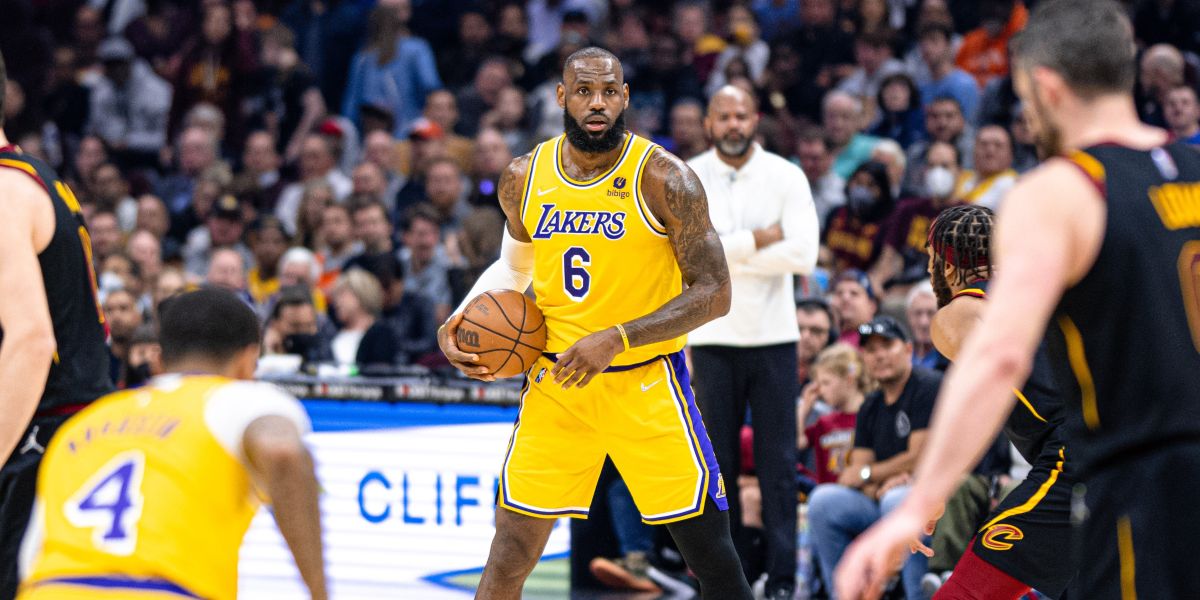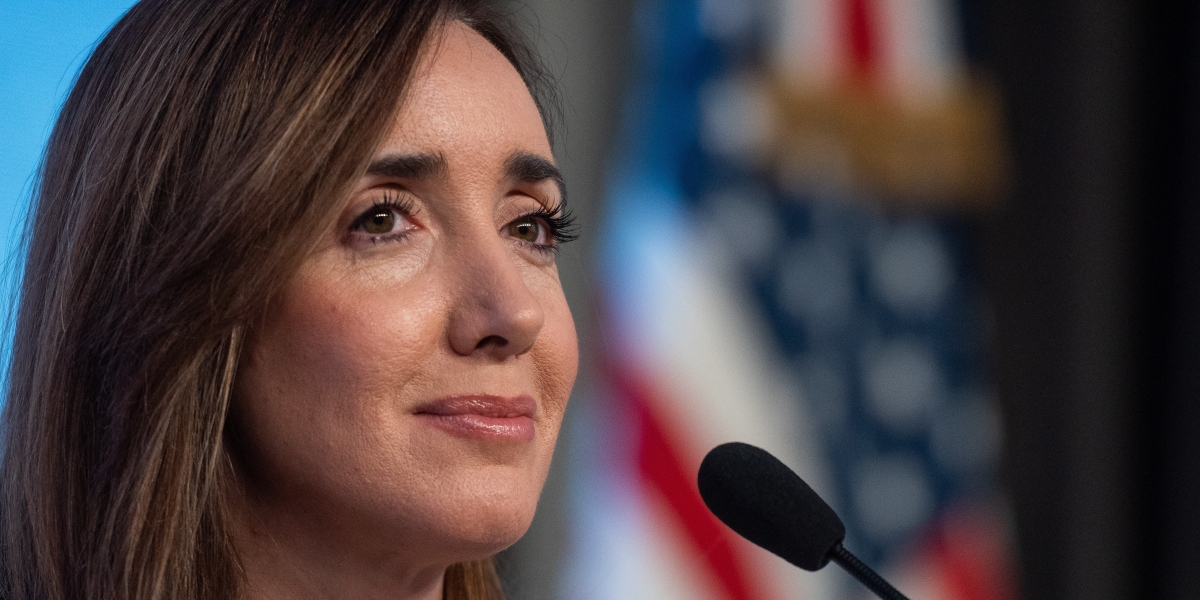
Argentina vice-president Victoria Villarruel has heightened the political tension surrounding Wednesday’s World Cup semi-final by describing England as “usurping pirates” and “invaders”.
Villarruel published the message on X before Argentina’s meeting with Thomas Tuchel’s side in Atlanta, explicitly connecting the match with the country’s long-standing claim over the Falkland Islands, known in Argentina as Las Malvinas.
“Tomorrow we play against the usurping pirates. This is not just another match,” Villarruel wrote, according to Clarín’s report on her post.
“I am not going to be politically correct or cold-hearted; against the English, it is always something more.
Read also: Thierry Henry issues blunt warning over Liverpool’s £123m signing
“It is the Malvinas, it is Diego, it is Leo’s last, and it is about stopping the invaders. Come on, Argentina! Because until our last breath, we will claim what is ours!”
The reference to Diego concerns Diego Maradona, whose two goals eliminated England from the 1986 World Cup. “Leo’s last” refers to what is widely expected to be Lionel Messi’s final appearance at the tournament.
Villarruel brings Falklands dispute into football rivalry
Villarruel has a close personal connection to the 1982 Falklands War. Her father, Eduardo Villarruel, was an Argentine army officer and veteran of the conflict.
Argentina invaded the islands in April 1982. British forces recaptured them after a ten-week war, but successive governments in Buenos Aires have continued to claim sovereignty.
Read also: Roy Keane goes nuclear on Man City after 114 guilty findings
The islands have been administered by the United Kingdom since 1833 and remain a self-governing British Overseas Territory. Argentina argues that the British presence represents an unlawful occupation and calls for bilateral negotiations over their future.
Britain maintains that the political status of the islands cannot be changed without the consent of the people who live there.
In a referendum held in 2013, 99.8 percent of participating islanders voted to retain their status as a British Overseas Territory. Turnout was 92 percent.
According to the British government’s latest official statement on the islands, the result demonstrated that the population had expressed its wishes “clearly and democratically”.
Read also: Here is Foden’s Man City exit route
Argentina does not recognise the referendum.
Foreign Minister Pablo Quirno recently argued that the islanders were an “artificially implanted” population and that a vote organised unilaterally by Britain could have no legal effect.
As reported by The Times, Quirno said: “Time does not transform an illegitimate occupation into sovereignty. Nor will it divide the territorial unity of the Argentine Republic.”
Downing Street rejected that position and reiterated that the wishes of the islanders remain paramount.
Read also: Rodri breaks silence on Man City verdict with remarkable 2020 comparison
Scaloni tells supporters to separate war and football
Villarruel’s intervention contrasts sharply with the message delivered by Argentina coach Lionel Scaloni.
The World Cup-winning manager has repeatedly urged supporters not to treat the match as an extension of the political dispute or the war.
“It is a football match; I cannot mix things up, out of respect for what happened so many years ago,” Scaloni said, as quoted by Extra.ie.
“It was a very sad time in our history, and there is not much we can do about it. Mixing the two would be madness.
Read also: The wheelchair champion beat the sub-two-hour man, and London Marathon has its 2027 schedule
“We criticise the fact that there was a war. Of course, people remember the history and what happened.
“It is a football match; we need to keep things separate. Yes, we remember the Argentine people and the people who were lost in the war, but let us not conflate things.”
Scaloni also questioned the relevance of holding the current players responsible for events that occurred more than four decades ago.
“What do today’s players have to do with something that happened many, many years ago?” he asked.
“It was a sad period, and of course we remember it, but it would be completely wrong to bring it into the match.”
Tuchel expects Argentina to be “fuelled by history”
Tuchel has similarly said England will not use the political or footballing history between the countries as motivation.
However, the England manager believes Argentina’s players will draw energy from the emotion surrounding the rivalry.
“They are fuelled by history; it means a lot to them,” Tuchel said, as quoted by The Guardian.
“That is what we basically expect and what we are up against. But we are also emotional, we have the grit, we have the mentality that it takes to go up against it, and we are ready for it.”
Tuchel described the fixture as a major rivalry between two of international football’s most recognisable nations, but said England’s preparations had focused on the game rather than the past.
“We do not use history as fuel,” he said, according to England Football’s account of his press conference.
“We respect our opponent, but we do not dip into historic events. We do not make it any bigger than it is. It is a big football match.”
Rivalry shaped by iconic World Cup meetings
England and Argentina have met five times previously at the World Cup.
England won their first two encounters, defeating Argentina in the group stage in 1962 and in a controversial quarter-final four years later.
Argentina responded with a famous 2-1 victory in Mexico in 1986.
Maradona opened the scoring by using his hand to direct the ball past Peter Shilton, an incident he later described as involving “a little with the head of Maradona and a little with the hand of God”.
Minutes later, he dribbled through the England team to score a goal later voted the greatest in World Cup history.
Argentina also eliminated England on penalties in 1998 after David Beckham was sent off for kicking out at Diego Simeone.
Beckham scored the only goal when the sides met again in the 2002 group stage, converting a penalty in England’s 1-0 victory.
Their most recent meeting was a friendly in Geneva in November 2005, which England won 3-2.
Place in the final at stake
Wednesday’s match is the countries’ first World Cup meeting in 24 years and their first encounter of any kind since 2005.
Argentina are attempting to become the first country since Brazil in 1962 to retain the men’s World Cup. England are seeking their first appearance in the final since winning the trophy in 1966.
The match begins at 21:00 CEST at Atlanta Stadium, with Spain awaiting the winner in Sunday’s final.
The sporting stakes were already high enough without political intervention.
Villarruel’s post has nevertheless ensured that the decades-old dispute over the Falkland Islands will remain part of the conversation surrounding one of the tournament’s most anticipated matches.
Scaloni and Tuchel have both tried to keep the focus on football. Argentina’s vice-president has chosen a very different approach.