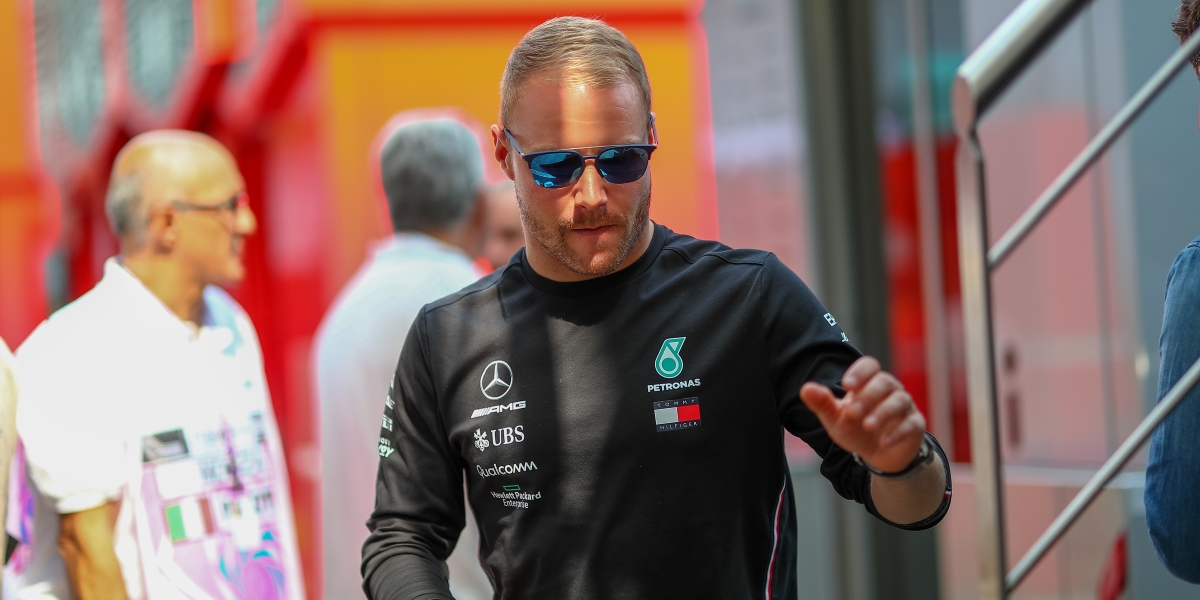
Formula 1 driver Valtteri Bottas has candidly revealed his past struggles with depression and an eating disorder, while also highlighting the significant improvements in mental health support within motorsports during his career. Bottas shared his experiences in an essay titled “Born Crazy,” published by The Players’ Tribune ahead of the Miami Grand Prix.
The Finnish driver’s essay, dated April 29, 2026, details a period during his five seasons with Mercedes where he was pushed to the brink of depression, admitting he “hated racing.”
Bottas joined Mercedes in 2017 from Williams, serving as teammate to seven-time world champion Lewis Hamilton. His role often saw him relegated to a “wingman,” sacrificing his own track position to aid Hamilton’s championship bids.
Reflecting on his time at Mercedes, particularly after a winless 2018 season, Bottas described a profound mental struggle. “I was definitely depressed and burnt out. I hated racing,” he wrote in his essay. “During that winter break before the 2019 season, I did not think that I was going to come back.
Read also: 2026 Chevrolet Corvette ZR1X named Indy 500 pace car
That winter break, I made the decision that I was going to retire. Then I went for a walk one day in the forest. I walked in the deep snow for maybe three hours and I walked out of those woods with a completely different mindset.”
Early struggles and the Mercedes pressure cooker
Beyond the pressures of his Mercedes tenure, Bottas also disclosed an earlier two-year battle with an eating disorder, referencing the year 2014. The immense scrutiny and demands of Formula 1, coupled with his designated support role for Hamilton, evidently took a heavy toll.
Bottas expressed complex emotions about his time as Hamilton’s teammate. “To this day, I have complicated feelings about it. I don’t know how to answer when people ask me about it, because Lewis is an incredible driver and a friend,” he stated in his essay. “I have no bad blood with Mercedes … but the whole situation almost made me walk away from the sport.”
Bottas said his then-wife asked him if he feared the risks of racing, but he’d become so detached that he told her “‘No. If I die, I die.’”
Read also: Anthony Joshua's warm-up fight loss would cancel Tyson Fury fight
A more welcoming environment in F1
Despite his personal hardships, Bottas believes the landscape for mental health in Formula 1 has evolved positively. Speaking in Miami Gardens, Fla., he acknowledged a broader shift in societal attitudes and communication, as reported by AP.
“The sport has changed a lot, the world has changed a lot,” Bottas commented on the improving support systems. “There’s better ways for people to communicate and share their issues, or anything from the past.
It’s definitely a more welcoming environment for everyone in F1, but I think also the whole world.” His revelations underscore a growing openness within elite sports to address the mental well-being of its athletes.
Sources: apnews.com, www.theplayerstribune.com
Read also: Haaland’s defining moment: The look that could tilt the title race
Read also: Kylian Mbappe doubt for El Clásico and World Cup after injury,