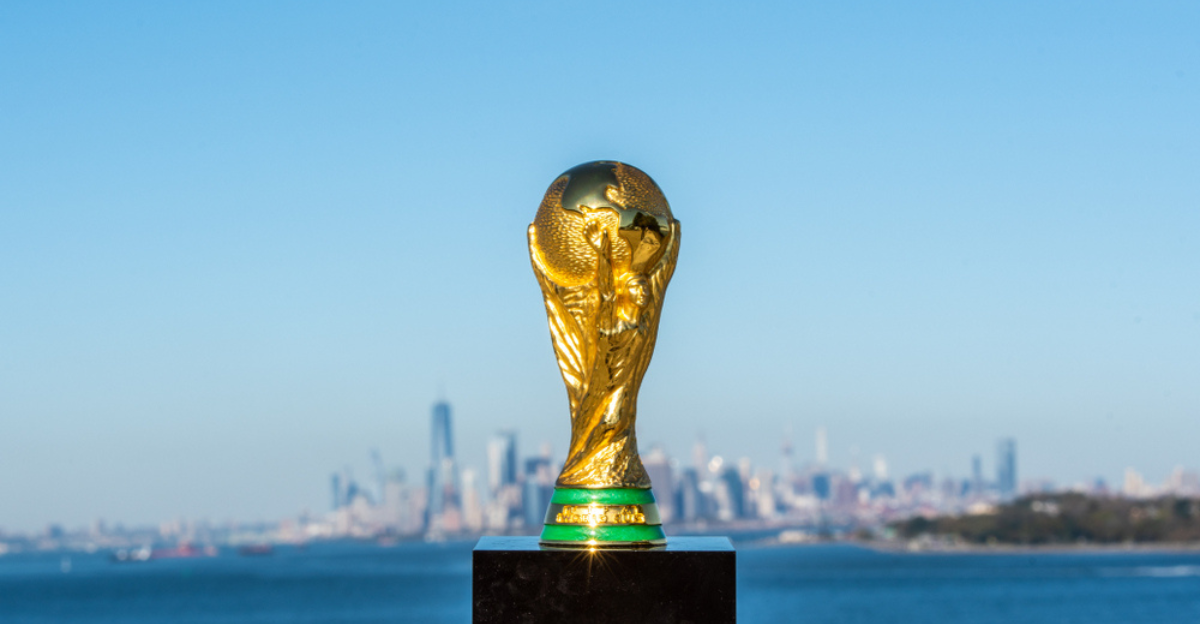
The 2026 World Cup has delivered a historic semi-final lineup, with the four highest-ranked national teams all advancing to the final four.
France, Argentina, Spain and England are the only countries still competing for the trophy after navigating an expanded tournament featuring 48 teams and an additional knockout round.
It is the first time since FIFA introduced its official men’s world ranking in December 1992 that the top four nations have all reached the semi-finals at the same World Cup.
FIFA ranking reflected in final four
According to FIFA’s latest ranking update, France returned to the top of the standings during the tournament following their strong start in North America.
Read also: Harry Kane’s Bayern future suddenly comes with a Tottenham escape route
As explained by AS, no previous World Cup held during the ranking era had produced a final four containing all of the four highest-placed teams.
The distinction is important because FIFA’s official ranking did not exist before December 1992. The achievement can therefore only be compared with tournaments from the 1994 World Cup onwards.
Expanded tournament produces elite finish
The statistic is particularly striking given the increased number of potential obstacles facing the leading nations.
The 2026 edition is the first World Cup to feature 48 teams, up from the 32-country format used between 1998 and 2022. The tournament also introduced a round of 32, requiring the semi-finalists to survive three knockout matches rather than two before reaching the final four.
Read also: ‘I’m not confident’: Red Bull chief delivers troubling verdict on Verstappen’s car
An expanded field was expected to create greater opportunities for surprise results. Instead, the competition has gradually eliminated every nation outside the world’s four highest-ranked teams.
According to FOX Sports’ overview of the semi-finals, this is the first occasion on which the four leading teams in the FIFA ranking have simultaneously reached this stage.
France and Spain meet in Dallas
France will face Spain in the first semi-final at Dallas Stadium on July 14.
Didier Deschamps’ side secured a third successive World Cup semi-final appearance by beating Morocco 2-0, with Kylian Mbappé and Ousmane Dembélé scoring the goals.
Read also: Man City hit back at Premier League with explosive accusation
Spain reached the last four for the first time since winning the tournament in 2010. Mikel Merino’s late goal delivered a 2-1 quarter-final victory over Belgium after La Roja had previously eliminated Austria and Portugal.
The meeting brings together the teams ranked first and third in the latest live standings, as well as the winners of the 2018 and 2010 World Cups.
England renew Argentina rivalry
England and defending champions Argentina will meet in the second semi-final at Atlanta Stadium on July 15.
Jude Bellingham scored twice as England recovered from behind to defeat Norway 2-1 after extra time. The result carried the Three Lions into their fourth men’s World Cup semi-final following previous appearances in 1966, 1990 and 2018.
Read also: Manchester City CEO says everything is one big “conspiracy theory”
Argentina also required extra time in their quarter-final. Lionel Scaloni’s team defeated Switzerland 3-1 to maintain their hopes of becoming the first country since Brazil in 1962 to retain the World Cup.
The fixture will renew one of international football’s most famous rivalries. Argentina and England have previously met five times at the World Cup, including Diego Maradona’s celebrated performance in 1986 and England’s penalty-shootout defeat in 1998.
No unexpected challenger remains
Previous tournaments during the ranking era have almost always featured at least one unexpected semi-finalist.
Bulgaria and Sweden reached the last four in 1994, Croatia did so in 1998, 2018 and 2022, while South Korea and Turkey produced memorable runs in 2002. Morocco became the first African country to reach a World Cup semi-final four years ago.
Read also: Pogacar’s home Euros go on without him, and now without Van der Poel too
There will be no equivalent outsider in 2026. Every remaining country has previously won the trophy, and all four entered the competition among the leading candidates.
The eventual champion will consequently have to overcome another member of the world’s top four in the semi-final before facing either of the other two in the final at New York New Jersey Stadium on July 19.