According to GiveMeSport, the 1-1 draw between Arsenal and Atletico Madrid in the Champions League was marred by two contentious refereeing decisions that significantly impacted the flow of the game, sparking renewed debate over the independence of VAR officials and on-field referees.
At the Wanda Metropolitano Stadium, Arsenal found themselves on the wrong end of a “soft” penalty call when a deflected effort struck Ben White on the thigh before hitting his hand. Later in the game, an initial penalty award for Arsenal, after Eberechi Eze was brought down in the box, was controversially overturned by VAR.
The ‘stick together’ culture among officials
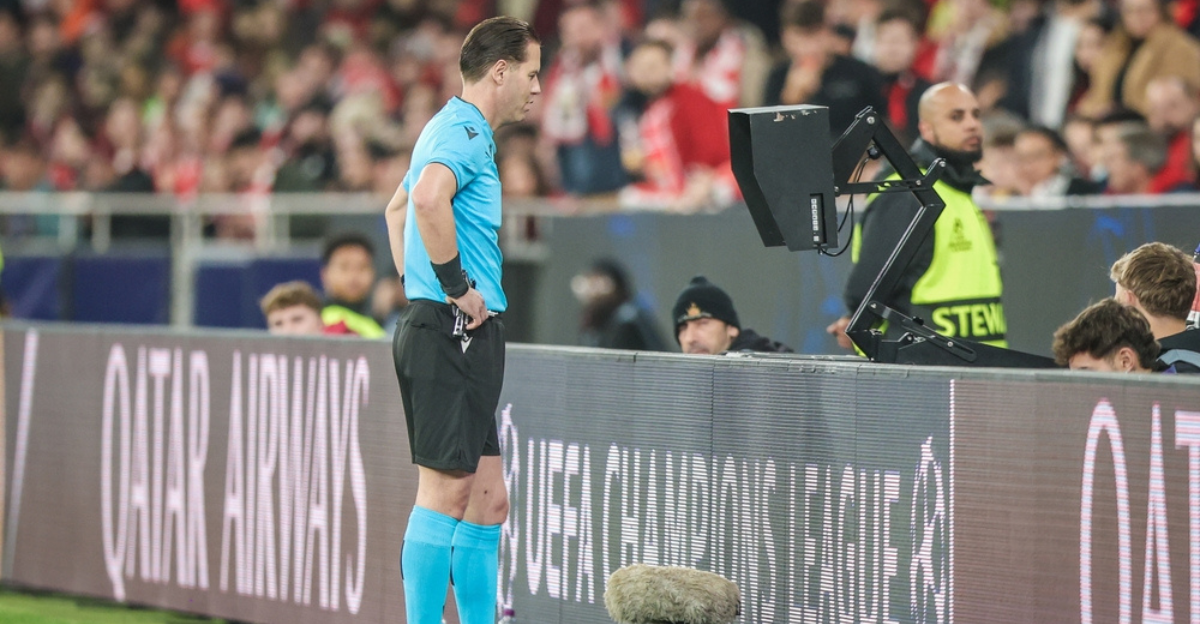
The reluctance of on-field referees to overrule VAR decisions, even when reviewing incidents on pitchside monitors, appears to stem from an ingrained culture within UEFA. Groups of match officials commonly work together regularly across the Champions League, fostering an environment where pressures can naturally build for officials to “stick together.” This dynamic can undermine the crucial independence between VAR officials and on-field referees, creating a power imbalance.
A source close to the refereeing community shed light on this phenomenon, stating, “This is the way it works. These guys all know each other. They work together all the time. The referees just don’t want to go against the VAR guys. It’s almost like rebellion if they do. It just makes everyone feel uncomfortable. So with the world watching, they stick together. It’s human nature.”
Read also: Atletico Madrid's midfield hunt: Premier League clubs loom
This sentiment was echoed in a recent incident involving Italian referee Maurizio Mariani. Last month, Mariani privately admitted feeling significant pressure to reverse his decision to award Liverpool a penalty for a foul on Alexis Mac Allister against PSG, after VAR official Marco Di Bello advised him to review it on the pitchside monitor. Mariani ultimately reversed his original decision.
IFAB protocol versus UEFA practice
The International Football Association Board (IFAB) website explicitly states that a video assistant referee may assist the referee only in the event of a “clear and obvious error.” However, there is a widespread belief that UEFA officials do not always strictly adhere to this protocol, leading to interventions that go beyond the intended scope of VAR.
External influence and pitchside pressure
Beyond internal dynamics, external pressures can also play a role. In the case of Eze’s overturned penalty, Atletico Madrid manager Diego Simeone was seen aggressively waving his arms and goading the officials while referee Danny Makkelie reviewed the footage on the pitchside monitor. Makkelie was sent to the monitor 12 times before reversing his decision.
Pundits Ally McCoist and Steven Gerrard publicly supported the theory that Simeone’s actions influenced the outcome. Similarly, Declan Rice, who was seen shouting at the referee during the review, made comparable comments and is now facing the possibility of a ban. These incidents highlight the multifaceted pressures that can weigh on referees during critical Champions League moments, further complicating the application of VAR.
Read also: Morgan Gibbs-White injury clouds Nottingham Forest's Europa League semi-final preparations
Sources: www.givemesport.com
Read also: Donald Trump breaks silence after FIFA confirm Iran will play at 2026 World Cup