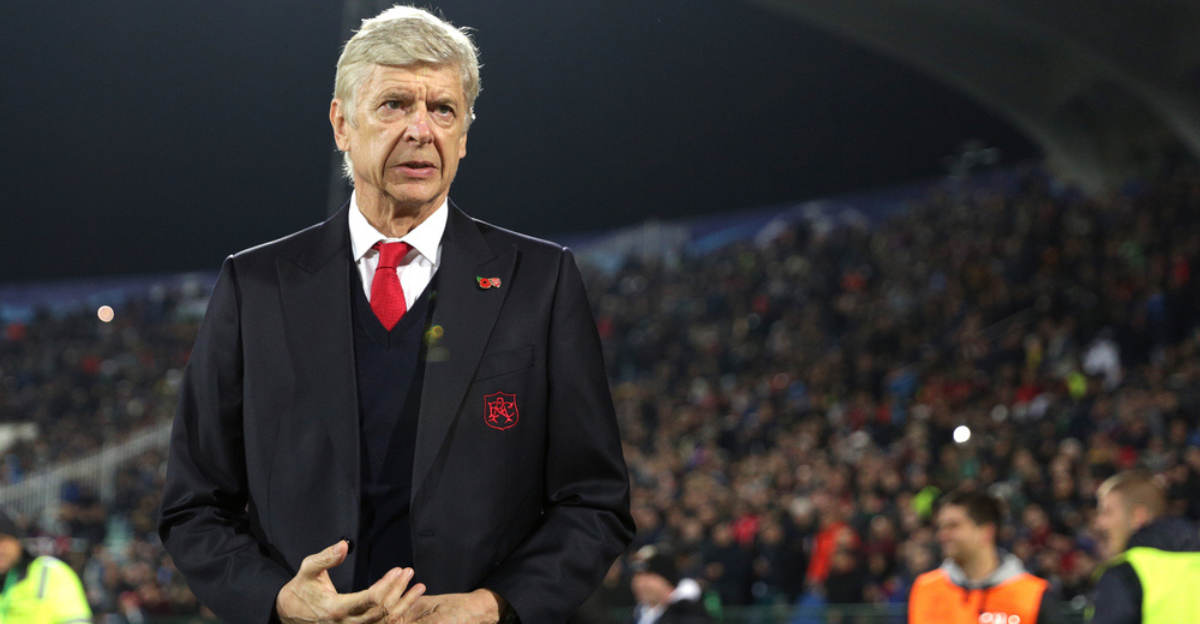
Arsène Wenger has pointed to immigration as one of the reasons behind the long-term success of the French national team.
The former Arsenal manager, now 76, was asked about the strength of French football during an appearance on the Kroos & Kroos podcast, hosted by former Germany midfielder Toni Kroos.
According to L’Équipe, Wenger said France’s success is not the result of one single factor, but of a system that has combined talent development with the country’s broader social history.
Wenger points to education and talent spotting
Wenger began by highlighting France’s ability to educate young players and identify talent early.
Read also: Harry Kane breaks silence on Man City verdict
“I think our success comes from the quality of education, from the identification of talent, which is neglected in many countries, and also from African immigration,” Wenger said.
It was a direct answer from a coach who has spent much of his career studying player development.
Wenger built his reputation partly on recognising talent before others did, first at Monaco, then during more than two decades at Arsenal. His comments reflect a belief that France’s footballing strength is not accidental. It comes from structure, opportunity and a deep pool of players shaped by different backgrounds.
France’s story linked to immigration
Wenger then placed the current French team in a longer historical context.
Read also: Phil Taylor comes out of retirement for stunning darts return
“When you look at the history of French football, our history is very linked to immigration,” he said.
He pointed to several of the country’s most important football figures as examples.
“The first French Ballon d’Or, Kopa, was of Polish origin. Then we had Platini, Italian immigration, then Zidane, Algerian immigration. Papin was not an immigrant, then we later had Benzema, Algerian immigration, and now Dembélé, African immigration,” Wenger said.
The list underlines how closely the history of Les Bleus has been connected to different waves of immigration.
Read also: ‘If you lie to me, I will leave’: Guardiola’s City warning takes on new weight
Raymond Kopa became a symbol of post-war French football. Michel Platini defined the 1980s. Zinedine Zidane carried France to the 1998 World Cup and Euro 2000. Karim Benzema later became one of the country’s greatest forwards. Ousmane Dembélé now represents another generation of French attacking talent.
For Wenger, these players are not exceptions. They are part of the story.
Hunger and opportunity
Wenger also spoke about the drive he believes many immigrant families bring into French football.
“They come because they feel there is real potential for education in France,” he said, “and they are often hungry, because they know they have to fight to be at their best.”
Read also: Harry Kane’s Bayern future suddenly comes with a Tottenham escape route
Kroos then asked whether football can sometimes become the only way for some players to reach an easier life.
Wenger answered in the affirmative.
The point was not simply about background, but about motivation. Wenger suggested that opportunity, combined with pressure and ambition, has helped produce generations of players capable of reaching the highest level.
A wider debate around Les Bleus
The comments come during another World Cup in which France remain one of the most discussed teams in international football.
Read also: ‘I’m not confident’: Red Bull chief delivers troubling verdict on Verstappen’s car
Les Bleus have built one of the deepest squads in the tournament, with Kylian Mbappé, Ousmane Dembélé, Michael Olise, Aurélien Tchouaméni, Jules Koundé and several others reflecting the strength of the French talent system.
At the same time, the national team has often been pulled into wider political debates about identity, belonging and immigration.
Wenger’s comments were not framed as criticism. They were a recognition of what he sees as one of French football’s great strengths.
France have benefited from strong coaching structures, elite academies and a culture that produces technically gifted, tactically educated players. But for Wenger, that is only part of the explanation.
The other part is the country’s ability, across generations, to turn diversity into footballing power.
A strength built over generations
France’s modern success did not begin with the current team.
It has been built across decades, through players from different regions, families and histories who became central to the national side.
That is the wider point Wenger was making.
The French team has often been at its strongest when it has reflected the complexity of the country itself. From Kopa to Zidane, from Benzema to Dembélé, the story of Les Bleus has repeatedly been shaped by players with roots beyond one narrow idea of France.
Wenger sees that not as a complication, but as one of the reasons France keep producing world-class footballers.