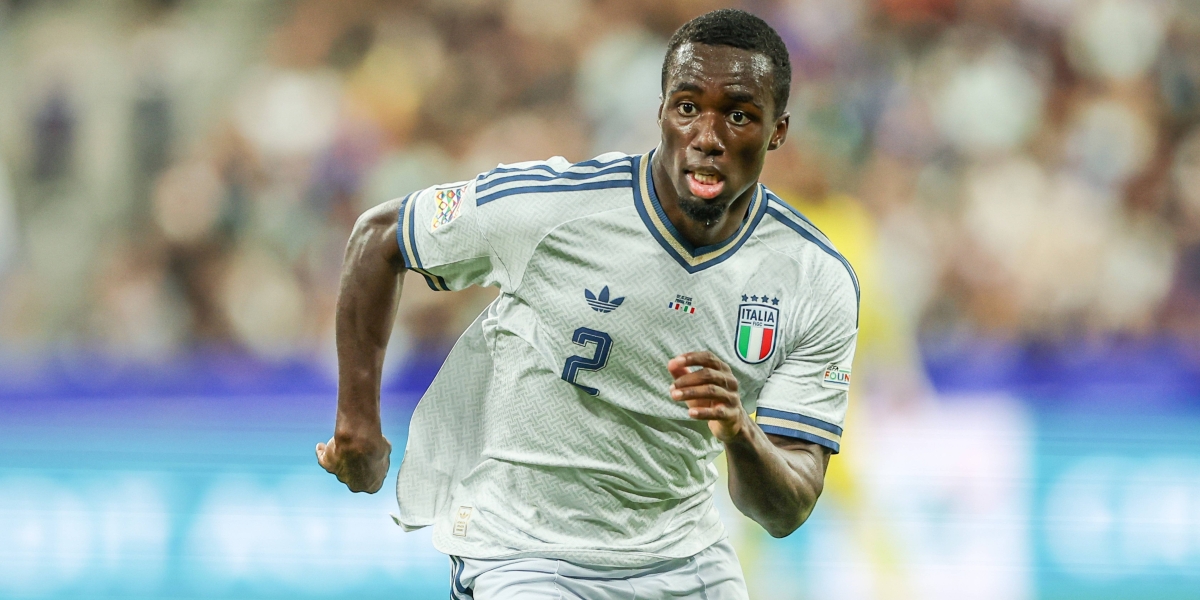
FIFA’s decision to clear Folarin Balogun for the United States’ World Cup last-16 match against Belgium has turned into one of the tournament’s most explosive controversies.
The American striker had been expected to miss the match after receiving a straight red card in the round-of-32 win over Bosnia-Herzegovina. Instead, FIFA suspended the automatic one-match ban, allowing Balogun to play against Belgium.
According to AP News, U.S. President Donald Trump personally intervened by calling FIFA president Gianni Infantino and asking the governing body to review the case.
After the ruling, Trump wrote on social media: “Thank you to FIFA for doing what was right, and reversing a great injustice!”
Read also: Messi admitted he targeted one World Cup rival on purpose
FIFA use rarely seen rule
Balogun was sent off in the United States’ 2-0 win over Bosnia-Herzegovina after stepping awkwardly on the ankle of defender Tarik Muharemović.
The decision came after a VAR review and triggered what was widely expected to be an automatic one-match suspension.
That changed on Sunday.
According to The Guardian, FIFA used Article 27 of its disciplinary code, which allows the judicial committee to fully or partly suspend the implementation of a disciplinary measure.
Read also: Cristiano Ronaldo crisis forces Portugal chief into emergency action
The result is unusual. Balogun’s red card remains on his record, but the one-match ban has been suspended for a probationary period of one year. If he commits another offence of a similar nature and seriousness during that period, the ban can still be enforced.
AP News described the decision as an extraordinary move and said it appeared to be the first time since 1962 that a World Cup red card had not led to a suspension.
Belgium accuse FIFA of breaking its own rules
The decision immediately angered Belgium.
The Royal Belgian Football Association argued that the ruling contradicted the normal World Cup regulations, which state that a player sent off must miss the next match.
Read also: Harry Kane breaks silence on Man City verdict
Quoted by The Guardian, the Belgian FA said: “We are astonished by this decision.”
It added: “This decision is in direct contradiction to the provisions of the World Cup 2026 competition regulations.”
The federation also said it was examining its options.
“In order to safeguard the legitimate rights of all participating teams and to protect the fundamental principles of fair play in our sport, both at this World Cup and at future editions of the tournament, the Belgian FA is investigating all potential options,” the statement read.
Read also: Phil Taylor comes out of retirement for stunning darts return
Political pressure under scrutiny
The controversy has become bigger than one player’s availability.
Balogun is one of the United States’ most important attacking players and had scored three goals before the Belgium match. His return is a major boost for the co-hosts, who are trying to reach the World Cup quarter-finals for the first time since 2002.
But the reported political involvement has made the ruling even more sensitive.
According to The Wall Street Journal, Trump called Infantino and urged him to review Balogun’s automatic suspension before the Belgium match.
Read also: ‘If you lie to me, I will leave’: Guardiola’s City warning takes on new weight
That sequence has created the impression, especially in Belgium, that FIFA responded to pressure from the White House.
FIFA’s formal explanation rests on Article 27, but the timing of the decision and Trump’s public thanks have made it impossible to separate the disciplinary ruling from the political context around it.
Spanish referee expert calls it a contradiction
The legal basis for FIFA’s decision has also been challenged by refereeing experts.
According to Cadena SER, former Spanish referee Iturralde González argued that FIFA had used the wrong article to justify the ruling.
He said Article 27 was not meant for yellow or red cards, but for other disciplinary situations.
“There are two regulations; the disciplinary code, which FIFA relies on, Article 27, says that the judicial bodies may choose to suspend all or part of the application of a disciplinary measure. Here is the trick: this article was not for yellow or red cards. It was for disturbances on the football pitch,” he said.
Cadena SER also pointed to Article 10.5 of the World Cup regulations, which states that if a player is sent off, he automatically receives a suspension and cannot play in his team’s next match.
UEFA angle remains delicate
The case has also raised tension in European football.
According to WP SportoweFakty, citing Politico, UEFA was considering whether to support Belgium’s position publicly. At the time of writing, however, no official UEFA statement had been confirmed.
That distinction matters.
Belgium’s protest is public and clear. UEFA’s position remains more cautious, at least officially. Still, the situation has already placed FIFA under pressure from one of its strongest football regions.
The controversy comes at a sensitive moment for the tournament. The United States are the only host nation still alive after Canada and Mexico were both eliminated in the last 16.
That makes Balogun’s availability even more politically charged.
A ruling that may outlive the match
For the United States, the decision is simple: their leading striker can play against Belgium.
For Belgium, it is a question of consistency, fairness and whether FIFA has created a dangerous precedent.
If Balogun scores or helps the United States advance, the debate will only grow louder. But even if Belgium win, the ruling may still follow FIFA for the rest of the tournament.
The red card was one incident.
The decision to suspend the ban has become something much bigger.