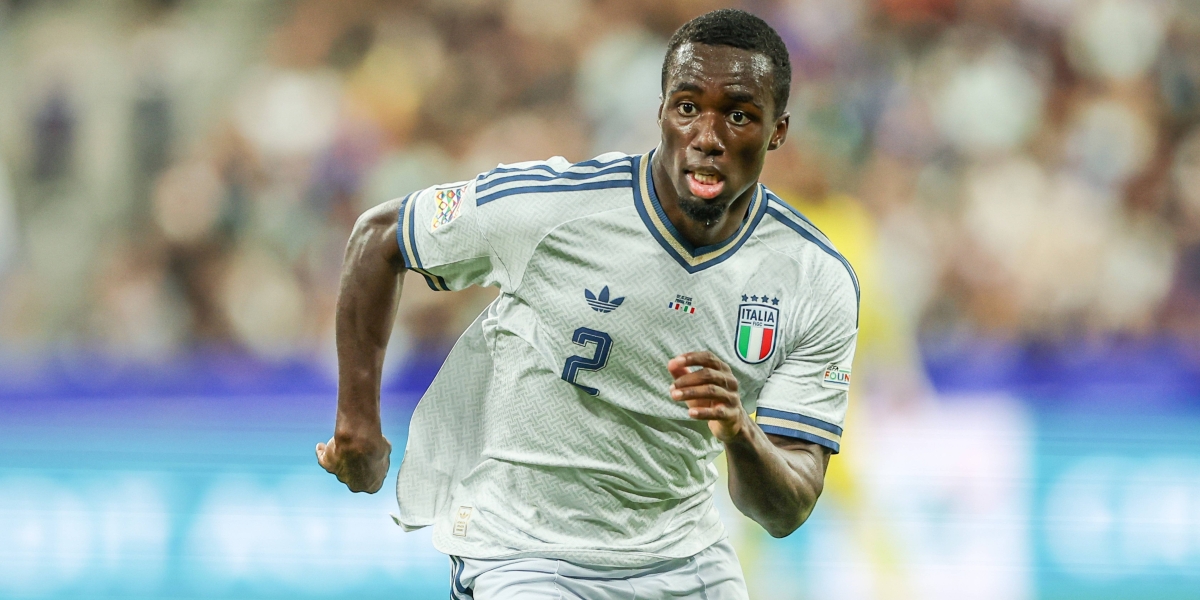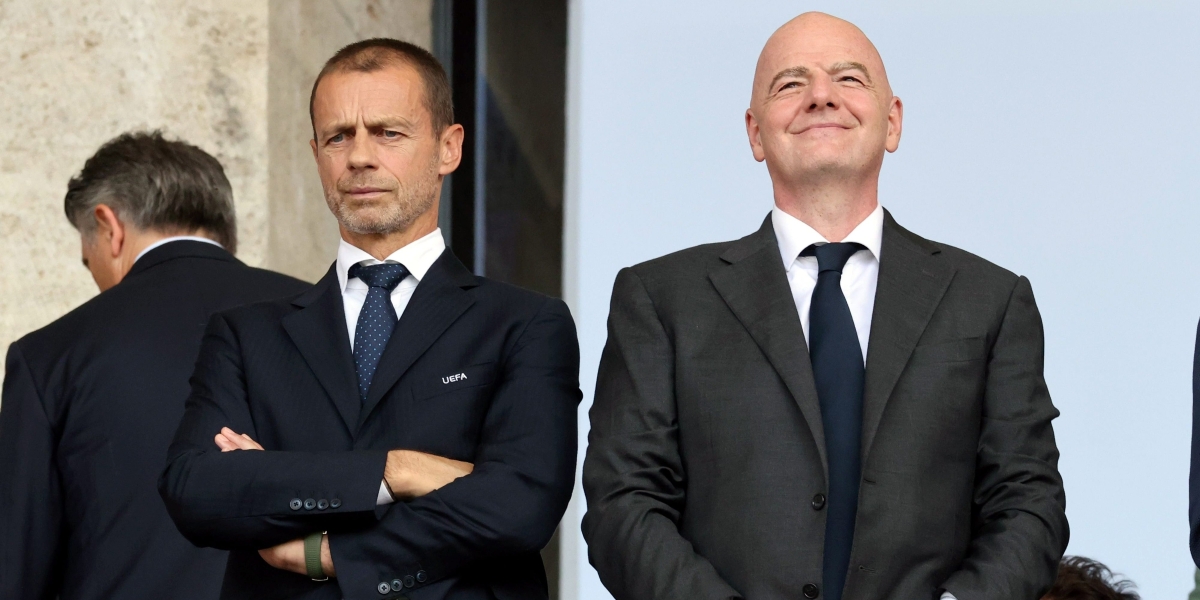
UEFA has launched a sharp attack on FIFA after Folarin Balogun was cleared to play for the United States against Belgium at the World Cup.
The American striker had been expected to miss the last-16 match after receiving a straight red card in the round-of-32 win over Bosnia-Herzegovina. Instead, FIFA suspended the automatic one-match ban for a probationary period of one year, allowing him to return immediately.
According to Cadena SER, UEFA described the decision as “unprecedented, incomprehensible and unjustifiable.”
UEFA accuses FIFA of breaking trust
UEFA’s response was unusually direct.
Read also: Harry Kane breaks silence on Man City verdict
The European governing body argued that FIFA’s decision had undermined one of football’s basic disciplinary principles: that a red card automatically leads to a suspension for the next match.
According to RTE, UEFA said: “Yesterday’s decision to suspend for a probationary period of a year the implementation of the one-match automatic suspension following the red card issued to the player Folarin Balogun crossed a red line.”
UEFA also warned that the problem goes beyond one player or one match.
“Football, like any other sport, relies on rules, which are the basis for fair, honest and transparent competition. Sometimes rules are open to interpretation. In this case, not,” the statement said.
Read also: Phil Taylor comes out of retirement for stunning darts return
The message was clear. UEFA believes FIFA has created an exception where, in its view, none should exist.
Balogun cleared after red card controversy
Balogun was sent off during the United States’ 2-0 win over Bosnia-Herzegovina after a VAR review.
The challenge on Tarik Muharemović was judged to be serious foul play, and under normal tournament rules, the red card would have ruled Balogun out of the Belgium match.
According to The Guardian, FIFA initially confirmed two days after the Bosnia-Herzegovina match that Balogun had to serve a one-match ban.
Read also: ‘If you lie to me, I will leave’: Guardiola’s City warning takes on new weight
That changed on Sunday, when FIFA used Article 27 of its disciplinary code to suspend the punishment.
According to CBS Sports, FIFA said: “In line with Article 27 of the FIFA Disciplinary Code, the implementation of the match suspension is suspended for a probationary period of one year.”
The same FIFA statement added that if Balogun commits another offence of a similar nature and gravity during that period, the ban will be enforced.
Trump link adds pressure
The ruling became even more controversial because of the reported involvement of U.S. President Donald Trump.
Read also: Harry Kane’s Bayern future suddenly comes with a Tottenham escape route
According to The Guardian, sources said Trump made several calls to FIFA after the red card, pushing for the decision to be reviewed before the Belgium match.
After FIFA’s ruling, Trump thanked the governing body on social media.
“Thank you to FIFA for doing what was right, and reversing a great injustice!” he wrote.
For the United States, the decision is a major sporting boost. Balogun has scored three goals at the tournament and is one of Mauricio Pochettino’s most important attacking players.
Read also: ‘I’m not confident’: Red Bull chief delivers troubling verdict on Verstappen’s car
For critics, however, the timing and political context make the case far more damaging.
Belgium already furious
Belgium had already reacted angrily before UEFA’s statement.
The Royal Belgian Football Association accused FIFA of contradicting its own tournament regulations and said it was examining all possible options.
According to CBS Sports, the Belgian federation said: “The Royal Belgian Football Association is astonished by FIFA’s decision to declare suspended United States player Folarin Balogun eligible to play in the USA-Belgium match.”
The federation also pointed to Article 10.5 of the World Cup regulations, which states that a player sent off by a direct or indirect red card is automatically suspended from his team’s next match.
That is the heart of the dispute.
Belgium believe the rule is clear. FIFA believe Article 27 allows them to delay the punishment. UEFA now says that interpretation threatens the integrity of the competition.
A precedent FIFA may struggle to contain
The Balogun case may not end with the Belgium match.
FIFA has already used Article 27 in another high-profile case during this tournament cycle. According to The Guardian, Cristiano Ronaldo was allowed to play in Portugal’s opening World Cup matches after FIFA reduced and suspended part of a previous ban.
That has made UEFA’s warning even sharper.
If red-card bans can be suspended during a tournament, rival teams may ask why the same logic is not applied in every case. If it is applied selectively, FIFA will face even tougher questions about fairness and consistency.
The United States now have Balogun available for one of their biggest matches in years.
But FIFA has a much larger problem.
What began as a red-card case has become a dispute about rules, influence and trust at the highest level of world football.